Four Orphaned Bear Cubs Now in Auburn Rescue’s Care
One arrived shot with birdshot, another unconscious on Highway 20.
5 min read
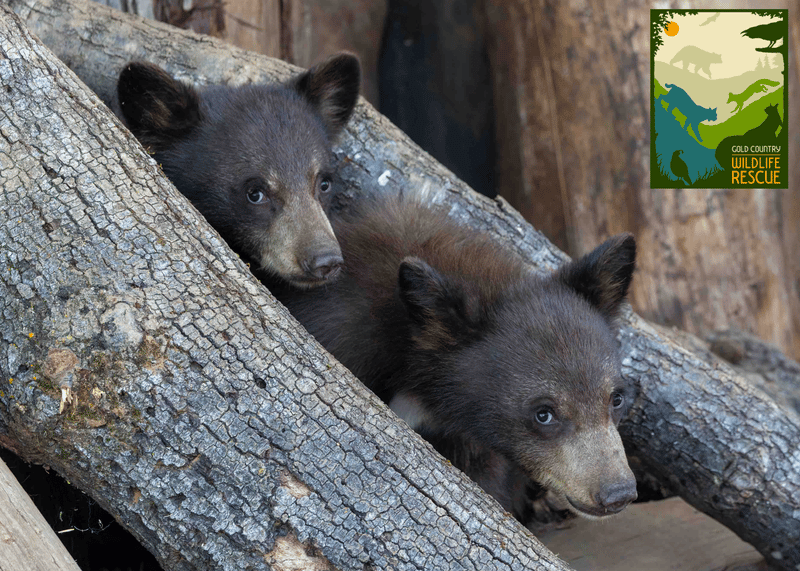
Two sibling bear cubs, the first of the season to arrive at Gold Country Wildlife Rescue.
Gold Country Wildlife Rescue
AUBURN — Four orphaned American black bear cubs are being raised behind visual barriers at Gold Country Wildlife Rescue in Auburn by staff whose stated goal is for the bears to stay afraid of people. All four arrived this summer, delivered by the California Department of Fish and Wildlife (CDFW) after being found without their mothers. The rescue is one of only three organizations in California permitted by the department to rehabilitate black bears.
The most recent arrival, announced August 5, was found unconscious in the roadway along Highway 20 with no mother nearby. The young female, identified as patient 26-3238, is the smallest of the four. Her initial examination showed signs of a head injury and a limp, and X-rays revealed a fractured leg.
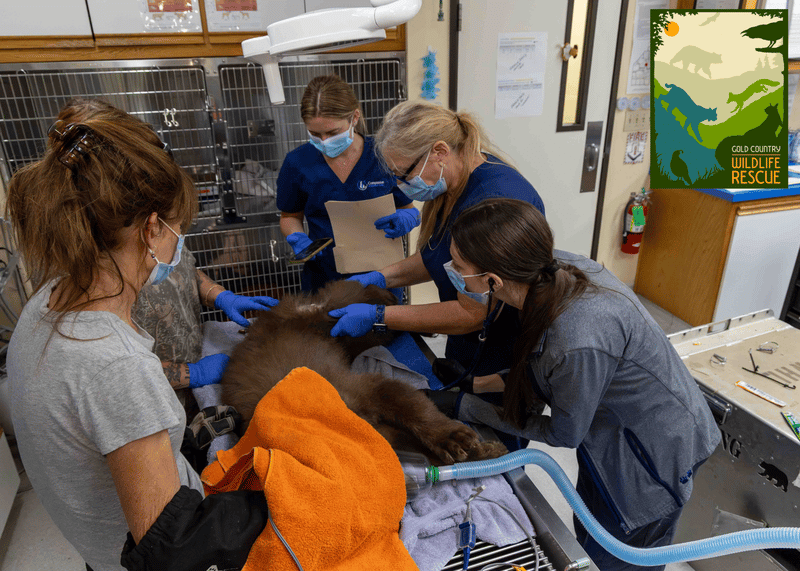
A cub undergoes medical treatment.
Gold Country Wildlife Rescue
Her condition has improved since then, the rescue said. She is no longer showing signs of a head injury, and veterinarians believe the leg is healing on its own and should not cause long-term problems. She is recovering in a quiet section of the bear enclosure, apart from the other cubs, because limiting her activity reduces the chance of reinjury. She will join them once she is ready.
The first three cubs of the 2026 season were admitted in July from Placer and El Dorado counties. Two were siblings, identified as 26-3000 and 26-3001, who were watched for several days after being found without their mother. When she did not return, they were transported to the rescue’s Wildlife Intake and Care Center in Auburn, where the organization described them as healthy and strong.
The third cub, a male identified as 26-3076, arrived just over a week later and was also found without his mother. An injury noticed during his examination led to X-rays, which showed he had been shot in the hind leg with birdshot at close range. No major bones, joints, or other critical anatomy were damaged. He was treated by veterinarian Mira Sanchez at Companion Vet Clinic in Auburn and is now climbing, exploring, and playing.
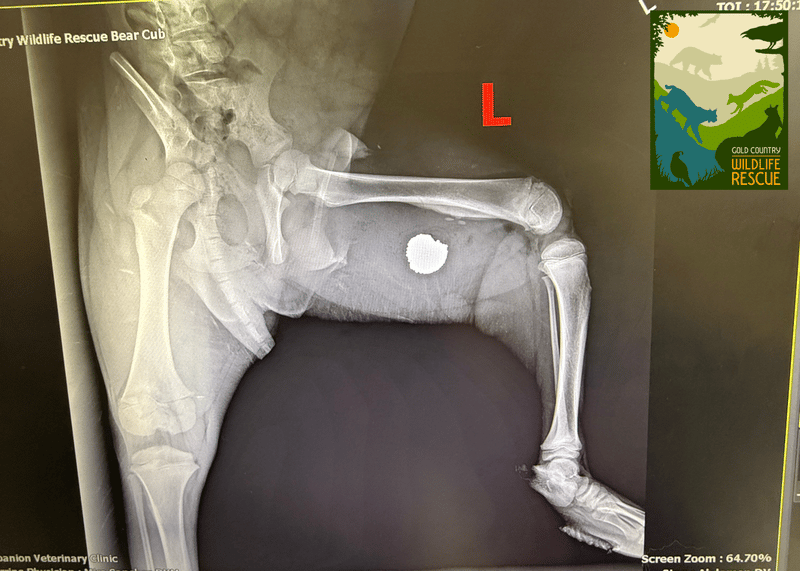
An X-ray image of the leg of one cub revealed the bear had been shot.
Gold Country Wildlife Rescue
The rescue said it has no information about how, when, or why the cub was shot, and it pointed the public toward the state’s wildlife violation tip line, CalTIP, at 1-888-334-2258. As of August 5, that cub was nearly ready to join the sibling pair, and all three could already see and smell one another through neighboring enclosures. In the recent heat, the organization said, their large water tubs have become a favorite place to cool off between naps in the shade.
A rescue that grew into bear work
Gold Country Wildlife Rescue was founded in Auburn in 1991 and provides rescue, rehabilitation, and release at no charge. It is permitted through CDFW and the United States Fish and Wildlife Service. In its first year, the organization handled roughly 300 animals; in 2025 it assisted 3,995 injured, orphaned, or sick animals, according to its annual impact report, with volunteers contributing more than 35,000 hours.
Its bear program grew out of wildfire response. In 2020, the rescue treated a bear cub, a gray fox, a bobcat, and two coyotes injured in Northern California wildfires. The following year, it took in ten wildfire patients, including three black bear cubs, and CDFW granted the organization its permanent bear cub rehabilitation permit.
Raising bears that fear people
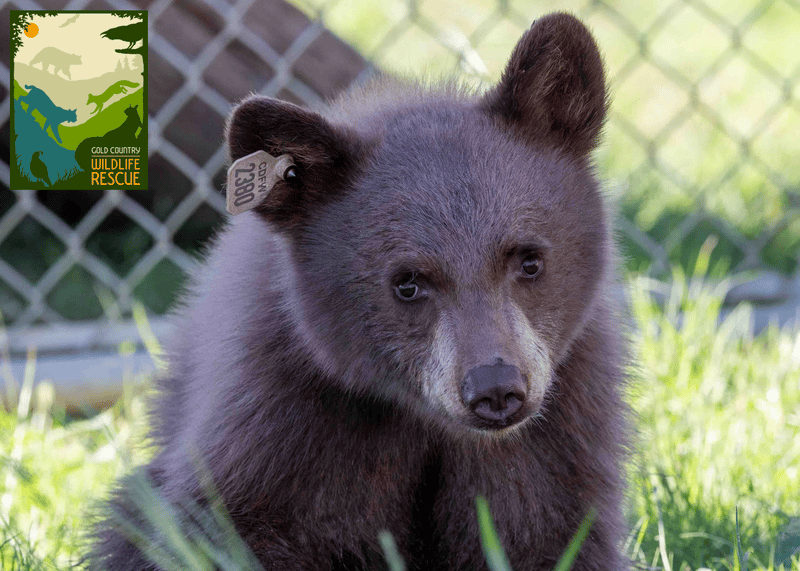
A cub in one of the rescue’s enclosures.
Gold Country Wildlife Rescue
The cubs live in a custom apex predator enclosure the rescue calls “Summit University.” Human contact is kept to an absolute minimum. Staff work behind visual barriers, avoid driving vehicles near the enclosure so the cubs do not learn to associate cars with food, and try to deliver meals while the cubs are resting in their dens.
“Our goal isn’t for these cubs to know us,” the organization wrote on August 5. “Our goal is for them to forget we were ever here.”
The rescue does not normally name the wild animals in its care, but bear cubs are an exception, because they stay for many months and often arrive in sibling groups. The nicknames are used for records and internal communication only, never around the cubs.
Food is the largest recurring expense, and the rescue is asking the community to help stock the pantry. It is accepting donations of fresh vegetables and fruit such as squash, greens, melons, and stone fruit; unsalted whole nuts and green acorns; and whole, uncleaned trout, salmon, and bass. Because the cubs are on carefully managed diets, the organization said it cannot accept anything outside its published list.
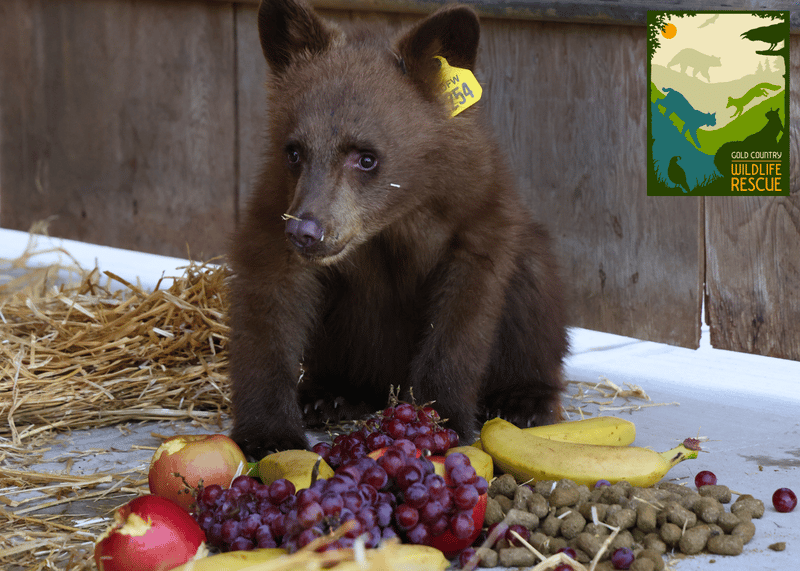
Cubs are fed fresh fruits.
Gold Country Wildlife Rescue
The same organization that is asking for bear food is equally direct about not feeding wild bears. Bears that learn to associate people with food often lose their natural wariness, the rescue said, which creates dangerous situations for both bears and people and frequently costs the bears their lives.
What comes next
Cubs admitted in 2025 faced a process the organization said typically lasts 10 to 11 months, and cubs orphaned in 2024 spent roughly nine months in Auburn before their release. Before a bear leaves, it undergoes a final health exam that includes body measurements, weight, and hair and blood samples collected for research, then is fitted with a breakaway GPS collar that lets wildlife officials follow its movements for up to a year. Release sites are kept confidential for the animals’ safety.
The timing of those releases is itself under study. Five orphaned cubs rehabilitated at other California facilities were released in Northern California in November 2025 as an experiment in fall release, and collar data reviewed by state scientists showed all five established dens, hibernated, and reemerged in the spring.
Heather Perry, CDFW’s Wildlife Rehabilitation Program coordinator, called the outcome a success in a June news release. “This is a massive win. These bears spent their first winter hibernating naturally in the wild as opposed to staying overwinter in a facility, which can be costly and difficult to do. It means less time in rehabilitation and less opportunity to get comfortable around humans,” she said.
The Auburn cubs are still months from any of that. Anyone who encounters a black bear cub alone is asked to contact CDFW at 916-358-2917, which assesses the situation and determines whether rehabilitation is necessary.