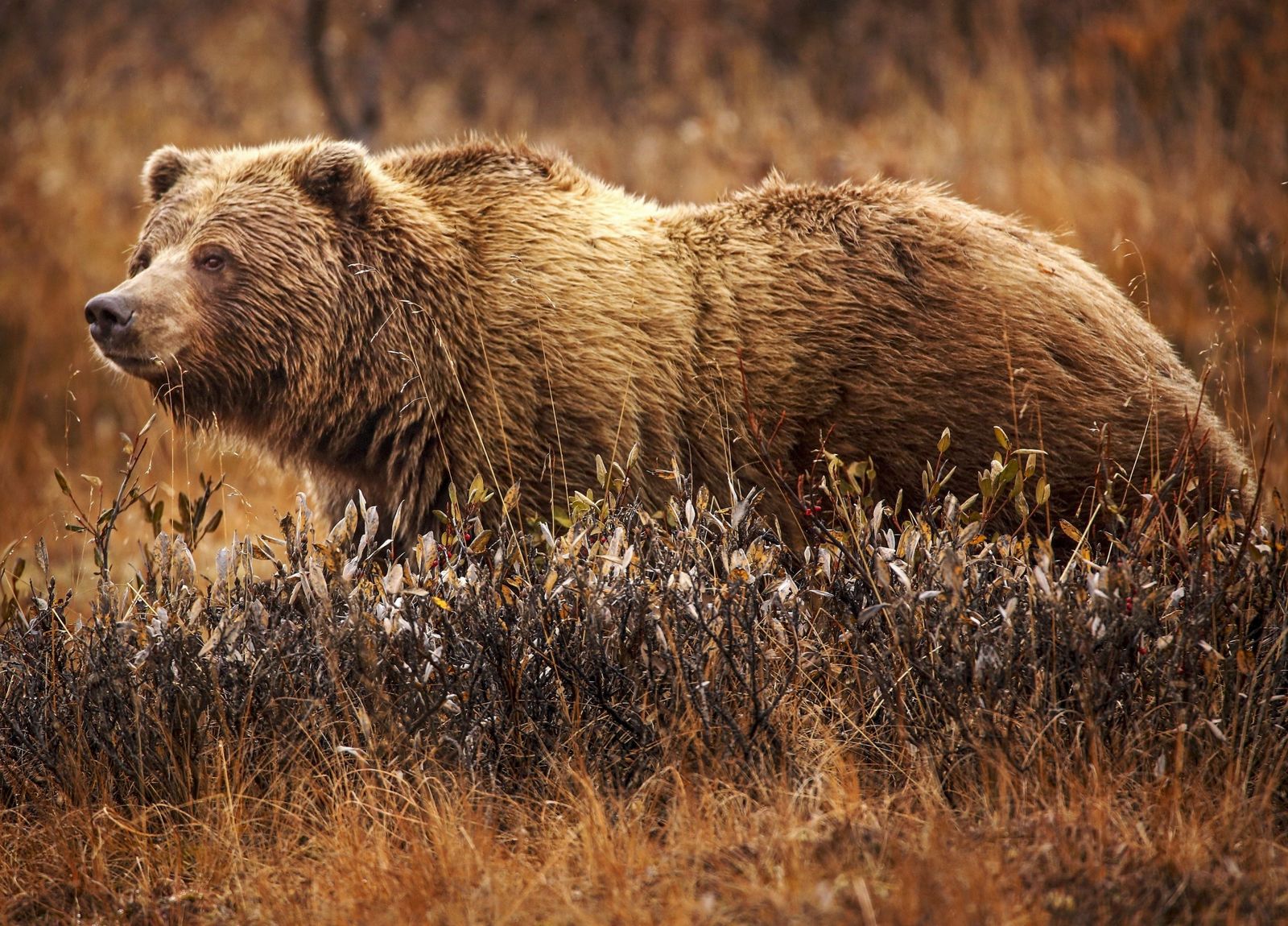
Grizzly Bear Study Bill Dies in Assembly Committee
State wildlife officials estimated the study’s first-year cost at $5.2 million.
5 min read
SACRAMENTO — A proposal to study whether grizzly bears could be returned to California ended its run on August 13, when the Assembly Appropriations Committee held Senate Bill 1305 in committee and under submission. The measure, by Senator Laura Richardson, who represents a Los Angeles County district, had passed the Senate on a 29-to-9 vote in May and cleared an Assembly policy committee in June before landing on the committee’s suspense file, where bills carrying significant costs wait for a single hearing that determines whether they move at all. No roll call was taken.
Opposition in the northern Sierra had been steady for months. The Sierra County Board of Supervisors unanimously approved a letter against the bill in May, after Sheriff Mike Fisher told a Senate committee in April that he did not see how the state could take on another apex predator while it struggles to manage the ones already here. District 1 Senator Megan Dahle voted against the measure in the Senate Appropriations Committee and was not recorded voting when it reached the Senate floor. District 1 Assemblywoman Heather Hadwick was one of two members to vote no when the Assembly Water, Parks and Wildlife Committee advanced it on June 30.
Senate Bill 1305, titled the California Grizzly Recovery Assessment Act, would have required the California Department of Fish and Wildlife to produce a roadmap evaluating “whether, and under what conditions, reintroduction of the grizzly bear is feasible and advisable,” and to submit it to legislative budget and policy committees, the Legislative Analyst’s Office, and the Fish and Game Commission by June 30, 2030. Reintroduction was barred until a long list of conditions was met, among them a finding based on the best available science that a self-sustaining population would be biologically viable, identification of the particular areas involved, consultation with California Native American tribes, and adoption of livestock loss prevention and compensation measures for ranching operations.
The committee’s analysis, prepared for the August 5 hearing, put a price on the study. The Department of Fish and Wildlife estimated costs of roughly $5.2 million in the 2027-28 fiscal year and $4.4 million in 2028-29 and ongoing, covering 15 permanent positions, 10 vehicles, an agricultural compensation framework for livestock and crop losses, and equipment ranging from tracking collars to bear traps. Committee staff were skeptical of parts of the figure, writing that it was “not clear” whether costs such as livestock compensation or bear traps should be attributed to a bill that required only a study, or whether the department’s costs should be treated as ongoing at all.
The analysis also set the request against the department’s finances. A service-based budgeting review for the 2023-24 fiscal year found the department funded for only one-third of its mandated program work. The department once ran a human-wildlife conflict program that helped communities manage predators, but it rested on one-time money from the 2021 budget, and most of its limited-term positions were eliminated in 2024. The current budget provides $1 million in one-time funding for temporary support of the department’s Coexisting with Wildlife Initiative.
The analysis raised a further complication: committee staff were unaware of any case in which the department had reintroduced a species that was entirely gone from the state. Gray wolves, the comparison rural residents raise most often, came back on their own beginning in 2011 rather than by any state release.
The county’s letter, written by Supervisor Lee Adams and signed by Board Chair Paul Roen, made the same argument in blunter terms. “California has not yet shown the ability to effectively manage large, predatory animals listed under the California Endangered Species Act for human-wildlife conflict,” it states. The letter noted that roughly 70 percent of Sierra County is national forest land that recent studies have identified as potential grizzly habitat, and that the local economy runs on tourism and livestock. Supervisors had already declared a public safety emergency over apex predators.
Richardson has consistently described the bill as a study and nothing more. In the committee analysis, she wrote that it “simply asks the state to study the possibility of the grizzly’s reintroduction and will include the best available science and data, consultation with a myriad of stakeholder groups, and a thoughtfully crafted plan on management procedures and implementation if reintroduction was found to be feasible.” The Tejon Indian Tribe and the Yurok Tribe sponsored the measure. The Yurok Tribe wrote that the “deliberate extermination of [the grizzly bear] from California following the Gold Rush caused lasting harm not only to our ecosystems, but to Tribal nations’ abilities to sustain cultural relationships and uphold traditional stewardship responsibilities.”
Opposition was not limited to rural counties and agriculture. A coalition of wildlife conservation organizations wrote that the roadmap was “not a neutral exercise but instead establishes institutional momentum toward reintroduction before critical feasibility, cost, and conflict issues have been resolved,” and argued that limited conservation money would do more good spent on habitat restoration and the state’s existing wildlife obligations. The California Cattlemen’s Association and the California Farm Bureau pointed to the department’s history of delay, noting that a new black bear management plan was finished only after years of work under a 1998 plan.
Dahle welcomed the outcome in a statement reported by Outdoor Life. “Senate Bill 1305 was one of the bills this year that had stoked the greatest concern among constituents,” she said. “I appreciate the voices of our local sheriffs, ranchers and farmers, hunting groups and others who made the case that one more top-level predator was more than rural California could take.” Assemblywoman Buffy Wicks, who chairs the Appropriations Committee, told reporters afterward that the state must first determine how people can coexist with the predators already present, pointing to the return of wolves and the cattle losses that followed, according to CalMatters. “The state needs to really invest in how we are actually addressing and dealing with those conflicts,” she said.
On the Legislature’s official record, the bill is still listed as an active measure in the committee process, with the August 13 hold as its last action. The two-year session ends this month, so the measure cannot move again, and a study of grizzly reintroduction would have to begin as a new bill.