Hadwick Bill on Endangered Species Self-Defense Goes to Governor
Governor Newsom has until September 30 to sign or veto the measure.
6 min read
Updated
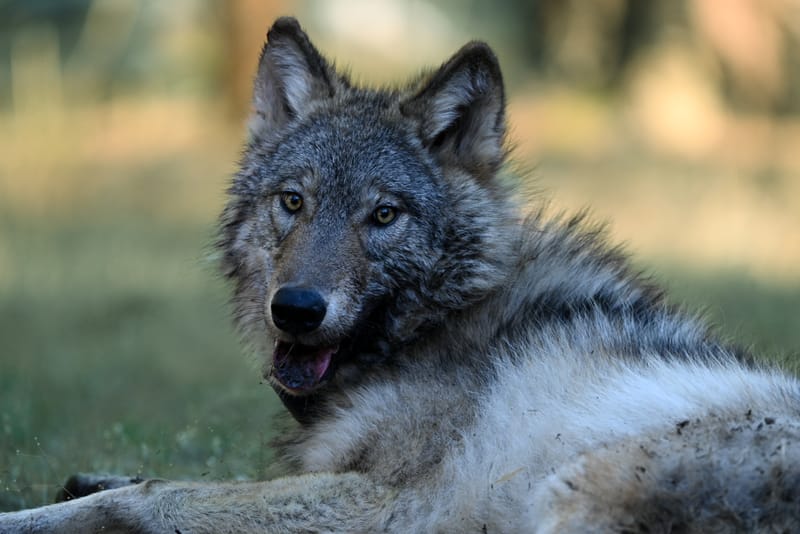
A photo of a California gray wolf, protected by the state as an endangered species, taken in January 2026.
California Department of Fish and Wildlife
SACRAMENTO — The Legislature gave final approval on Thursday to a bill that would let a person kill an animal protected under the California Endangered Species Act to stop an attack on a human being without facing the fines and jail time state law now allows. The Assembly voted 61 to 1 to accept the changes the Senate made to Assembly Bill 1722, the last step the Legislature had to take, and the measure now goes to Governor Gavin Newsom. Presenting the bill for the final vote, Assemblywoman Heather Hadwick said it had received bipartisan support and asked her colleagues for an aye vote. Hadwick, a Republican whose First Assembly District covers Sierra County and much of northeastern California, wrote the bill, which would create the first self-defense exception written into the state act.
As the law stands, the act forbids anyone from taking a species the California Fish and Game Commission has listed as endangered or threatened, and the prohibition reaches candidate species awaiting a listing decision as well. State law defines take broadly, covering hunting, pursuing, catching, capturing, or killing an animal, or attempting to do so. A violation carries a fine of $25,000 to $50,000, up to a year in county jail, or both. The act allows take under permits issued for research and for projects that minimize and mitigate their harm, but it offers nothing to a person who kills a listed animal to save a life.
Hadwick has argued the gap leaves rural residents exposed. She told the Mountain Messenger in April that her bill “takes something that exists on the federal level and applies it to California to ensure the self-defense standard applies when someone must defend themselves or a loved one against a large predator protected under the California Endangered Species Act.” She added that “under this bill, a person can defend themselves or their family from bodily harm inflicted by an endangered species, including gray wolves who are dually protected.” In a written statement to an Assembly committee, she said people who act to protect themselves or others from bodily harm “may still face civil, administrative, or even criminal penalties.”
To escape civil and administrative penalties, a person would have to show by a preponderance of the evidence that “necessary and reasonable force” was used in self defense, to protect a family member, or to defend any other individual from immediate bodily harm from an endangered, threatened, or candidate species. The same showing would serve as a defense against criminal prosecution. Anyone who kills or tries to kill a listed animal under the exception would have to notify the Department of Fish and Wildlife within 24 hours, and the Legislative Counsel’s digest states that failing to report would itself be a crime.
In an April analysis, the Assembly Water, Parks and Wildlife Committee wrote that an “individual” is generally understood to mean a natural human person, so the bill “could not be interpreted to include pets, livestock, or other property.” Shooting a wolf that is going after cattle or a dog would remain a crime, and the wildlife department tells residents it is illegal even to shoot at or attempt to injure a wolf attacking a dog.
For the northern Sierra, the gray wolf is the listed animal most likely to bring the exception into play. Wolves have been protected under both the state and federal endangered species acts since 2014, and the department’s July report on known wolves places the Long Valley pack in eastern Sierra County, eastern Plumas County, and southern Lassen County. Adult wolves continue to turn up in and around Sierra Valley, according to the department’s most recent quarterly update. Department guidance says wolves rarely pose a direct threat to people and generally fear and avoid them, though depredation of cattle remains.
Two animals that come up in the same conversations would not be affected. Mountain lions have their own statute, which says a person who kills or injures one in self-defense or in defense of others is not guilty of a violation. Black bears are managed as game animals, so the rules governing them would not change.
The two floor votes this week were the closest thing to opposition the bill has drawn. Assemblyman Alex Lee, a Democrat who represents parts of Alameda and Santa Clara counties, cast the lone no vote on Thursday. In the Senate on Wednesday, the bill passed 34 to 1, with Senator Henry Stern, a Democrat whose district runs from Los Angeles to Ventura County, opposed and five senators not voting. The Mountain Messenger has reached out to Stern’s office for comment but has not yet received a response. The Assembly passed the measure 64 to 0 in May, and it cleared three Senate committees without a no vote, among them a June vote in the Senate Natural Resources and Water Committee in which Stern voted yes.
The standard the bill would apply has narrowed since February. Early versions borrowed the federal Endangered Species Act’s test, which excuses the killing of a federally listed animal when the defendant acted on a “good faith belief” that a person needed protection — a subjective measure the Assembly committee warned was looser than California’s own rules for self-defense. Amendments replaced it with the requirement of necessary and reasonable force against immediate bodily harm, and a Senate amendment on June 25 confined the exception to species listed under the state act.
Committee staff and conservation groups have questioned whether the exception is needed at all. The April analysis said no examples of a listed species being killed in self-defense had been provided to the committee or found by it, and described the bill as an answer to a hypothetical problem. The Center for Biological Diversity and Defenders of Wildlife registered oppose-unless-amended positions, and opponents wrote that long-standing law already governs self-defense against wildlife, “including endangered species, so that it is not clear why there is even a need for this bill.” The California Rifle and Pistol Association supported the measure, writing that Californians who lawfully carry firearms “in bear or predator country” should not be “treated as poachers or criminals after defending human life.”
The bill will now be enrolled and sent to the governor. Under the Legislature’s calendar for the year, he has until September 30 to sign or veto measures passed by August 31. A bill signed without an urgency clause takes effect the following January 1, and Assembly Bill 1722 directs the wildlife department to report to the Legislature by July 1, 2032 on the species, dates, and approximate locations of the killings reported to it from 2027 through 2031.
Editor’s Note: The assembly concurrence vote total was updated to reflect the official record.