In the Valley of the Wolves
Nearly one hundred cattle dead in a valley where wolves are protected.
10 min read
Instinct, I am told. Their intense hunger will soon be sated. The moon’s celestial arc and their keen noses tell them so. A nonexistent winter heralds a summer of smoke and drought. Limited rainfall has somehow given way to meadows of emerald green. Surrounding granite mountains emerge from blankets of fragrant pine forests silently making their way towards the summit. In the foreground, hawks and blackbirds wrestle, their screams reverberating in the cool morning air.
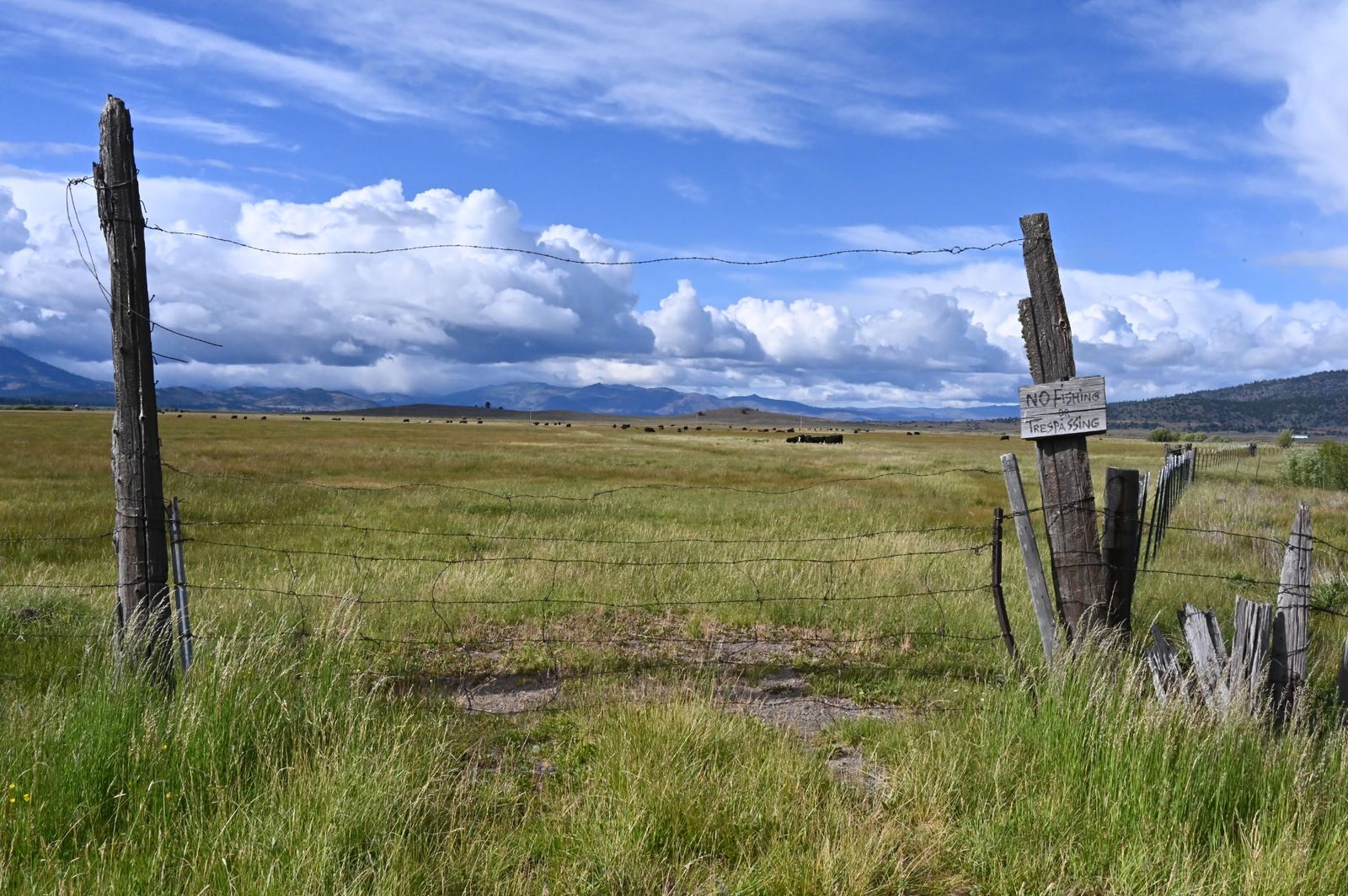
Eons ago, an ancient grassland’s fertile valley emerged from receding lake waters to sit almost a mile high above sea level. It is the largest alpine wetland in North America and the headwaters for the western-flowing Feather River. Tucked quietly into a remote corner of California just east of the “Lost Sierras” and one county north of Truckee, hides a unique world less than an hour from Reno, bustling Sierra Nevada ski towns and enduring Lake Tahoe boating enclaves.
With its provincial ranching hamlets left over from the lumber and gold mining era, the Sierra Valley offers a treasured insight into a once bridled frontier now easily forgotten by the modern world. On closer look, this legacy of Western ranching culture wraps itself around an insulated rural lifestyle few outsiders ever get to experience.
Smart county planning has allowed this paradise to remain intact. Community foresight and wisdom have given way to land trust protections, which brought any sort of building frenzy to a standstill. Unlike many mountain towns, historical preservationists got it right. In a few weeks, cattle will fill up these grasslands and give the impression that all is well in this alpine valley.
Once again, nothing is what it seems. Languishing in the grasses, barely visible, are packs of starving and lethal Gray Wolves, accomplished apex predators who wander through looking for prey. Over the last two decades, the Gray Wolves have slowly made their way down from Canada, Montana, Idaho, and Yellowstone to form packs in Northern California. Unfortunately, without enough natural prey to quiet their hunger, they will once again have unfettered access to a forbidden and off-limits animal that will eventually jeopardize their future: Artiodactyla::Bovidae::The Cow.
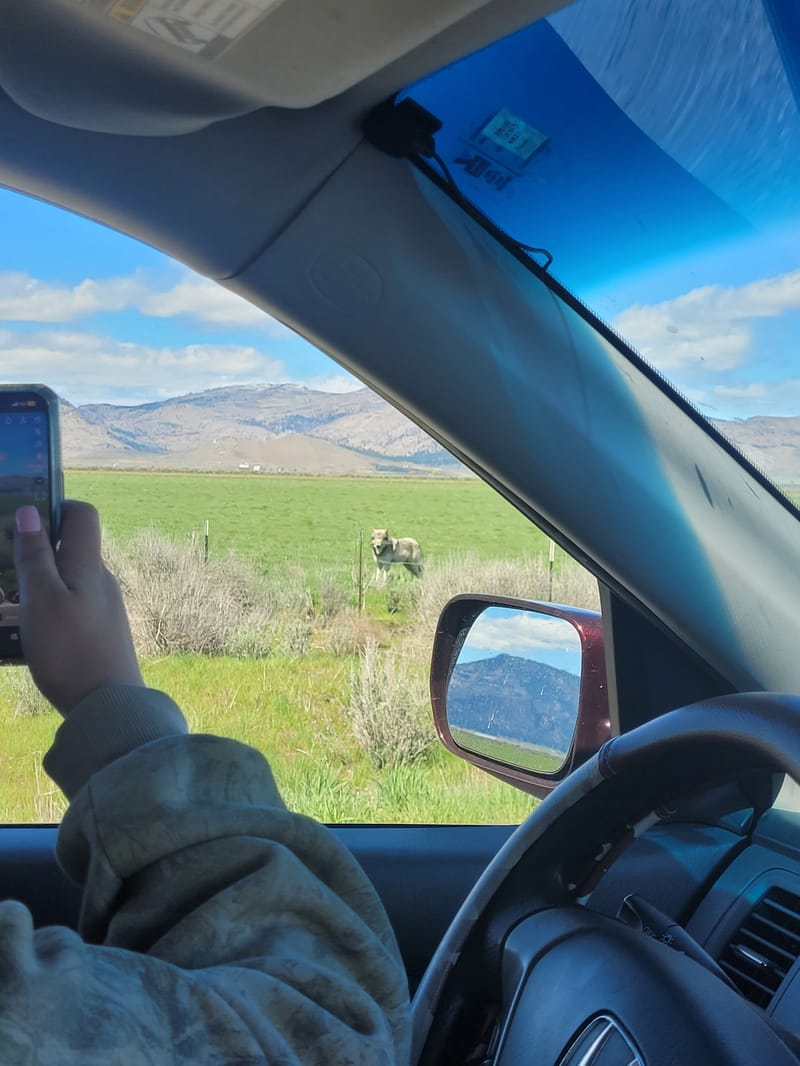
A wolf discovered in a Sierra Valley field.
Paul Roen
The return of the Gray Wolf to California in 2011, after an absence of almost a century, has set off hair-raising, frightening, and bloody standoffs that are still, fifteen years later, nowhere near resolved. Recently, after a long year of nightly kills in the Sierra Valley in 2025, the Gray Wolf emerged victoriously. By killing almost 100 head of cattle, they set the stage for the eventual removal of one of their own, four members of the Beyo Seyem pack.
Studied as part of a wolf project at a prestigious university, these wolves eventually cursed their own existence, further underlining a badly managed wolf-cattle conflict and a dangerously compelling urban-wildlife interface which has stated the obvious. Without enough natural prey to sustain them, the wolves have had no choice but to turn to cattle for sustenance.
After a long summer, four members of the Beyo Seyem pack were no more. They had killed 100 cows in the Sierra Valley and terrified ranching families who suffered financial, emotional, and spiritual harm as they watched their cows die horrific deaths. An entire war was fought and lost in an area once known for a halcyon way of life. The poor, lumbering bovine was clearly done for, obliterated in the most violent of circumstances, eaten alive by the bone-crushing jaws of these apex predators who clearly reigned supreme. Their lethal escapades, despite months of expensive efforts by state and local agencies to stop them, came to an unfortunate end in October of 2025.
It is estimated that the wolves’ lethal behaviors cost this ranching community millions of dollars. Although there is a compensation program which dispenses funds when available, for each confirmed cow/calf killed by a wolf, it does not reimburse for future calves, perhaps 10-12, in the lifetime of the cow. The loss of an $8000 cow is just that and not $80,000-$100,000 for the lifetime production of each cow’s offspring. In addition, ranchers have expended unreimbursed funds for drones, night vision binoculars, and other expensive tools to protect their herds. In broader terms, the stress on cattle of having this apex predator roaming about also contributes to low birth rates, low body weight, and a general sense of unease within the cow herd. The toll that it has taken on the ranchers’ mental health has been enormous, yet the rewilding folks never seem to speak about this aspect.
There is a growing movement within the rewilding communities who have, in both covert and direct ways, demonstrated an attitude that ranchers are “in the way” of restoring the natural world. Where there are cows, instead there should be bison. Get rid of fences, some say. Let the wolves, cougars, and bears roam where they please. Let them consume what they want, even if it happens to be cattle, and all will be restored in the natural world.
Without shouting it from the mountaintops that “the wilderness has been tamed” so to speak, real estate development in nearby areas offers up, instead, pristine, manipulated, and curated versions of the wilderness experience. With their descriptively alluring gated communities advertised as “safe” in the middle of “the forest,” the situation becomes even more ludicrous. Wolves, bears, and cougars running across golf courses as they try to get to prey and dens underscore unchecked urban expansion that has crashed into and obliterated food sources for wildlife. These starving predators are forced to enter more urban environments regularly and look for any type of available food: cats, dogs, chickens, and any other backyard pets.
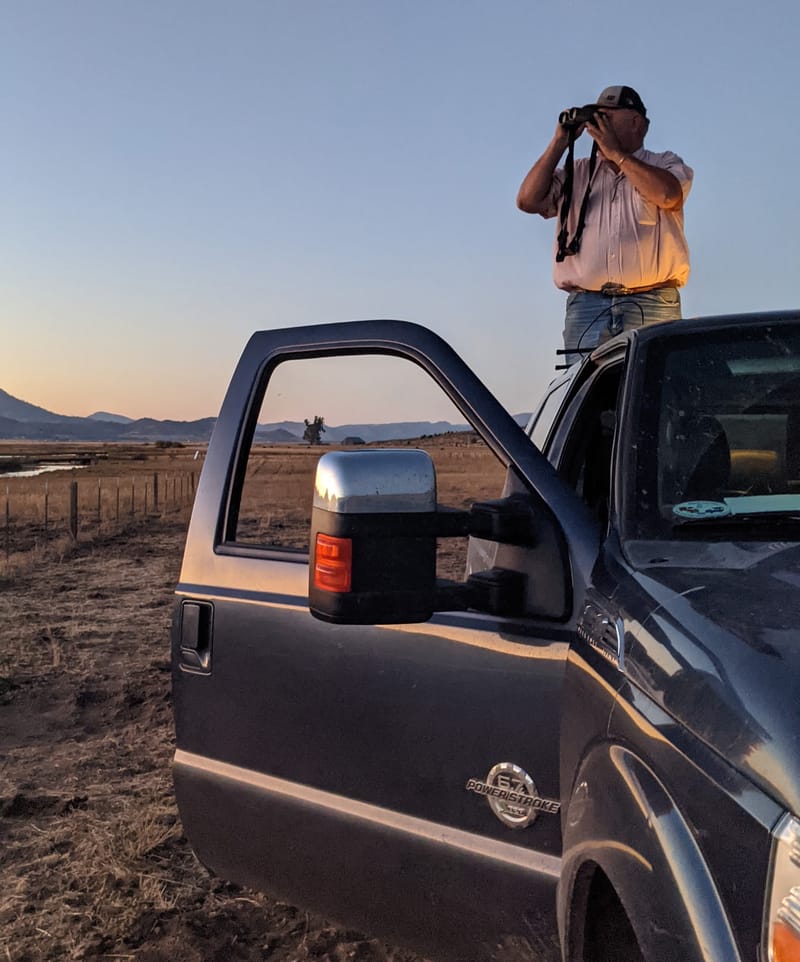
Sierra County Supervisor Paul Roen surveys the valley.
Tracy Schohr
If our pets aren’t safe, are we safe? Will the wolves eventually eat us too? Conversations at the dinner table now morph into a cascade of fear frenzy for city dwellers who are unhabituated to interacting with wildlife. From the sensationalized hoopla on the evening news to the reality that the backyard chickens and a neighborhood dog just disappeared, a mental vulnerability for the uninitiated starts to unfold. Just like ranchers, urban dwellers also lay awake at night wondering if they are safe from wild animals who seek food for survival as they witness their neighborhood pets disappearing.
Sometimes the awareness that these predators who have been invisibly living among them on the planet for the last millennia comes front and center. A long-awaited shift in consciousness, perhaps? To say that losing the wilderness in your soul has come at a steep price is just the beginning. If we don’t embark on a better plan for our apex predators whose habitat depends upon our understanding of their needs, then the future of wildlife in our wilderness only promises violent and brutal interactions ahead.
Expertly woven into this false narrative that is continually fostered by state and federal agencies, academic wolf projects, and NGOs, is the presumption that starving apex predators can abstain from attacking grazing cows if ranchers would just employ enough fladry or use more flashing lights and rock music. The truth of the matter is that there is no scaring off wolves. Their hunger overrides their fear of man, and they return to hunt and kill to feed their packs. Ranchers live in daily fear that their livelihoods will be decimated by a legally protected apex predator which no one is allowed to harm, harass, or kill. The harsh reality is this: Shoot a wolf, go to prison. The Endangered Species Act is quite clear about what happens when one takes matters into their own hands.
Whoever thought that the current wolf population in California could solve a hundred-year absence in the rewilding of America has not taken a deep dive into the wolf-cattle conflict or studied the brutal effects of cohabitation. The presumption that the ranchers aren’t “doing enough” starts to feel more like victim-blaming. No long-term effective deterrent exists within the parameters of the Endangered Species Act. There must be a better way of implementing a thoughtful and well-planned strategy for creating cohabitation with the ranching communities. Thirty-seven million more people now inhabit California since the wolves were last here. Without enough agency manpower to manage the wolf packs and increase ungulate(deer) populations, the scales have tipped in favor of the wolves. Unless a better plan is in place, the situation will not end well for the wolves or the ranchers.
The Wolves in My Dreams Are the Wolves At My Door…
A rancher’s perspective.
Each night, sleep eludes me. From across the room, a dappled moonlight filters in through sheer white curtains now perfectly still in the night air. I toss and turn. My anxiety is never far away. Tonight I am reminded that we are once again in the season of the wolf. The warm night carries hints of jasmine and newly cut grass. Outside, a vague sliver of black sky frames my pasture and herd. From the leather chaise, where I end up most nights, I can sense the wolves, their silhouettes perfectly masked by the darkness and the tree line.
Wide awake, with no chance of restful slumber, I am now on full alert. At my feet, protective and vigilant, two of our livestock guard dogs are at the ready. Listening to anything resembling a suspicious sound, they make soft whimpering noises to reassure me. Will another calf be lost to a midnight wolf attack?
I get up and wander down the creaking staircase. A quick glass of water and a furtive glance out the window. Nothing stirs. For now, just the normal sounds of night. A lone owl perches silently on a pine bough, occasionally making a soft scratching noise, barely audible, against the old parlor window. For all this mangled silence and pensive wondering, I don’t need to see them to know that they are out there. Watching. Waiting.
I climb the stairs to get some shuteye before my rooster announces the dawn. A quick mental calculation. So far, the wolves have wiped out 50 of my calves and cows. Some were viciously eaten in fits of extreme hunger, but most were just joy-killed, then left to suffer for other predators to finish the job.
As I fall into a fitful dream state, I see how these wolves are the perfect assassins, expert killing machines with thousands of years of practice, expertly woven into their genetic makeup. The realization makes me shudder. My cattle and I don’t stand a chance.
Roaming our valley day and night, slinking through fences, creeping around homes and barns and crouching in tall grass before they head into the forest, these wolves have figured out their targets. Why chase rabbits or pronghorn deer? The defenseless and slow-moving bovine offers a much better meal for less calories spent.
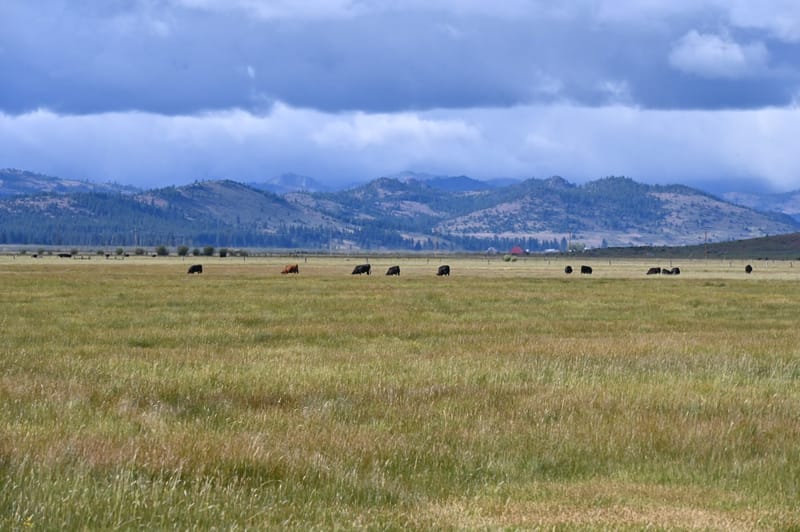
Tracy Schohr
As I drive through the valley checking on my herd, I can see them in the early morning light. By the side of the road, in the fields, slightly hidden or exposed, without fear of humans and cars, their gray-white and dark furs deftly moving through the spring grasses. Suddenly one stops and arches his neck; a long, eerie howl flies through my open window, announcing that he is king and unafraid.
I know why these apex predators were hunted to extinction in the early 1900’s. During my grandfather’s era, they decimated cattle and ungulates(deer) with speed and precision. Fellow ranchers saw their future wiped out if they didn’t solve the “wolf problem”. And they did. The last wolf was killed in 1924. Almost a hundred years passed before the howl of the wolf was heard again in ranching communities and rural environments in California.
The rewilding of America proponents will have you believe that the well-being of apex predators is the only topic to consider in the survival of the planet. Important, but not at the expense of the ranching world. Without adequate prey to satisfy their immense hunger, the wolves are, once again, getting themselves into a world of trouble. Their cattle killing sprees and night-time rampages have created an embattled future for them, one which could end in their permanent removal. So far, they have been unstoppable. State and federal laws protect them completely. The warning clarion is repeated at every Ag meeting; a bullet brings prison time. The ranchers are told: Don’t Even Think About It. In dreams the ranchers plan their demise, but the reality is that they are helpless to protect their cattle, farm animals and livelihoods. The cards are stacked too high against them. Non-lethal methods such as fladry, loudspeakers, etc. are clearly useless against these clever animals.
My family has farmed and ranched here for five generations. It is all we know. The way that the world is now, I could never forgive myself if we sold our ranch. It is just too late for us to start over in another profession. Here my family is safe. My kids are safe on my property, or so I thought. The look on my wife’s face when my daughter runs out to the chicken coop to grab eggs. Will she return?
I toss and turn every night wondering how I will explain to my family that our future is uncertain. Until this last summer we lived a peaceful life. Now we battle predators frenzied from starvation. With no end to their attacks on our cattle and without adequate prey, how could they ever co-exist peacefully in our ranching communities?