Katie's Sightings
2 min read
A Day on the North Yuba River!
 North Yuba River - 8/23/23
This week I finally spent a day on the North Yuba River that runs through our neighborhood. It's been a while since I had the time to linger on the river. It is such a beautiful river, clear glass-green in color, running over miles and miles of water-sculpted bedrock and river rocks, bordered by willows, grasses, and giant-leaved Indian Rhubarb, surrounded by conifer covered ridges, and filled with wildlife of all types!
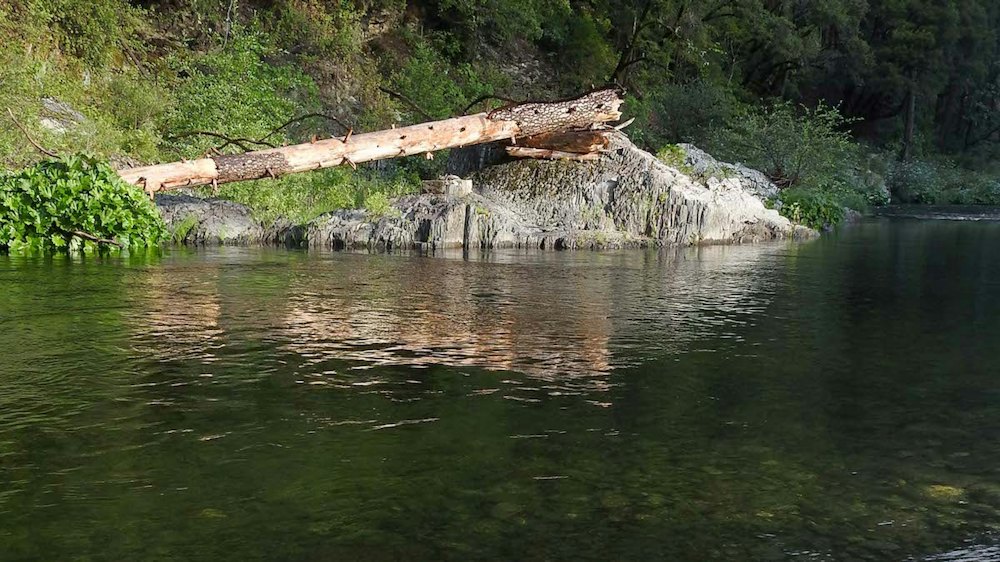
For several years there has been a dead tree trunk in the river, down-river from the bridge. In the high water of last winter it got washed downriver and ended up on top of this big bedrock boulder! I've seen Canada Geese on this rock, as well as Spotted Sandpipers, and Black Phoebes. River Otters are occasionally present here, as the water is deep and trout are sometimes abundant. Almost daily in the summer, Common Mergansers swim by with their ducklings. Kingfishers and Ospreys often fly overhead. It is just one of the many magical spots on the North Yuba River and it has been our swimming hole for 30+ years! We affectionately call it "Big Rock"!
River Birds
 Cooper's Hawk - Accipiter cooperii
On the morning of my day on the river, I was astounded to see a Cooper's Hawk land on the dead tree trunk perched on Big Rock! WOW! It actually stayed on the log for 20 seconds, looking all around before it took off! I've never seen one on the river before. Cooper's Hawks are uncommon and mainly live in dense forests, but can also be found in open fields. Their main food is other large birds such as doves, pigeons and robins. They will also prey on squirrels, rabbits, mice and reptiles.
 Cooper's Hawk - Accipiter cooperii
They can readily pursue prey through dense thickets or forests. Their short wings and rudder-like tail makes them able to make quick, sharp turns. They grab prey with their feet, and will drown or squeeze them to death! They can see 2-3 times farther than humans! It's a rare event that a Cooper's Hawk doesn't catch its prey, unless a tree intervenes! Almost one fourth of the museum specimen Cooper's Hawks that have been examined, have breastbones that have healed fractures! These hawks are uncommonly seen in our area, although they live here year-round. How lucky to see this beautiful raptor on the river!
Your questions and comments are appreciated. Please feel free to email me at northyubanaturalist@gmail.com. Thanks!