Katie's Sightings
2 min read
Local Ponds & Ducks!
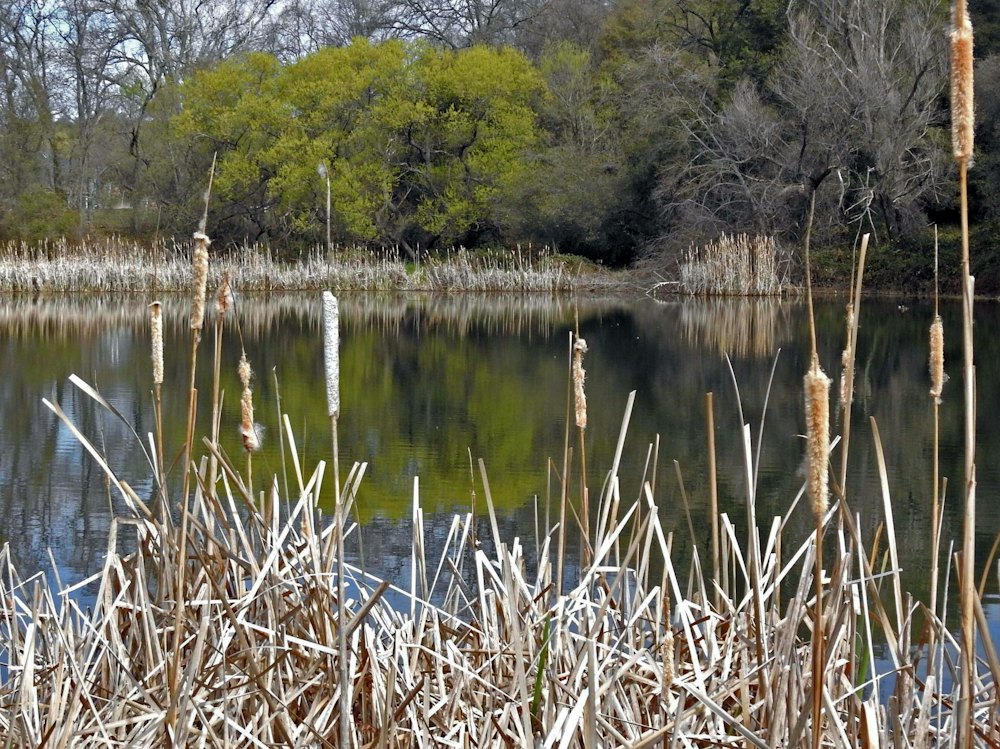
Wood Duck Pond
This week I drove down to a pond that I only frequent in the winter. It’s located about an hour from our home, down in the upper foothills. I had my fingers crossed that there would be some Wood Ducks present, like the previous four years. When I arrived at the pond it looked mostly unoccupied, but then at the far northern end I spotted some Wood Ducks in full view! I only got a few quick photos of them before they hid themselves in the tules that bordered the pond. Yay, Wood Ducks! I was delighted to see them once again!
 Wood Duck (male) — Aix sponsa
The males are so beautifully colored and strikingly marked! The females, like most female birds, are way less colorful and more camouflaged. Wood Ducks feed on nuts (especially acorns), seeds, algae and other water plants, butterflies and moths, beetles and insects, ants, dragonflies, slugs, and snails.
Wood Ducks live in California year-round, from the coast to the foothills. They nest in the foothills of the western Sierra, usually below 3,000' - 4,000' in elevation. They are tree-cavity nesters, but do not use abandoned woodpecker cavities, except for the large ones made by Pileated Woodpeckers. They mainly use natural cavities that have formed in a mature tree, often where a branch has broken off due to heart rot.
 Wood Duck — Aix sponsa
The Wood Duck is the only North American duck that regularly produces two broods in one 5-6 month breeding season! The female lays 10-13 eggs in her feather-lined nest, anytime between March and June. The incubation period is 30 days. The ducklings are born precocial, and leave the nest usually within 24 hours after hatching. They jump to the ground and their mother leads them to water, where they immediately start feeding! After approximately 30 days, the female abandons the young ducklings, to start another brood! This pond is in the right elevation/location for these ducks to nest, and I have seen young Wood Ducks here in the past!
Joubert’s Diggins
 Joubert’s Diggins, February 2nd, 2024I check the ponds in the above photo at least once a week. Lately there has been an increase in the waterfowl population, as well as the arrival of two new species!
Your questions and comments are appreciated. Please feel free to email me at northyubanaturalist@gmail.com. Thanks!