Nevada County Adopts 2025 California Building Standards Code
Nevada County updates building codes, impacting future construction requirements.
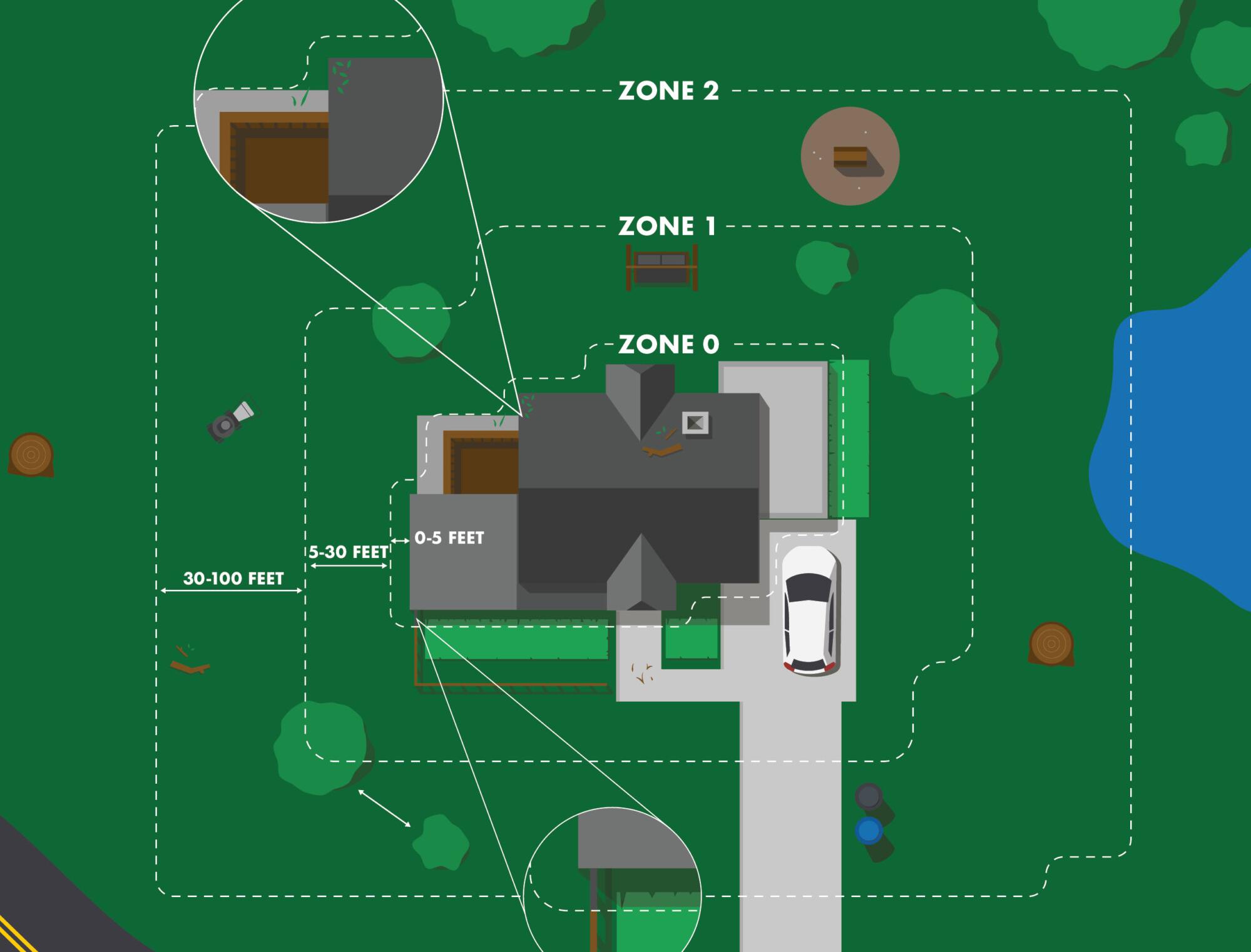
An illustration of defensible space zones. Credit: Cal Fire.
NEVADA CITY — On December 16, the Nevada County Board of Supervisors unanimously approved an ordinance amending Title 14 of the county code to adopt the 2025 California Building Standards Code. The updated code takes effect on January 1, 2026, and applies to all building permit applications submitted on or after that date. County building department staff presented the changes, emphasizing safety enhancements while noting potential impacts on construction costs.
A prominent addition in the 2025 code cycle is the creation of a standalone California Wildland-Urban Interface Code, designated as Part 7 of Title 24. This new section consolidates and strengthens previous fire-hardening requirements scattered across other parts of the code. The standards focus on protecting structures in wildfire-prone areas by improving resistance to embers and flames.
Specific requirements outlined in the county presentation include the use of noncombustible and corrosion-resistant materials for ridge vents and vents in roof decks. Gable-end and dormer vents must be placed at least 10 feet from property lines. Underfloor vents should be installed as low as practically possible to reduce ember entry, and fascia boards must consist of ignition-resistant material or have a minimum thickness of 2 inches.
Nick McBurney, the county’s supervising plans examiner, clarified during the meeting that these Wildland-Urban Interface standards apply solely to new construction. Renovations, additions, and alterations to existing structures remain exempt from the new provisions. The code also mandates fuel management and defensible space around properties to further reduce wildfire risks.
Other significant updates involve revised snow load calculations using the American Society of Civil Engineers Hazard Tool. Residential and accessory structures face approximately a 50 percent increase in required snow loads countywide, while commercial buildings may see increases of 100 percent or more. These changes will likely raise construction costs through larger footings, beams, and rafters, and will require engineered designs in areas at roughly 2,500 feet elevation, where prescriptive tables were previously sufficient up to 3,000 feet.
Assembly Bill 130 provides some relief by imposing a six-year moratorium on most new residential code changes, with exceptions for fire hardening and emergencies. The bill also extends the validity of approved master and model plans to 10 years. Nevada County’s affordable housing master plans, developed with regional partners, now remain usable without updates until approximately 2032, continuing to support lower-cost housing options.
Building Director George Schureck noted that the 2025 code cycle has fewer rural impacts than previous updates, with many new provisions targeting high-rise and urban settings. The department plans to update its website, handouts, and checklists, and will present the changes to the Nevada County Contractors Association and the local Realtors Association. All 2025 codes are available for free public viewing at https://www.dgs.ca.gov/BSC/Codes.
Supervisors acknowledged the tension between enhanced safety measures and housing affordability goals during discussion. The ordinance passed without opposition after no public comment was made. Residents planning new construction after January 1, 2026, should consult the county building department for guidance on compliance.