Nevada County School District Plans Sawmill Expansion
CAL FIRE also offers Feather River College $906,620 for fire training.
3 min read
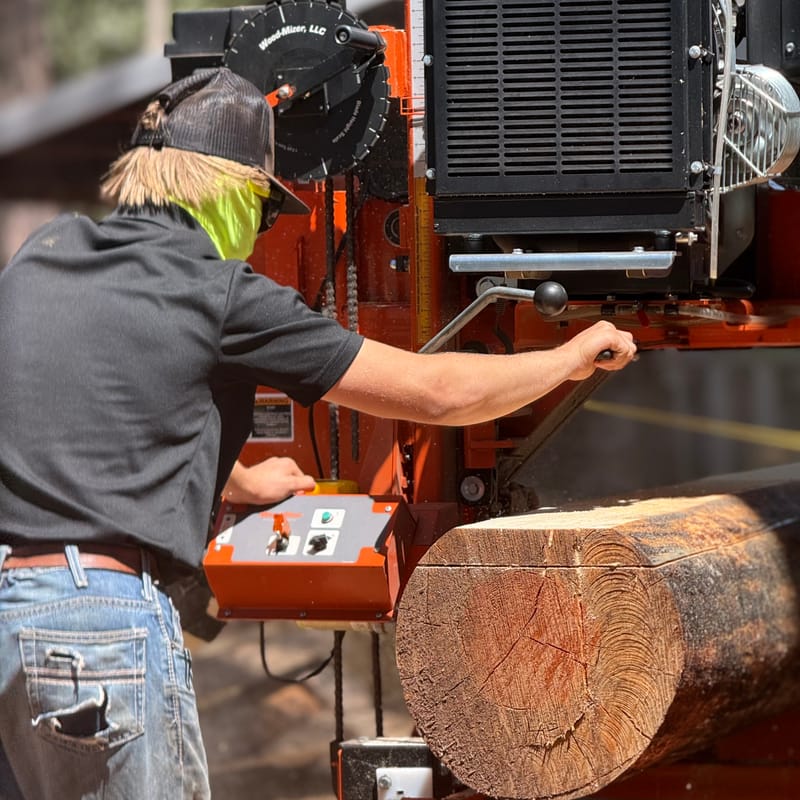
An intern operates Nevada Joint Union High School District’s sawmill.
Ellen Van Noy, NJUHSD
GRASS VALLEY — Nevada Joint Union High School District plans to expand its ranch sawmill with an $817,242 state grant offer, aiming to produce all the lumber its schools use while giving students experience turning logs into finished products.
The California Department of Forestry and Fire Protection, known as CAL FIRE, offered the funding for the district’s Sierra Foothills Agriculture Workforce Development and Mill project. Its award-offer roster also lists $906,620 for Feather River Community College District’s Higher Education Fire Training program.
Ranch coordinator Ellen Van Noy says the district’s existing mill is at full capacity. Two paid interns and two adults help run it at the district’s 86-acre ranch. Classes visit throughout the school year, and about 95% of the lumber produced goes into construction trades, agriculture, and other programs on district campuses.
Van Noy says the expansion is intended to help the mill pay for itself over time and offset district costs. “It also teaches students how an industry works from start to finish, from the log to the finished product,” she wrote.
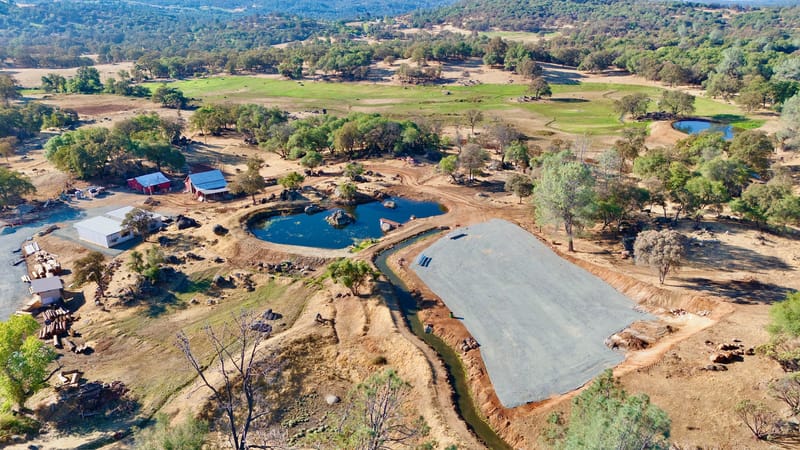
“The Ranch,” a Nevada Union-owned property near Grass Valley where the mill is stationed.
Mike Ybarra, Hansen Brothers
The proposed Wood-Mizer production line would include an electric industrial sawmill with a powered 20-foot log deck, an edger to trim boards to finished widths, and equipment to move lumber and carry away sawdust and waste.
A drying kiln housed in a 20-foot shipping container would let the district dry lumber on site. A four-sided moulder would shape wood into finished products such as trim and siding. Blade-sharpening and maintenance equipment would help students learn to maintain the mill as well as operate it.
Van Noy said the grant would also cover installation and staff training by Wood-Mizer technicians, along with continued daily instruction from a professional sawyer. Students would build small kilns in shop classes to turn leftover wood into biochar, a form of charcoal, and the district plans workshops with the Nevada County Resource Conservation District for students and community members.
The district expects to sign its grant agreement this fall, then spend about the first year on environmental review and expansion of the existing sawmill area, Van Noy said. Equipment delivery and installation would follow once the site is ready. The state’s grant guidelines require completion by September 30, 2030.
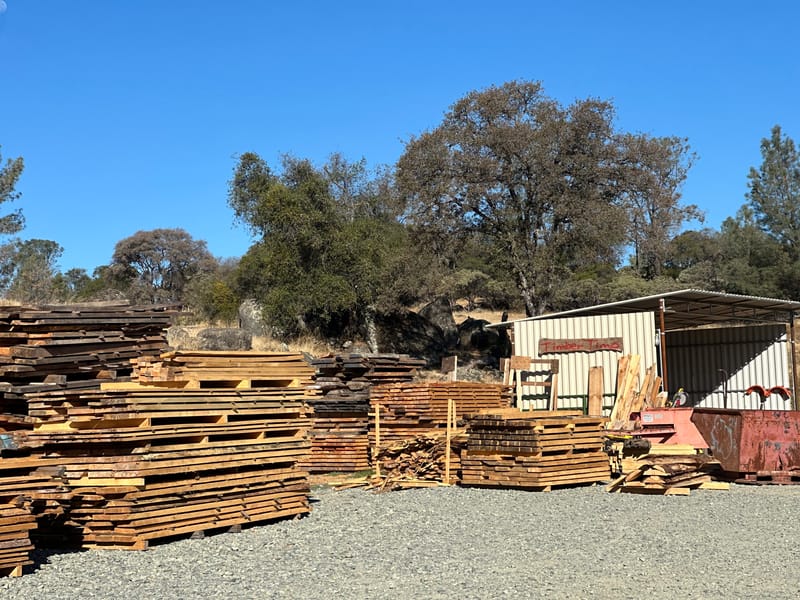
Lumber produced by the district’s mill.
Ellen Van Noy, NJUHSD
Training would continue on the existing mill during construction. The district plans to expand its Natural Resources and Forestry career pathway and internship program through 2030; CAL FIRE’s roster describes a goal of training up to 200 students annually, plus up to five paid interns.
At Feather River College, the $906,620 offer would build on a partnership with Chico State Enterprises to provide paid fire training for college students and recent graduates.
Feather River’s proposal calls for at least 100 participants, more than 400 certifications, and 15,000 training hours. The roster lists Sierra, Plumas, Lassen, Butte, and El Dorado as the project’s five counties.
The college’s paid-work program combines wildfire certification courses with work on prescribed burns, which use planned fire to manage vegetation. Students work alongside Chico State students on public and private lands while attending school. They are paid for courses and work on active burns.
Feather River and Chico State Enterprises would also help Lake Tahoe Community College develop a prescribed-fire training program. The proposal includes work with local tribes and training led by Indigenous fire practitioners.
The two offers total $1,723,862. They are among 17 projects in a $10 million round of Business and Workforce Development grants announced September 22. CAL FIRE said California Climate Investments funds the grants.