Newsom Orders Storm Readiness as Local Crews Prepare
Sierra County and Caltrans clear drainage and ready snow equipment.
3 min read
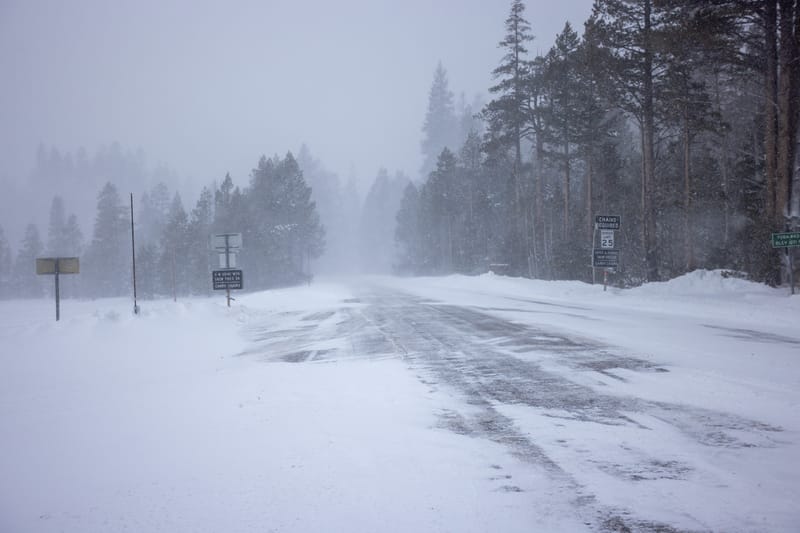
Harsh winter conditions at Yuba Pass during a 2024 storm.
LOST SIERRA — Road crews in Sierra and Plumas counties are clearing drainage channels, checking slopes, and preparing snow equipment for winter as Governor Gavin Newsom’s September 21 emergency proclamation directs state agencies to identify vulnerable roads and plan for severe storms.
The statewide order comes as El Niño, a warming of the tropical Pacific that influences weather patterns, strengthens. In its September 10 outlook, the National Weather Service Climate Prediction Center put the chance of a very strong event this fall and winter above 90 percent.
The proclamation gives the California Department of Transportation (Caltrans) and the California State Transportation Agency 30 days to identify the state’s transportation infrastructure most at risk from severe storms and submit a prioritized project list to the Governor’s Office of Emergency Services. Caltrans must also plan where to position crews, snow-removal equipment, traffic controls, and emergency communications supplies near vulnerable locations to maintain travel and restore access.
District 3, which serves Sierra and Nevada counties, is developing that project list. Public Information Officer Jeremy Linder says the list currently proposes drainage and culvert work along Interstate 80 near the Donner Summit Rest Area.
That proposal accompanies the district’s regular fall maintenance. Linder says crews are clearing drains and ditches, repairing pavement, removing hazardous trees, inspecting slopes, and addressing erosion. They are also repairing or replacing snow poles that mark the highway’s edges for winter operations.
Sierra County’s Director of Public Works and Transportation Josh Handel described a similar seasonal effort locally.
“As with any winter, staff has been hard at work clearing culverts and ditches countywide for months now,” Handel wrote. He said crews would identify potential problem locations over the next several weeks, prioritizing main routes to maintain safe access for first responders.
Caltrans District 2, which serves Plumas County and portions of Sierra County, is also carrying out its standard seasonal preparations, Public Information Officer Chris Woodward said in an interview. Those include repairing worn pavement, clearing drainage, checking bridges, and removing loose rock from slopes.
“We’re always preparing for a pretty harsh winter up here,” Woodward said.
In Plumas County, crews inspect slopes and tunnels along Highway 70 and look for roadway damage needing repair. Woodward said sections of the highway run between steep slopes or rock formations and the river, making them a focus of inspections before winter.
District 2 is preparing snow-removal equipment, ordering rental machinery for sites where winter road materials are stored, purchasing supplies, and hiring additional employees to help with plowing. Woodward said the district works with the National Weather Service on forecasts and coordinates more closely as individual storms approach.
Winter preparations also affect roads under construction. Asked about the Highway 70 paving work near Graeagle, Woodward said he expected any stretches where pavement had been removed to be paved again before winter weather so crews could plow them.
Beyond highways, the proclamation directs the Governor’s Office of Emergency Services to coordinate local planning and state-assistance requests, while the Department of Water Resources must position flood-fighting supplies such as sandbags and pumps. The California Environmental Protection Agency and California Natural Resources Agency must prioritize permits and technical help for local flood-preparation work.
For households, Sierra County emergency services coordinator LeTina Vanetti recommends keeping 7 to 10 days of food, water, necessary medications, and pet supplies on hand. She also urges residents to check backup heat and power sources and arrange a way to check in with neighbors, friends, or family before severe weather arrives.