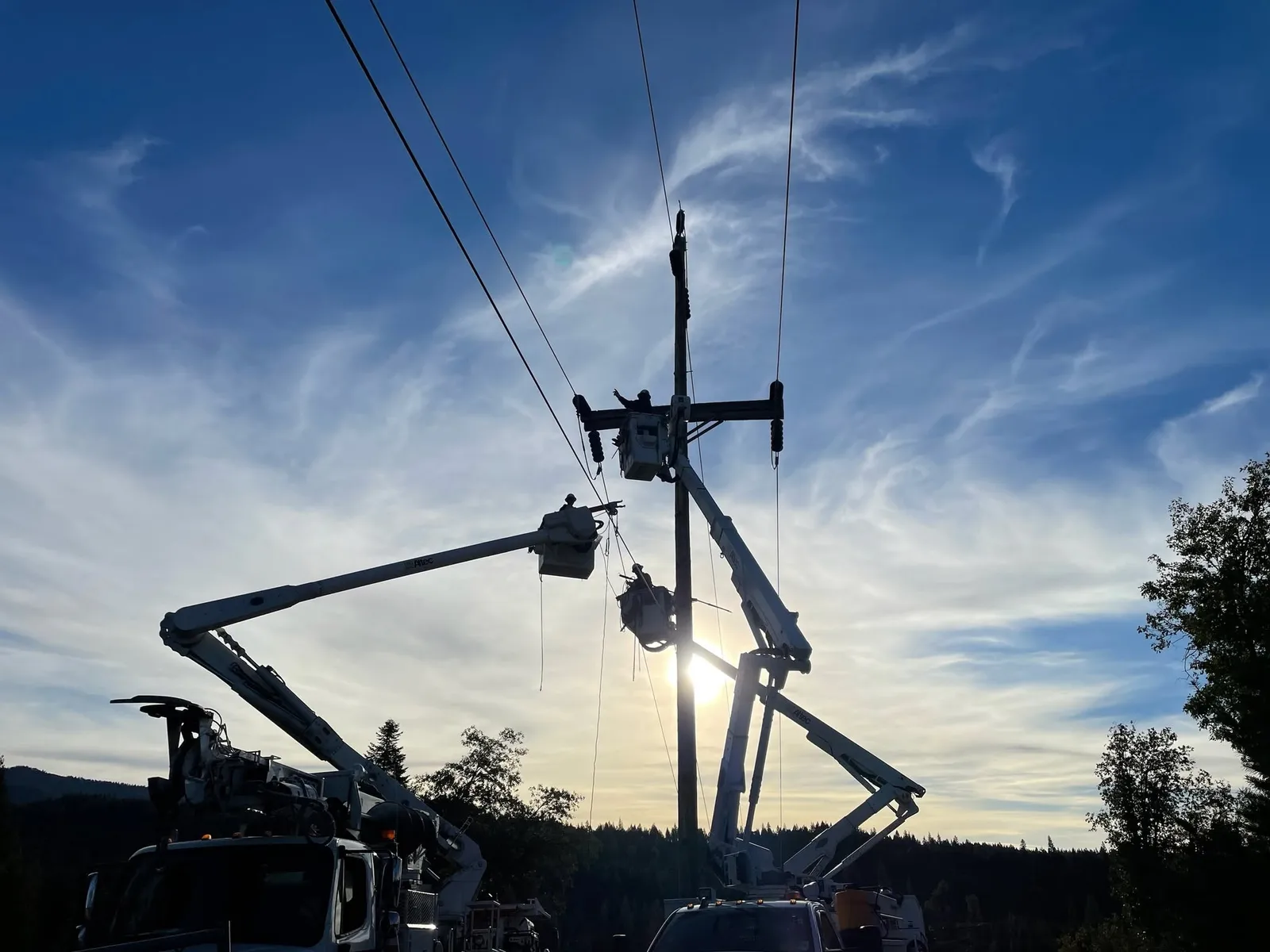
PSREC Seeks Input on Proposed 2027 Electric Rates
Two residential options divide the increase differently between monthly fees and electricity use.
4 min read
PORTOLA – Plumas-Sierra Rural Electric Cooperative proposes roughly 4% higher electric rates for January 2027 and is asking members which of two residential pricing designs they prefer.
For a household using 700 kilowatt-hours in a month, either option would add about $7 to its combined energy and fixed charges. The difference becomes more noticeable at lower or higher usage: one option puts the entire increase on electricity consumed, while the other adds $2 to the monthly fixed fee and raises the usage rate by a smaller amount.
PSREC is a member-owned, nonprofit cooperative founded to serve rural communities in Plumas, Sierra, and Lassen counties. Its seven elected directors govern the cooperative.
What Would Change on a Household Bill?
The cooperative’s published standard residential rates are $49.99 a month plus 17.78 cents per kilowatt-hour. The fixed charge helps pay for maintaining power lines, billing, and other costs of keeping service available, even when a member uses little electricity. The energy charge rises with consumption; a kilowatt-hour is the amount used by a 1,000-watt appliance running for an hour.
The two designs in PSREC’s October proposal are:
Option 1: Keep the $49.99 monthly fee and raise the energy rate to 18.78 cents per kilowatt-hour.
Option 2: Raise the monthly fee to $51.99 and the energy rate to 18.49 cents per kilowatt-hour.
The following examples compare the fixed fee plus energy charges for standard residential service at the same monthly usage. PSREC also lists a 3.9% public-benefits charge; that charge and any other applicable bill adjustments are additional.
200 kilowatt-hours: $85.55 currently; $87.55 under Option 1, a $2 increase; or $88.97 under Option 2, a $3.42 increase.
700 kilowatt-hours: $174.45 currently; $181.45 under Option 1, a $7 increase; or $181.42 under Option 2, a $6.97 increase.
1,500 kilowatt-hours: $316.69 currently; $331.69 under Option 1, a $15 increase; or $329.34 under Option 2, a $12.65 increase.
The two options are nearly equal at about 690 kilowatt-hours a month. Below that level, Option 1 costs less. Above it, Option 2 costs less because the savings from its lower energy price outweigh the extra $2 fixed fee.
That gives members a practical way to compare the proposals: look at the monthly kilowatt-hours on their own bills. A lightly used seasonal home would tend to pay less under Option 1. A household buying more electricity for heating or vehicle charging would tend to pay less under Option 2. The comparison turns on electricity purchased each month.
Under Option 1, every 100 kilowatt-hours would add $1 to the current energy charge. Under Option 2, the increase would be $2 a month plus 71 cents for each 100 kilowatt-hours. Those calculations also show why individual increases vary around the cooperative’s 4% description.
PSREC lists separate rate schedules for all-electric homes, net-metered solar accounts, and winter-assistance participants. Members on those schedules can ask the cooperative for a comparison using their rate class and usage. Management says small-commercial increases would parallel residential increases.
Members facing winter bills can also check PSREC’s Winter Rate Assistance Program, which discounts energy use from November through April for qualifying households. The cooperative lists an income limit of 190% of the federal poverty level and requires accounts to be current and in good standing. Members can call 530-832-4261 for application help and a rate comparison.
Why PSREC Wants an Increase
General Manager Bob Marshall cites rising equipment, materials, labor, and fuel costs. He says the California Air Resources Board determined PSREC’s natural-gas purchases meet the threshold for greenhouse-gas allowances, adding about $500,000 a year in costs tied to its High Desert generating plant. He says that expense alone accounts for roughly a 1.5% rate increase.
Under the state’s emissions-control program, regulated entities surrender allowances to cover their greenhouse-gas emissions, with limited use of offset credits, according to the air board’s explanation.
Marshall says Option 2 better reflects the cost of providing facilities. That approach collects more through the charge every household pays for maintaining service, while Option 1 collects the additional money through electricity use.
Who Decides, and How to Participate
The elected board has authority to adopt and amend rate schedules under PSREC’s bylaws. At a board meeting, the bylaws generally require at least four directors present and approval by a majority of those present. The proposed prices would take effect through board adoption; members’ feedback gives directors information about how the alternatives would affect their households. Management proposes applying the change to January 2027 usage billed at that month’s end.
The rate discussion is scheduled for Wednesday, November 4, at 6 PM, at PSREC headquarters and the Milford Community Center, with online participation and questions available. The headquarters is at 73233 State Route 70 in Portola. PSREC directs online participants to its website for the meeting link.
Members can email their preferred option and reasons to feedback@psrec.com, monitored by Executive Assistant Kaitlyn Beever. PSREC plans a separate meeting for irrigators and will notify them directly.