Southwest Sierra #84 – Chimney Sweep
3 min read
Last week, I shared the story of coming into cell coverage from a 3-day camping trip only to learn of “the thing that happened” (that is how we say it lately, speaking to fellow first responders). David, Kava and I hadn’t reached home yet when Alleghany Assistant Chief Ned Cusato reached us. We had circled around from Milton Lake to Bowman to come out on the Nevada County side, detouring through “town” (Grass Valley and Nevada City) to get groceries. As we came up through Pike it was especially poignant to see Chief Dorn’s message on the electronic sign in front of the Pike City Firehouse. It says: “sweeP chimney”. The capital “P” a typo. Nobody imagined that this would be his last message to the community.
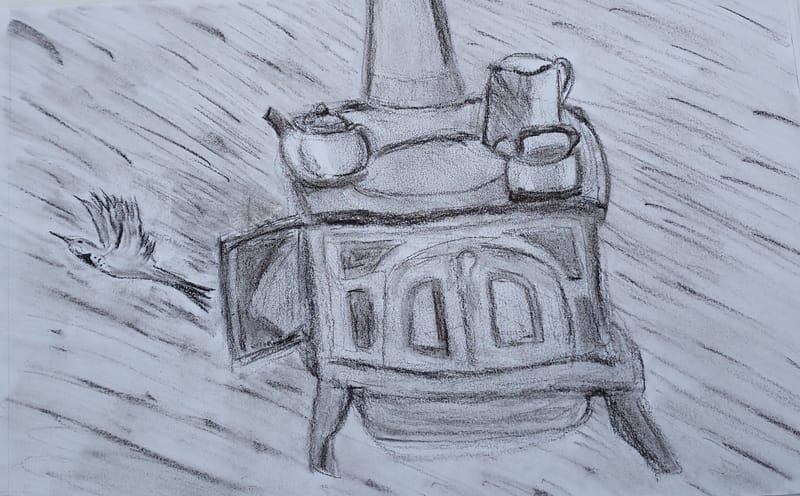
The inside of the house was very cold when we got home. While I was unpacking the truck, David opened the woodstove to build a fire and out flew a flicker! It crashed against the window where Mom’s angel wing begonia lives. David grabbed the bean pot, caught it and released it outside. I kept unpacking while he brought in wood and got a nice hot fire going. After the groceries were put away, we started to think about it. “How did that flicker (a pretty big bird) get in the stove?” It had to have flown down the chimney. Chimney swept by flicker!
Red Shafted Northern Flickers (caloptes auratus) are large members of the woodpecker family. According to a display at Grinding Rock State Park, their reddish/orange wing feathers were used ceremonially by several California tribes. The feathers were harvested by placing a funnel shaped basket over a nesting hole to trap a bird. A couple of wing feathers would be plucked, and the bird would be released.
These same birds are wreaking havoc on the siding of the cabin near our house. Approximately fifteen years ago, our son Wyatt re-sided it with cedar from a large tree that was infringing on Main Street. The County cut the tree, and since it was on our property we got to keep it. We hired a portable sawmill to cut as much one-inch-thick lumber as it would yield. Prior to this the cabin had wood shake siding. The flickers had many round holes in the old shake siding. When nesting season came, the new siding did not deter them. They went to work drilling new round doorways to access the same wall cavities that they have been nesting in for who knows how long. The cabin dates to at least 1865 and was used as a speakeasy during prohibition. The flickers’ nesting season lasts about a month. Sometimes they startle us, or we startle them. Going forward, red-winged flickers will always remind us of Chief Dorn and his free-flying spirit.