Supervisors Adopt Solid Waste Fee After Notice Confusion
The residential increase is $36.72 a year, not the $403.56 total.
9 min read
DOWNIEVILLE — The Sierra County Board of Supervisors adopted higher solid waste fees for the 2026-27 fiscal year on Tuesday, September 1, after a public hearing in which commenter after commenter described misreading the county’s own notice. Assistant Clerk of the Board Melissa Kinneer told supervisors that 170 written protests had arrived from the owners of the 2,103 parcels sent notices, roughly 8 percent, well short of the majority Proposition 218 requires to stop a fee.
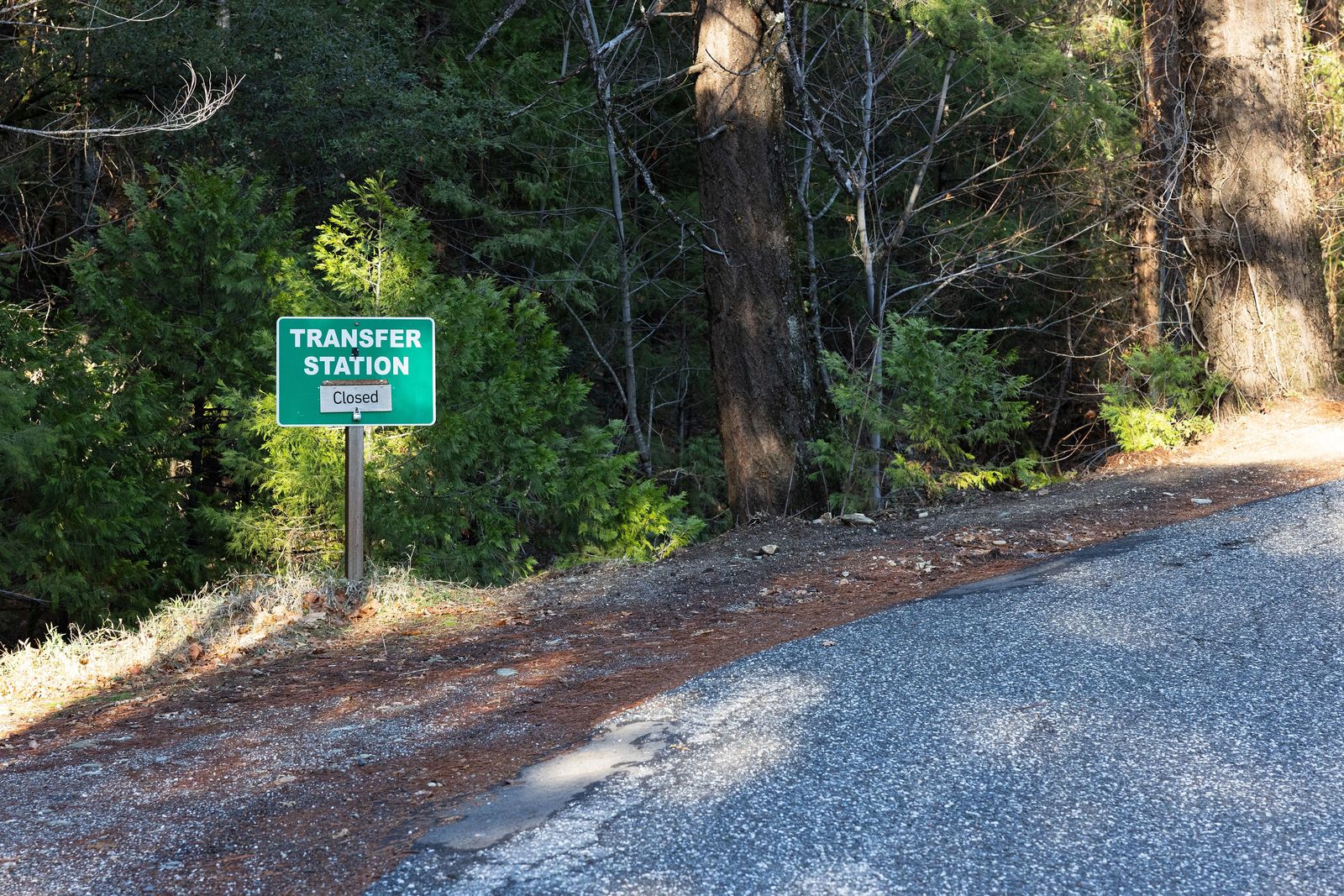
The board had approved the proposal at a special meeting on June 30, which set the protest period in motion. For a single dwelling unit, the fee rises from $366.84 to $403.56 a year, an increase of $36.72, or $3.06 a month. Every residential unit in the county is billed for the same 18 loose cubic yards of waste, according to the county’s Solid Waste Fee Administration, so the whole change comes from the rate charged per cubic yard, which rose from $20.38 to $22.42. Non-residential parcels pay the same $22.42 rate, applied to the volume their licensed hauler reported between April 1, 2025 and March 31, 2026. The fee buys disposal of customary household waste at the county’s five transfer stations — in Loyalton, Sattley, Sierra City, Ramshorn near Downieville, and Alleghany — and is charged in lieu of gate fees.
Neither the old fee nor the size of the increase appeared anywhere in the mailed notice. The Notice of Imposition of Solid Waste Fee told each owner the property “will be required to pay an annual fee in the amount of $403.56 (equivalent to $33.63 per month),” wording that protests in the board packet show owners reading as an entirely new charge stacked on top of what they already pay. The notice also told owners the fee covers the 2026-27 fiscal year and that, unless modified, it “will be the same in subsequent fiscal years.”
Kirk Uhrlaub of Sierra City wrote to the board twice, and his second letter, dated August 10, laid the problem out plainly. After talking with neighbors, he wrote, he had been told the charge was not a new fee at all but an increase to one already on his tax bill, and he asked the board whether that was right. The notice, he wrote, “never mentions the existing fee, never calls out an ‘increase,’ and instead is written as though this is a totally new, additional fee.” Uhrlaub, who had written in July that he approved of the fee and thought it made sense for county residents to contribute, added that if the change amounted to about $3 a month, “the information distributed to residents should probably say just that.”
The same misunderstanding filled the chambers. One property owner in the Greene Acres subdivision at Bassetts told supervisors he pays a private hauler $163 a quarter to empty three large containers at the home where he spends most of his time. “And all I get up here is a transfer station,” he said. “I get nothing picked up locally.” He called the figure on the notice ridiculous and suggested the grand jury look into the county’s costs.
Donna Johnson, who identified herself as representing the Greene Acres property owners association, said the subdivision arranges its own garbage pickup eight months a year and pressed the board on how the charge was calculated. Later in the hearing she asked supervisors to say plainly what the increase actually was. Told it came to about $36 a year, she answered, “I don’t think that’s the way any of our residents read it,” adding that had she known she would likely not have made the trip to Downieville.
Chair Paul Roen apologized. “It was not an increase of four hundred and some,” he said. “That is the total fee with the three dollar a month increase.” Vice-Chair Sharon Dryden said the calls she fielded were overwhelmingly about the wording rather than the money, and that the format follows what Proposition 218 requires of the county. “Once that was clarified, people understood,” she said.
Supervisor Lee Adams asked that the clerk and county counsel review the notice before future mailings to see whether a line on the size of the increase can be added. He suggested the county spell it out so that “after all the state gobbledygook, this is actually what it’s going up a month.”
The notice’s wording was not the only objection. Most of the protests in the packet that included a written explanation came from owners of cabins and second homes who said they are in the county only part of the year and make little use of its transfer stations. Anina Irvin, whose family uses a house on Lewis Lane in Sierra City three or four times a year for at most 25 days, wrote that they carry their garbage back to the Bay Area, partly because of the limited hours the stations keep. Arlene Amodei, who is in residence about six months of the year, wrote that she takes two ten-gallon bags to the Sattley station every two or three weeks and composts or recycles nearly everything else. David and Amy Schemenauer, who lease a seasonal Forest Service cabin served by a mandatory weekly dumpster in their tract, wrote that properties like theirs “place minimal demand on the County’s solid waste system.”
Many of those owners asked for a gate fee instead, a charge collected at the transfer station from whoever brings waste in. Amodei wrote that she would “much prefer to pay at the gate to dispose of my trash” until the county adopts what she called a more equitable policy. Neill Beurskens, a cabin owner in the Clark Station summer home tract, wrote that charging for use would encourage residents to generate less waste, and asked in the alternative that his tract be billed only for the five months its dumpster runs. A. Jeff and Donna Lee Ponta, whose Greene Acres association dues cover a weekly dumpster, wrote that a gate fee, “while I understand the stated hazards, would seem to be much more equitable solution.” Ken and Kathy Freeman, who haul their garbage home to Reno, asked for a reduced fee covering two or three trips a year, writing that otherwise the county is “charging for services not available to property owners such as we are.”
Supervisor Adams, who owns a second home in Inyo County and pays that county’s full fee, said the Sierra County charge buys access rather than a set number of trips. “What you folks are paying for is the availability of this service,” he said. “If you choose not to use it all year long, that’s your choice, but it’s the availability of the service.” He said the county has heard “overwhelmingly from Sierra County residents that they do not want gate fees.” Before the vote, he said he understood the frustration of owners who are not in the county year-round, but that the system “only works because everybody participates.”
Supervisor Dryden, reiterating one of the county’s primary objections to the gate fee approach, says she is concerned that most people would not pay at the gate and that the waste would end up somewhere other than a transfer station. “People would just dump their garbage,” she said, describing trash left out in the forest.
The county had made the same argument in writing. An information statement mailed with the fee notices says the board considered gate fees and is concerned that relying on them could drive up disposal costs, and that high gate fees “could lead to an increase in illegal dumping in the County; to the detriment of all of the County’s citizens and businesses.” Without a stable funding source, the statement says, the county could be forced to cut transfer station hours or close stations, and a majority protest could leave the board relying on gate fees or requiring every property owner to subscribe to a collection service. Beurskens had taken up the point in his letter, writing, “Yes, illegal dumping is a concern, but isn’t it anyway/always?”
A related complaint, made in the letters and in the room, was that owners who already pay a hauler are being billed twice for the same service. The Schemenauers wrote that they are “effectively paying twice for the same essential service.” Adams said the two payments cover different things. A hauler’s fee pays only to carry a household’s garbage to a county site, he said, while the county fee pays to receive and dispose of it once it arrives. Adams described haulers as providing a taxi ride to the county’s waste facilities.
Green waste drew complaints as well, though the county has said the service is not funded by the garbage fee. Johnson said the county announced that green waste would no longer be allowed two days after the fee notices went out, and criticized how the material has been handled. Roen said the situation had been rectified and green waste was being accepted again, pointing to a report Public Works Director Josh Handel gave the board earlier that morning.
Dryden also pressed for transfer station attendants to check identification, so that people from outside the county are not using sites paid for by Sierra County property owners. People who are not residents, she said, do not get “the privilege of using our dump.” Such checking would enforce already-existing county rules. For property owners with out-of-area addresses, Dryden said a property tax bill can be displayed at the gate, and Assessor Eric Jackson noted that each transfer site keeps a list of the parcels owners participating in the solid waste program. “You have to demonstrate that your property is in Sierra County,” Dryden said. Adams asked that the county post clarifying material on its website.
Roen noted that the fee stood higher in 2019 than the amount adopted Tuesday, and said the board had done its “damnedest to try to keep the fee as reasonable as possible and keep the system operating as well.” At the June 30 meeting, Handel told supervisors that salaries and materials had risen roughly 4 percent per year since the county’s last increase in 2022 and that unspent solid waste funds had fallen from about $500,000 in 2022 to an estimated $290,000. Dryden said Tuesday that hauling contracts had gone up with fuel prices and that the county passed the cost along.
The higher fee is already in force. Resolution 2026-063, which supervisors adopted on June 30 and ratified Tuesday, makes the fees effective July 1, 2026 and allows the tax collector to bill them on the property tax bill. Secured bills go out in October under the county’s property tax calendar, with the first installment due November 1 and a 10 percent penalty added after December 10. Owners who believe their parcel is misclassified have until 5 PM on December 1 to file an application for adjustment with the Solid Waste Fee Administrator.