Trump Order Starts Ninety-Day Clock on Wolf Protections
Interior must decide whether gray and Mexican wolves have recovered.
4 min read
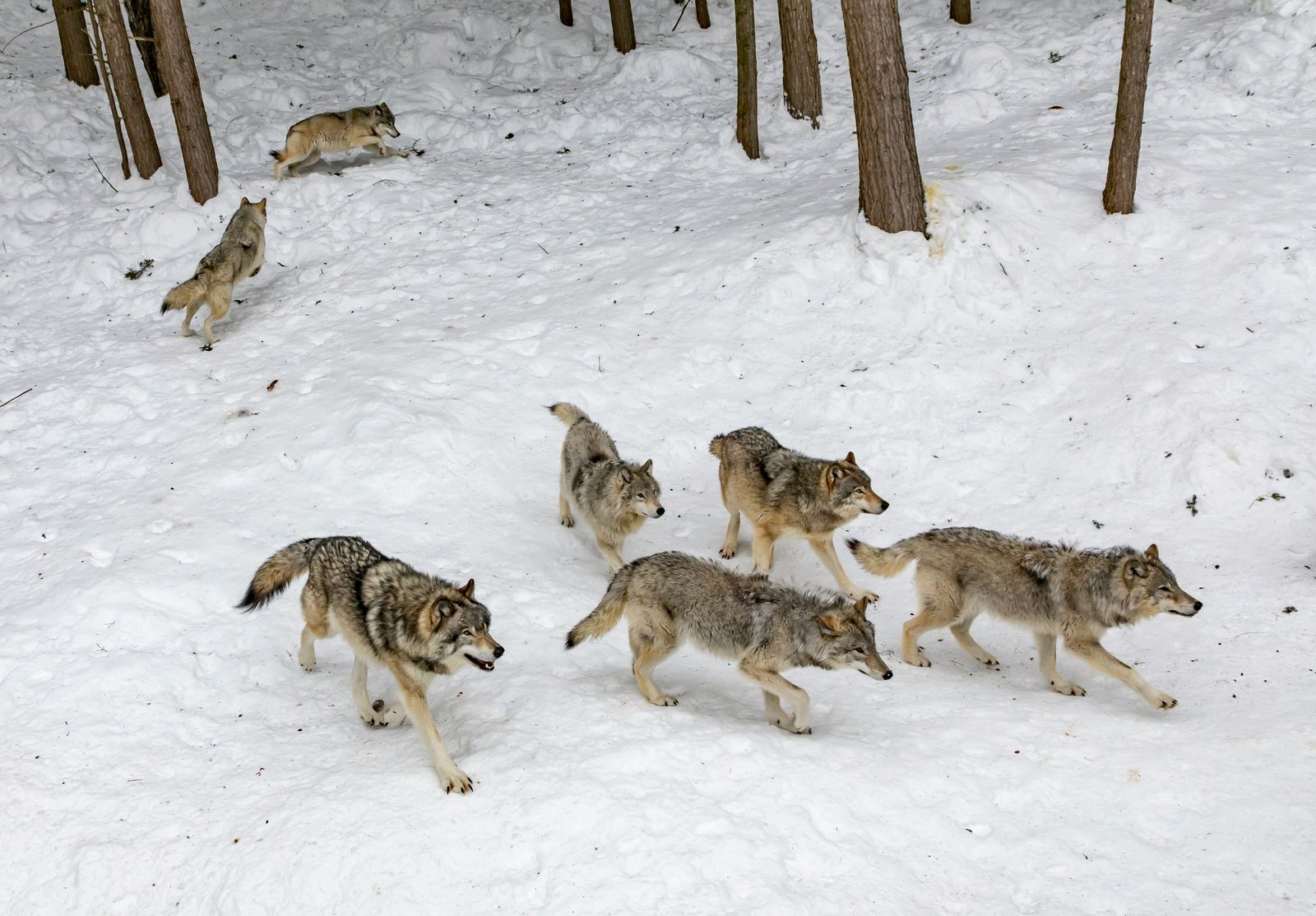
WASHINGTON — President Donald Trump signed an executive order on Friday giving the Secretary of the Interior ninety days to decide whether gray wolves and Mexican wolves have recovered enough to lose their federal protection. Gray wolves are listed as endangered in California, and one of the state’s newest packs ranges across eastern Sierra County. Nothing in the order changes what a rancher may lawfully do about a wolf today.
The order, Supporting America’s Ranchers, is broader than wolves. It also orders a review of federal regulations affecting ranchers and a study of whether beef can be required to carry country-of-origin labeling. Its third section, titled “Helping Ranchers Combat Predation,” directs Interior Secretary Doug Burgum to determine whether the two animals have met the recovery criteria for delisting or downlisting under the Endangered Species Act and, if he finds they have, to begin the process. Regardless of what he decides, he must also work with the White House Director of Legislative Affairs on a recommendation for legislation that would fully delist or downlist both. The deadline for all is set ninety days from the signing, or December 3.
Three further directives address livestock losses. Burgum and Secretary of Agriculture Brooke Rollins are told to consider rewriting their departments’ compensation regulations, evidentiary standards, and program handbooks so depredation claims are assessed consistently and quickly, including by weighing factors beyond subcutaneous hemorrhaging — the bruising beneath the hide that investigators look for to establish an animal was bitten while it was still alive. Burgum is separately told to consider loosening the criteria for authorizing the lethal removal of wolves and allowing faster emergency responses, including precision targeting, when wolves threaten people or livestock. If he finds the recovery criteria have been met, White House and Agriculture officials are to press states to drop wolves from their own protected-species lists and to loosen their standards for killing them.
Delisting or downlisting would both require the U.S. Fish and Wildlife Service to propose a rule, take public comment, and issue a final rule. The agency’s last attempt, a 2020 rule that removed gray wolf protections across most of the country, was overturned by a federal court in February 2022, which is why the animals remain listed today.
California handles listing separately. Gray wolves have been listed as endangered under the California Endangered Species Act since 2014, and the Department of Fish and Wildlife says it is illegal anywhere in the state to hunt, pursue, harass, capture, or kill one, with no hunting season.
Federally, gray wolves are endangered across most of the lower forty-eight states, including in California. They are threatened in Minnesota, and wolves in the Northern Rocky Mountains — Idaho, Montana, Wyoming, and parts of Oregon, Washington, and Utah — remain off the list and under state management.
The Mexican wolf is a separate listed subspecies, and its wild population lives only in Arizona and New Mexico. The Mexican Wolf Interagency Field Team counted a minimum of 319 in the wild at the end of 2025, up from 286 a year earlier. Downlisting under the 2022 federal recovery plan requires a four-year average of at least 320 wolves in the United States along with benchmarks for genetic diversity, and the Arizona Game and Fish Department said in February that the average had not been reached.
In findings published on November 3, 2025, the Fish and Wildlife Service declined to write a national gray wolf recovery plan, concluding that listing the animals is “no longer appropriate” and that measures under the Act are “no longer necessary” because the wolves have recovered. The Center for Biological Diversity sued in February, asking a federal court to order the agency to produce one.
The Center called Friday’s order premature and said it would go to court over any attempt to strip the protections. “Trump’s new push to prematurely remove wolf protections will lead to yet another court decision that reinstates those protections while doing nothing to help ranchers,” said Collette Adkins, a senior attorney and director of the group’s carnivore conservation program. “Smart ranchers coexist with wolves by using commonsense measures like guard dogs and fencing to protect livestock. Trump should be funding these tools, not wasting taxpayer money trying to kill or illegally strip wolves of lifesaving protections.”
The White House also released a fact sheet describing the President’s reasoning for issuing the order.