Avalanche Warning Issued for Central Sierra Nevada Backcountry
Forecasters urge backcountry travelers to avoid unstable slopes amid heavy rain, snow, and strong winds.
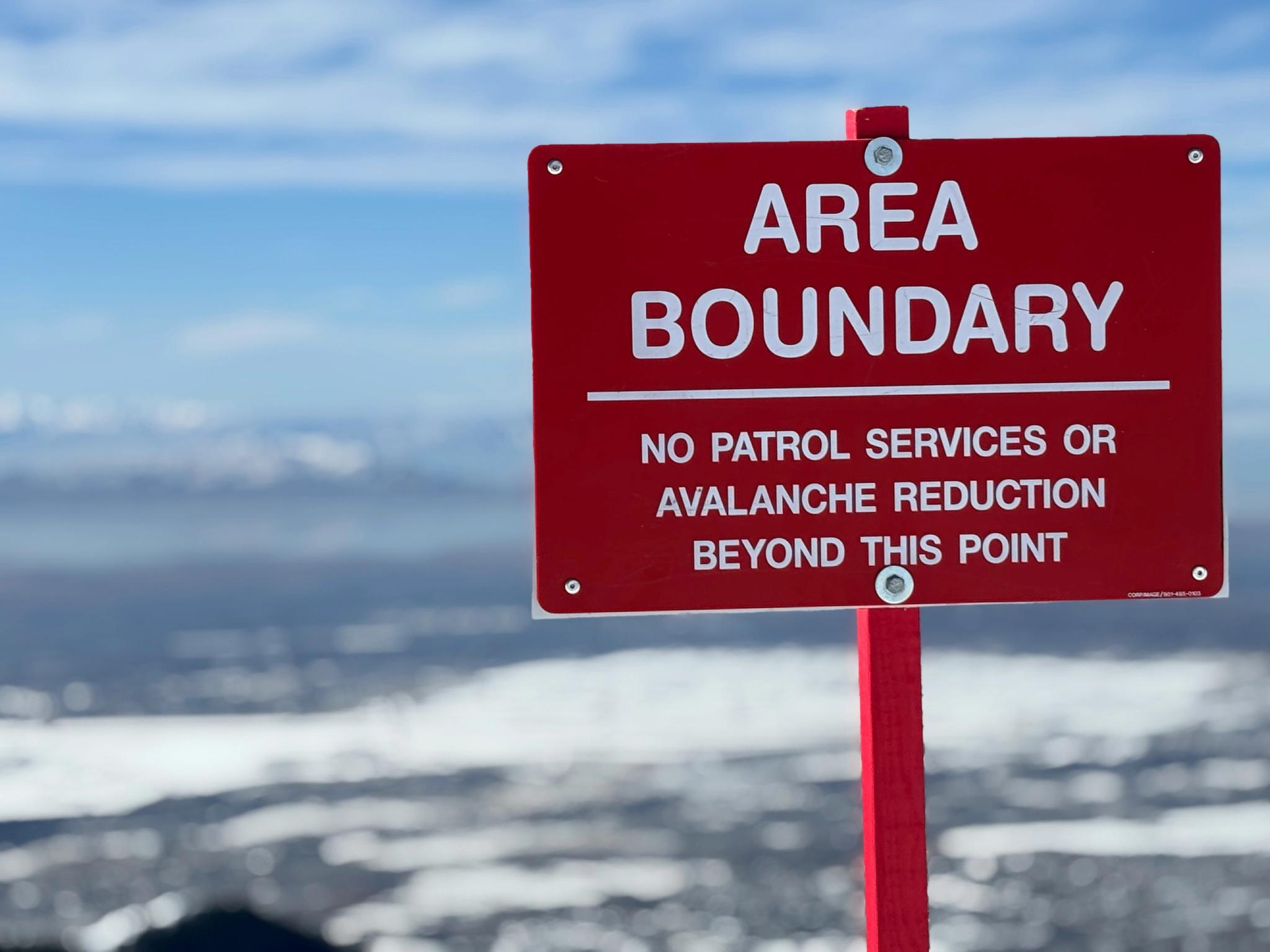
SIERRA NEVADA — The Sierra Avalanche Center in Truckee has issued a backcountry avalanche warning for portions of the Central Sierra Nevada Mountains. The warning was issued at 5:30 AM on February 24. The alert targets areas where high avalanche danger exists and remains in effect until 7:00 AM on Wednesday, February 25.
The warning covers terrain from Yuba Pass on Highway 49 in the north to Ebbetts Pass on Highway 4 in the south, including the greater Lake Tahoe area. Avalanche risks apply only to backcountry locations away from ski resorts and highways that operate under dedicated mitigation programs.
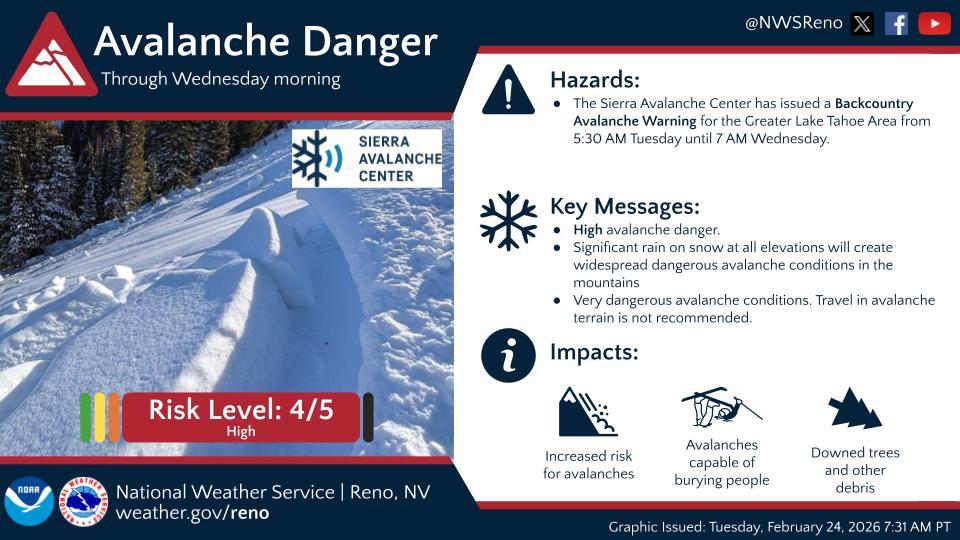
An avalanche warning graphic shared by the National Weather Service - Reno.
“Travel in, near, or below avalanche terrain is not recommended today,” the Sierra Avalanche Center stated in the warning. “Expect widespread avalanche activity due to rain on snow at all elevations. Large avalanches could run farther than expected and may reach areas typically considered safe.” Conditions include wet weather, poor visibility, and high winds, which may complicate navigation and delay rescue efforts.
In addition, the National Weather Service in Reno has issued a wind advisory of moderate severity for the greater Lake Tahoe area and surrounding Sierra regions. Southwest winds of 20 to 30 mph with gusts to 40 to 50 mph will affect Sierra communities at the lake level and along Highway 395. Gusts may reach 90 to 100 mph at the Sierra crest, with wave heights of 2 to 5 feet on Lake Tahoe.
The wind advisory takes effect at 4:00 AM and expires at 7:00 PM on February 24. The strongest winds will occur late in the morning and into the afternoon. Wind could make travel difficult for high-profile vehicles.
Backcountry users and residents should check the latest information from the Sierra Avalanche Center at sierraavalanchecenter.org and from the National Weather Service Reno office at weather.gov/rev before venturing into higher terrain. Conditions can change rapidly in mountainous areas.