McGuire Details Congressional Priorities in Sierraville Town Hall
State Senator Mike McGuire addressed healthcare, taxes, and democracy issues during the congressional campaign event.
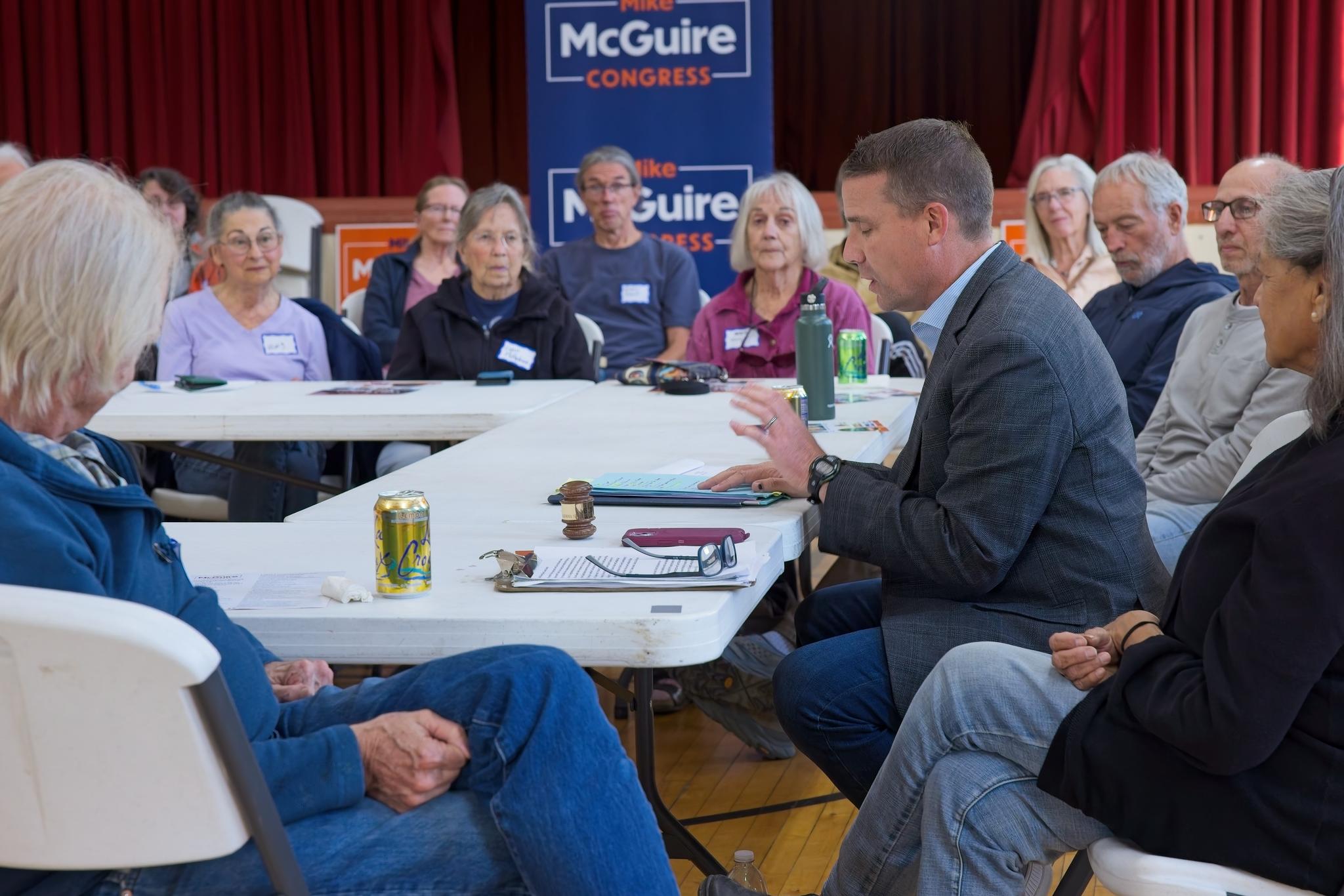
McGuire addresses potential 1st District constituents in Sierraville.
SIERRAVILLE — State Senator Mike McGuire held a town hall on Tuesday evening in Sierraville. The event marked his thirty-fifth community meeting as he campaigns for the newly redrawn First Congressional District. Proposition 50, passed by voters in November 2025, redrew district lines, placing Sierra County under a Democrat-leaning seat stretching toward Marin County. The event was organized in part by the Sierra County Democrats, Chaired by Sylvia Lopez, and McGuire was introduced by Sierra County Supervisor Lee Adams, who spoke in support of the candidate.
McGuire, a Democrat from Geyserville, brings deep experience in local and state government. He won election to the Healdsburg School Board at age nineteen. McGuire later served on the Healdsburg City Council and as mayor before joining the Sonoma County Board of Supervisors in 2010. Voters elected him to the California State Senate in 2014. He has represented a large district from the Golden Gate Bridge to the Oregon border and previously served as Senate Majority Leader and President pro Tempore.
During the forum, McGuire spoke extensively about national issues. He criticized President Donald Trump as fascist, corrupt, and narcissistic. McGuire called for Democrats to flip the House of Representatives and “take our country back.” He pledged to repeal the $2.2 trillion in tax cuts that he said benefited billionaires. McGuire advocated for Medicare for All, raising the federal minimum wage from $7.25, and fully funding Social Security. He also pushed for universal childcare and tuition-free community college.
McGuire opposed recent cuts to Medicaid and the Affordable Care Act. He stated that forty-two percent of residents in the congressional district rely on Medicaid. McGuire warned that the cuts would lead to rural hospital closures by mid-2027. He called for restoring $32 billion in ACA subsidies and criticized increased military spending. On foreign policy, McGuire described the conflict involving Iran as “a war of choice” that costs over a billion dollars per day and drives up prices for food and fuel.
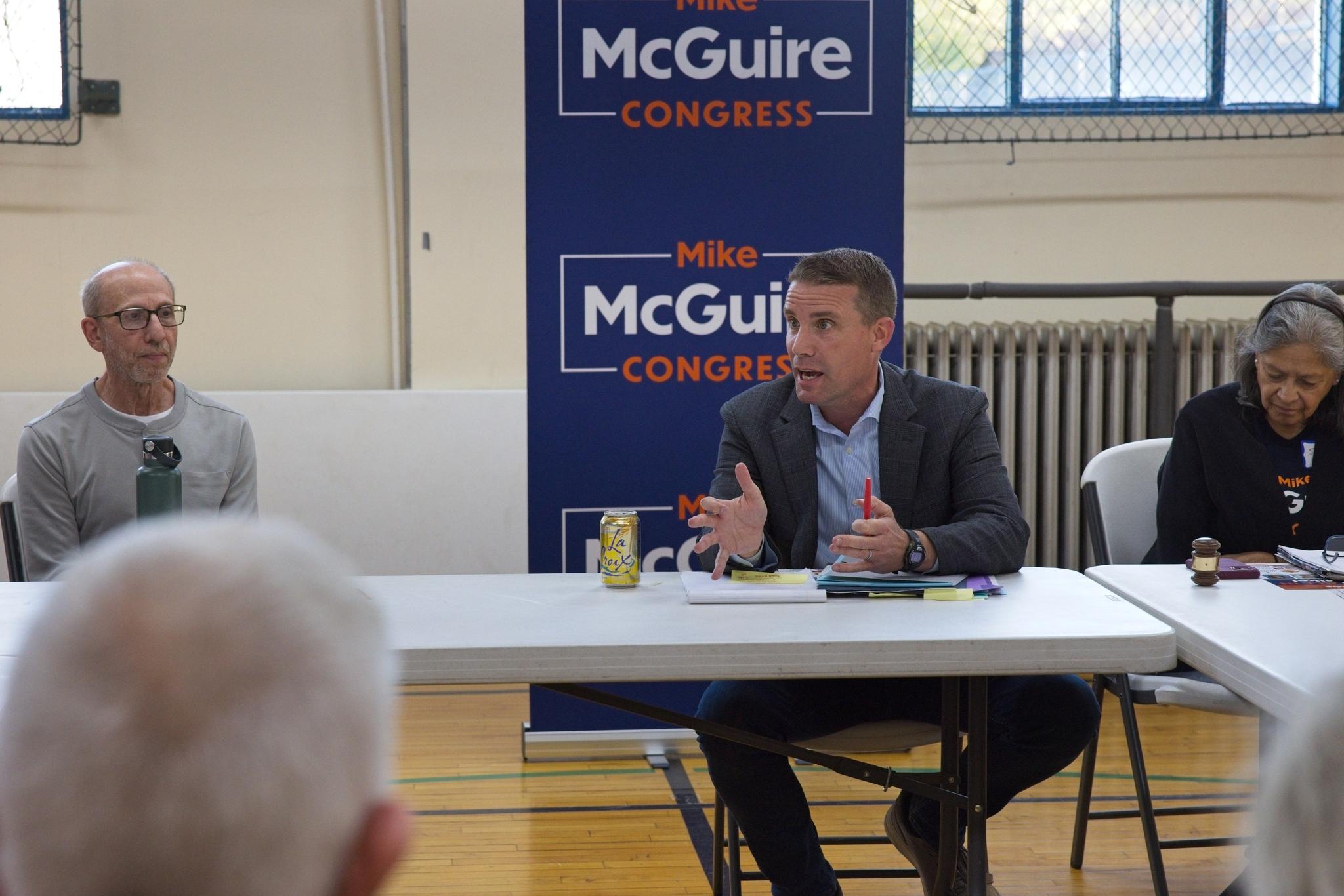
McGuire answers a question from an attendee.
McGuire supported term limits for Supreme Court justices and efforts to reform the impact of the Citizens United decision. He called for stronger protections for voting rights and greater accountability for federal immigration enforcement agents. McGuire stated that 74% of individuals detained by ICE have no criminal record, according to government data.
On local and rural issues, McGuire placed strong emphasis on wildfire mitigation and forest management. He called for full funding of Payment in Lieu of Taxes (payments offsetting lost property tax revenue from non-taxable, publicly owned land, such as national parks or forests) and Secure Rural Schools programs. McGuire noted that these funds help support roads, schools, and law enforcement in counties with large federal landholdings, such as Sierra County. He proposed restructuring the U.S. Forest Service by creating a separate wildfire response agency modeled after Cal Fire and a dedicated forestry division. McGuire backed increased hazardous fuels reduction and greater investment in home hardening and defensible space efforts around communities, rather than remote logging far from homes.
McGuire also advocated expanding rural residency programs for doctors and developing healthcare education job hubs to grow the local workforce. He highlighted his work securing six billion dollars for rural broadband expansion in the state and said high-speed internet should be treated like electricity. Attendees also raised questions about road conditions, including Highway 89 and healthcare access in rural areas. McGuire promised to fight for federal highway funding and distressed hospital loan programs. While the issue of wolves in the Sierra Valley was only briefly mentioned, McGuire voiced support for funding non-lethal deterrence programs.
McGuire closed by inviting ongoing dialogue with constituents. He encouraged attendees to conduct reference checks on his record of delivering for rural communities.