Katie's Sightings
3 min read
A WET Spring in Sierra Valley!
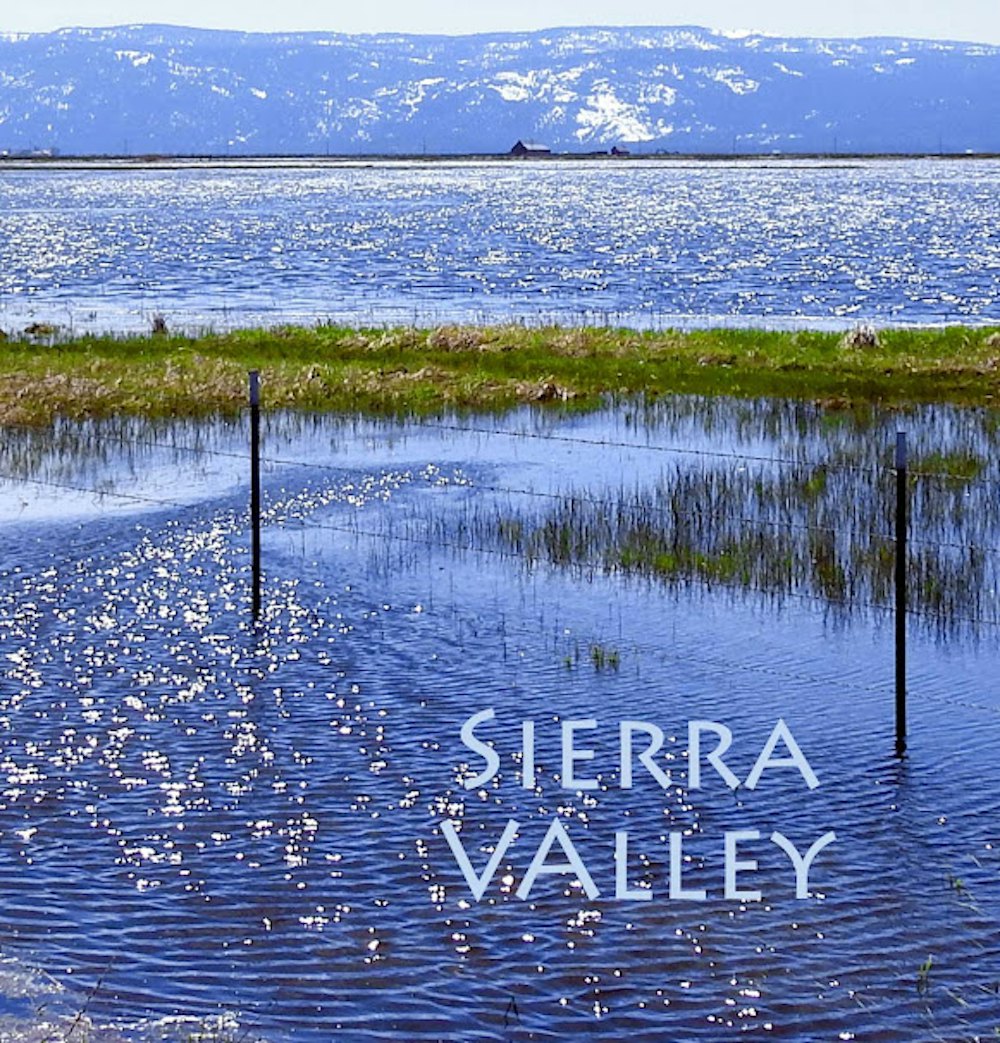
Sierra Valley is a little more than an hour east of where we live. I had read about it being flooded from all the runoff from the melting heavy snowpack. I had also watched a YouTube video of Sierra Valley filmed from the air this past March that showed how extensively it was flooded, (https://www.youtube. com/watch?v=Mor2HQeyfkU&t=67s)
To celebrate my birthday, my husband and I decided to drive over and see what was happening. To our astonishment it had turned into a HUGE LAKE!!! We had never seen this much water here before! Wow!!!
 Sandhill Crane - Antigone canadensis
We were able to drive out to the Steel Bridge, where we usually go to watch birds, but the road was flooded just a quarter mile further east. Due to the high volume of water there weren't a whole lot of birds in the vicinity of the Steel Bridge other than Cliff and Barn Swallows, but in the slightly drier areas we enjoyed seeing a variety of birds. We saw five Sandhill Cranes in the distance that day! Always so elegantly beautiful!
There were lots of Barn and Cliff Swallows at the Steel Bridge. The Barn Swallows overwinter in Central and South America, as far south as the tip of Argentina! The Cliff Swallows overwinter in South America, as far south as northern Argentina. Both of these swallows make nests out of mud on the underside of bridges. Pictured above, Cliff Swallows are getting mud for their nests!
It takes approximately two weeks for the male and female to construct a nest out of 9,000 to 12,000 mud pellets. The breeding pair will start sleeping in the mud housing, as soon as it is partially finished. Inside the mud housing, they create a nest made of dry grasses and feathers. Females will lay 1-6 eggs, and brood them for 10-19 days. Swallows will also lay eggs and/or transfer their eggs into neighboring swallow nests. The young are altricial when hatched, and are cared for by their parents for 20-26 days.
Along the road to the Steel Bridge there were lots of male Yellow-headed and Red-winged Blackbirds! They were gorgeous in their bright contrasting colors. I just happened to catch this Red-winged Blackbird in a mating display! How wild! The Yellow-headed Blackbirds were making their loud, coarse calls, but we didn't see many females in the area. The females of both species lack the bright colors of the males. Both of these birds will nest and raise their young in Sierra Valley. Both will make nests woven between upright stalks of vegetation such as cattails and tules, above water.
The Yellow-headed Blackbird overwinters in Mexico. The Red-winged Blackbird probably drops down to lower elevations for the winter, but is not a long-distance migrant.
Just past the Steel Bridge there is a smallish separate pond where we saw quite a few waterfowl. Lining the pond, there were tules to hide and nest in, compared to the area near the Steel Bridge. Perhaps that's why they congregated there.
Ruddy Ducks probably overwinter in California's Central Valley or down into Mexico. Pied-billed Grebe's probably do the same thing. Both will nest and raise their young in Sierra Valley, on floating platform nests made out of dried plants.
Unfortunately, you can no longer sign up to get my blog via email. Just go to northyubanaturalist.blogspot.com directly.
Your questions and comments are appreciated. Please feel free to email me at northyubanaturalist@gmailcom. Thanks!