Katie's Sightings
3 min read
Bird Nests!
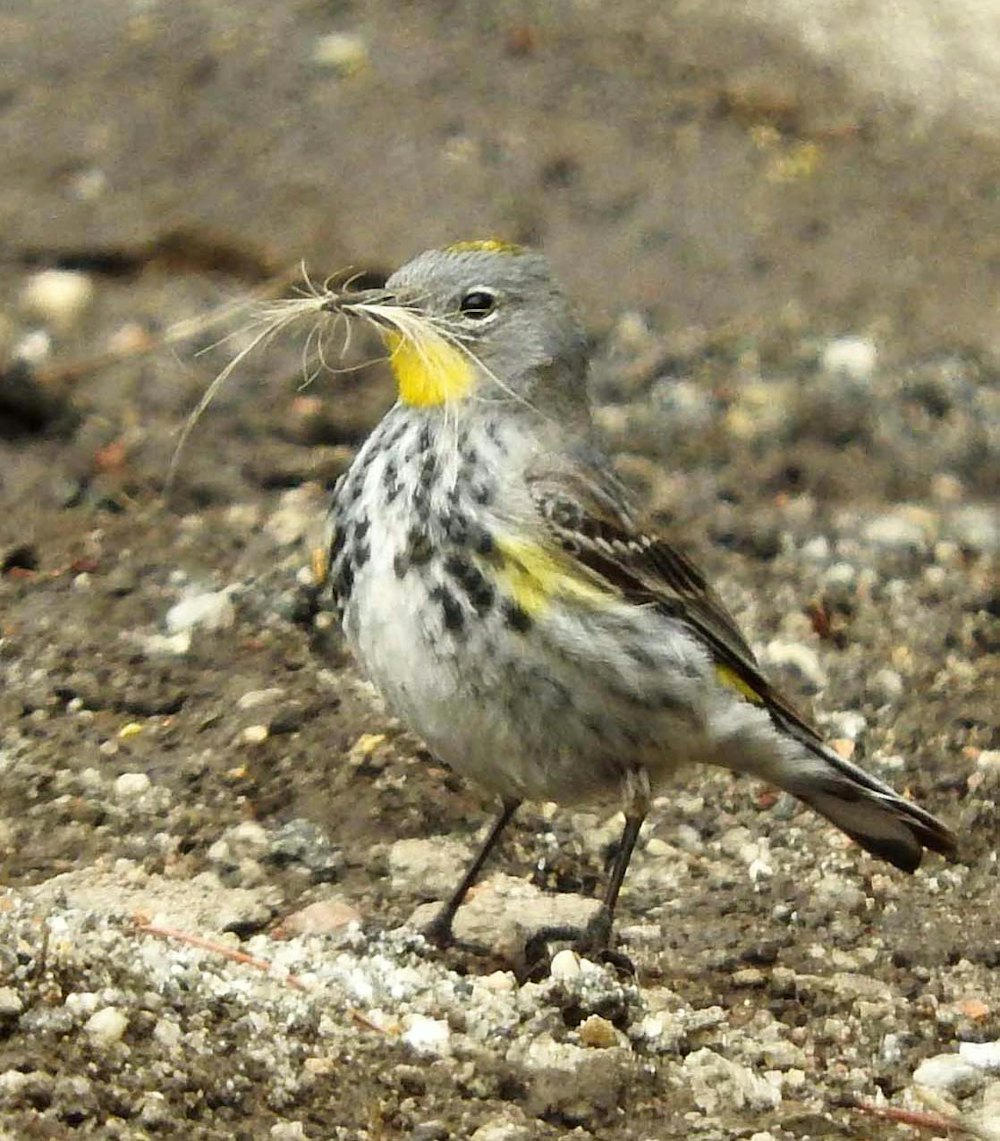
Just this week I noticed several new bird nests, as well as birds gathering nesting material! The materials used by birds in nest construction varies tremendously from species to species. Mud, grasses, leaves, twigs, branches, feathers, rootlets, animal hair, plant fibers, tules, cattails, and manmade objects are some of the main materials that are used in bird nests. Nest sites also vary greatly, and can be on the ground, in a tree trunk or on a branch, in shrubs or vines, floating on water, or in a manmade structure. The shape and structure of the nest also varies between species, from cup shape, to a platform, a hanging pouch, or just a bare scrape on the ground, to name a few!
I luckily got this photo of a female Yellow-rumped Warbler with nesting material in its beak up at Yuba Pass last week! How beautiful!!! To learn about the nest and nesting habits of a certain bird species, I use allaboutbirds.org for a reference, as well as birdsoftheworld.org. for more in depth information. Both websites are from the Cornell Lab of Ornithology. Here is what they said about Yellow-rumped Warbler nests!
"NEST PLACEMENT: Yellow-rumped Warblers put their nests on the horizontal branch of a conifer, anywhere from 4 to about 50 feet high. Tree species include hemlock, spruce, white cedar, pine, Douglas-fir, and larch or tamarack. They may build their nests far out on a main branch or tuck it close to the trunk in a secure fork of two or more branches. Occasionally nests are built in a deciduous tree such as a maple, oak, or birch.
NEST DESCRIPTION: Females build the nest, sometimes using material the male carries to her. The nest is a cup of twigs, pine needles, grasses, and rootlets. She may also use moose, horse, and deer hair, moss, and lichens. She lines this cup with fine hair and feathers, sometimes woven into the nest in such a way that they curl up and over the eggs. The nest takes about 10 days to build. It's 3-4 inches across and about 2 inches tall when finished."
 Yellow-rumped Warbler (female) with nesting material
Setophaga coronata
On one of my morning wanders this week I spotted this Hairy Woodpecker nest in a dead alder tree! How exciting! I watched it for a few minutes, and the female came back several times with insects in its beak and poked its head into the nest hole. No baby birds are poking their heads out yet, but I'll check back in a few days.
 Hairy Woodpecker Nest
My friend Gerry Tecklin found this Hairy Woodpecker nest in a dead tree that had fallen on the forest floor. He cut it in half length-wise to expose the size of the nest cavity. It looks like the cavity was approximatedly 15" deep! Wow! That must have taken quite a while to excavate! Here's what Cornell says about Hairy Woodpecker nests.
"NEST PLACEMENT: Hairy Woodpeckers typically excavate their nests in the dead stub of a living tree, especially trees with heartrot, or in a dead tree. The cavity is often in a branch or stub that isn’t perfectly vertical, with the entrance hole on the underside. This location may help keep flying squirrels and sapsuckers from trying to take over the hole. Hairy Woodpeckers begin excavating their nests less than 2 weeks before egg-laying begins.
NEST DESCRIPTION: The entrance to the nest is about 2 inches tall and 1.5 inches wide, leading to a cavity 8-12 inches deep. The inside widens at the bottom to make room for the eggs and the incubating bird. It’s typically bare except for a bed of wood chips at the bottom for the eggs and chicks to rest on."
Your questions and comments are appreciated. Please feel free to email me at northyubanaturalist@gmail.com. Thanks!