Katie's Sightings
3 min read
Wonders Never Cease
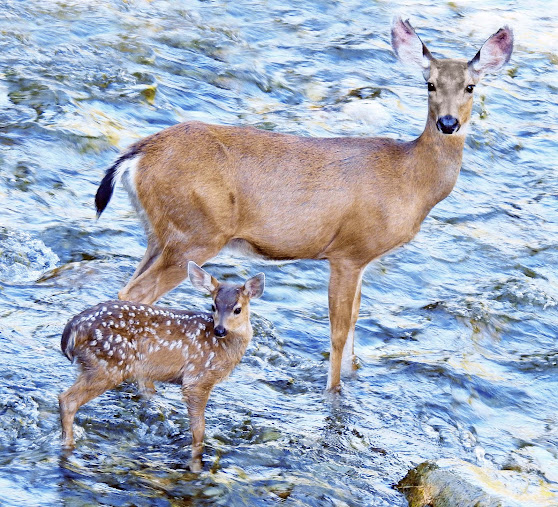
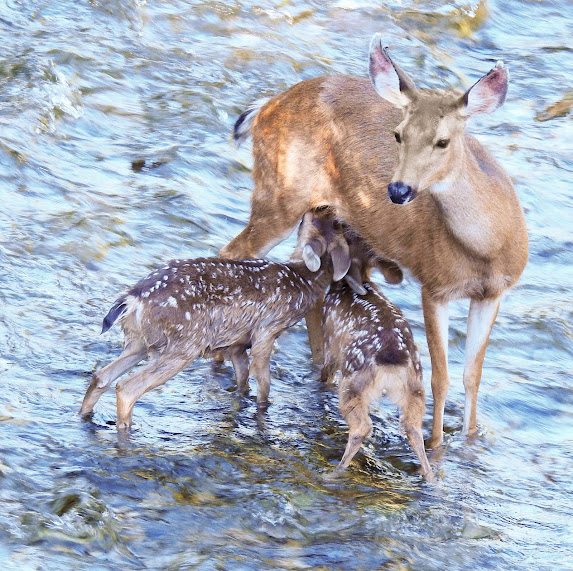
To my astonishment I spotted a doe and a little, spotted fawn in the river one morning this week! The doe froze when she saw me, which prompted the tiny fawn to instantly nurse! In another few seconds a second fawn joined the first fawn and also began nursing, right in the river!!! After about a minute the doe moved, the fawns stopped nursing, and they all crossed the river! Wow!!! I haven't seen any little fawns for years, and I never ever watched them nurse before! What a great sighting! Just wonderful!
I posted this information about fawns about a year ago, but thought it was totally relevant right now! The following quote is from northernwoodlands.org.
"Young fawns' scent glands are not well-developed. When a fawn is born, the doe licks it clean, removing odors that might alert predators. A few hours after birth, when the fawn can stand and walk, she moves it from the birth spot to a new hiding place. A fawn spends most of its first weeks of life bedded down alone. The doe stays away from her newborn except to nurse it periodically, and to lead it to new bed sites. That way her scent does not attract predators to the area where the fawn is hiding. If she has twins, which is common, the doe will typically hide them in separate places and make the rounds to nurse them. While the fawn nurses excitedly, its tail flicking, the doe licks its fur and genital areas to stimulate urination and defecation. She may also consume the fawn's droppings to destroy evidence of its presence. Although secrecy is a fawn's main defense, it has another: mom. If a fawn is in distress, it bleats, and the doe, which stays nearby, usually comes running, ready to defend it with her sharp hooves."
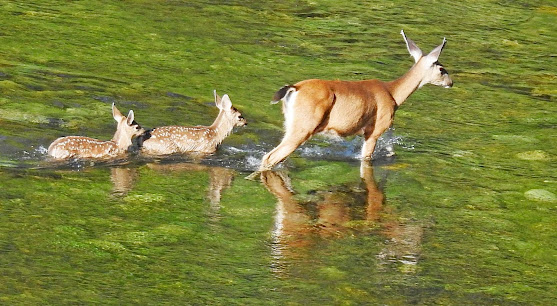
Fawns grow rapidly on their mother's rich milk. By two to three weeks of age, they begin to nibble green vegetation. After a month, they will browse on tree seedlings. At this age, they begin to choose their own bedding sites and twins are reunited. By summer, young deer can outrun most danger, and trail their mother closely. Fawns usually are weaned at two to three months. In early autumn, a fawn's spotted coat is replaced by the gray-brown winter coat of an adult deer. Female fawns usually stay with their mothers for two years; young bucks leave after a year. A buck fawn can be identified when only a few days old by the two round spots on its head where the antlers will grow."
I hope I run across this beautiful, little family again soon!
Editor's Note: Due to space limitations here, Katie's pictures of a young, cinnamon-colored Brown Bear grazing quietly on sweet grass in her neighborhood could not be printed here this week. The same can be said about the Gray Fox who made a quick appearance on Katie and Mike's property in Goodyears Bar early one evening last week. Her excellent photos of local orchids now blooming in local bogs and wet meadows are missing, as well.
Therefore, we encourage readers who have access to the internet to check-out Katie's blog northyubanaturalist.blogspot.com or visit www.themountainmessenger.org for the complete, full-color version of her latest observations of the natural world.