Nevada County Supervisors Back Public Lands Protection Resolution
The unanimous vote seeks a local voice and full federal funding.
5 min read
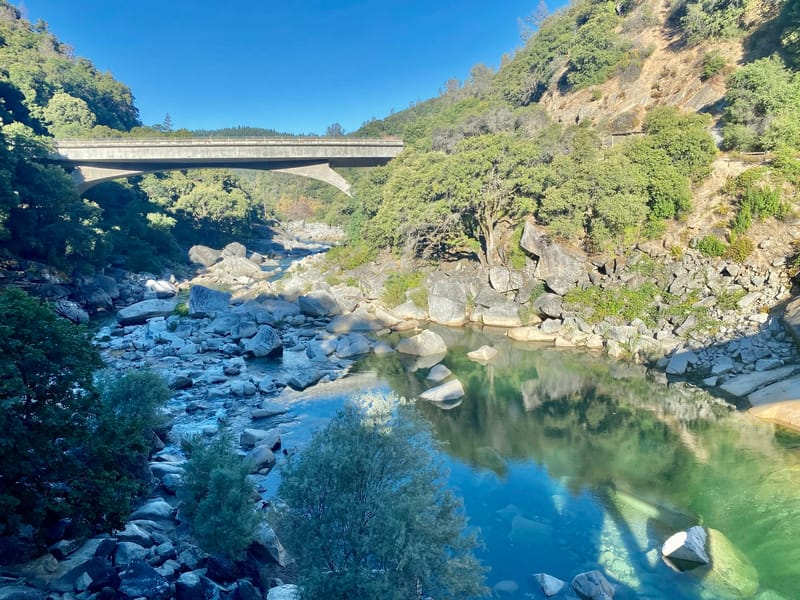
Roughly 30% of Nevada County’s land is federally managed, including parts of South Yuba River State Park.
South Yuba River State Park
NEVADA CITY — The Nevada County Board of Supervisors voted unanimously Tuesday to adopt a resolution supporting the protection and responsible management of public lands, asking Congress to fully fund the federal agencies that manage the land around the county and to give local residents a say before any of it is sold. District 5 Supervisor Hardy Bullock brought the measure forward. Three speakers addressed the board, all in support of the item.
Bullock described the resolution as resting on four pillars: keeping the public at the table when land-use decisions are made, funding the federal agencies that manage public land, keeping agency offices and staff in the communities they serve, and sustaining collaboration between the county and its state and federal partners. He said the sale and disposition of public land has dominated recent discussion at the National Association of Counties, where he sits on the Public Lands Steering Committee, and that selling land suits some communities and not others. The resolution asks that the conversation happen locally first, among the residents who live alongside the land in question.
Lis Olaerts, strategic campaigns director with the Sierra Nevada Alliance and a Truckee resident, laid out the document’s terms in public comment. “It makes clear the decisions to sell, transfer, or dispose of public lands should include meaningful and transparent public engagement,” she said. “It also calls for Congress to fully fund and staff our public land management agencies and for continued collaboration with local communities.” Olaerts told the board she had worked on the resolution with The Mountain Pact.
Anna Peterson, executive director of The Mountain Pact, joined the meeting remotely to explain the timing. Her organization has spent more than 10 years working with local elected officials in mountain towns across the West, she said, and now works with 150 communities in all 11 Western states. National Public Lands Day falls on September 26, and Peterson said Western communities that have not already passed resolutions are doing so during September to mark it. “In the West, public lands power our outdoor economies, provide critical water and grazing resources for agriculture, and give residents unmatched opportunities to recreate and enjoy the peace and solitude that comes along with time spent in nature,” she said. She told the board the day drew more than 900 events and 55,000 volunteers nationwide last year, and that the 2026 theme, Caring for Our Shared America, marks the nation’s 250th anniversary.
The resolution follows a year in which federal proposals unsettled conservation groups across the West. In 2025, Senator Mike Lee of Utah proposed legislation requiring the Forest Service and the Bureau of Land Management to sell as much as 3.3 million acres; after the Senate parliamentarian ruled the provision could not move through budget reconciliation, Lee released a smaller version limited to Bureau land and then withdrew it in late June of that year. Olaerts told the board that recent sell-off proposals would have bypassed local engagement, and that federal land management agencies are absorbing funding cuts and staff losses at the same time.
Public land covers about 30 percent of Nevada County’s 958 square miles, according to the county’s General Plan, with the Tahoe National Forest accounting for roughly 169,000 acres and the Bureau of Land Management about 20,000 more. Bullock said the county is unusual in spanning so many landscapes, from low grassland to the Sierra crest, and that nearly every supervisorial district borders a large swath of public land. He pointed to figures from the United States Bureau of Economic Analysis showing that outdoor recreation added $87.9 billion to California’s economy in 2024 and supported close to 600,000 jobs statewide, a total he said is probably conservative.
On funding, Bullock reminded the board that a few years ago a significant part of the local forest had no Forest Service law enforcement officer assigned to it, shifting pressure onto the county sheriff’s office and other local agencies responsible for a large area. He said the association of counties adopted its own resolution on properly funding the agencies a couple of years ago. The board has worked to keep the Forest Service’s local office in the county, he said, so that its staff remain part of the community and understand local needs.
TJ Graven, speaking for the Bear Yuba Land Trust, told the board the organization has worked in Nevada County since 1990, manages more than 50 miles of trails, and has helped conserve 26,000 acres in Nevada and Yuba counties. Well-managed public lands deliver wildlife habitat, resilient forests, healthy watersheds, and recreation, he said. “Most importantly, they provide low-cost opportunities for families and the communities you represent to spend time together outdoors.” He added that continued uncertainty about federal support “means that local governments must step up to ensure that local management and conservation efforts are adequately recognized and supported.”
Daniel Elkin, communications and engagement director for the South Yuba River Citizens League, said the Tahoe National Forest sits at the headwaters of the Yuba River, and that the meadows his organization restores there store snowmelt, filter water, and buffer communities against drought and wildfire. “At a moment when federal funding and staffing cuts threaten the agencies that manage these lands, this resolution is an important and appreciated affirmation,” he said. By adopting it, he said, the county was stating that any changes to long-standing public lands policy should be “transparent, collaborative, and grounded in the values of the communities that depend on them.”
“It’s just really important that we continue to advocate,” said District 1 Supervisor Heidi Hall, adding that the county needs a local voice in how the lands are managed and whether they stay public. Hall said she learned during a recent trip to Hawaii that the state’s constitution keeps coastal areas public, which she called “a beautiful sentiment.” “It ensures that going forward in the future, people and their children and their grandchildren are going to continue to have access to beautiful areas,” she said.
District 4 Supervisor Sue Hoek said the county’s working relationship with the Forest Service is not what you see everywhere, and that collaboration is what keeps such arrangements from falling apart. “We want public lands public,” she said. District 2 Supervisor Robb Tucker said local engagement and local control are usually the better option in nearly every situation, and thanked Bullock and Hall for their federal advocacy.
Chair Lisa Swarthout, the District 3 supervisor, said she concurred with the board’s comments and thanked Bullock for putting the item on the radar. The board adopted the resolution 5-0 on a roll call vote.