Night Sky
1 min read
Measuring brightness of stellar objects
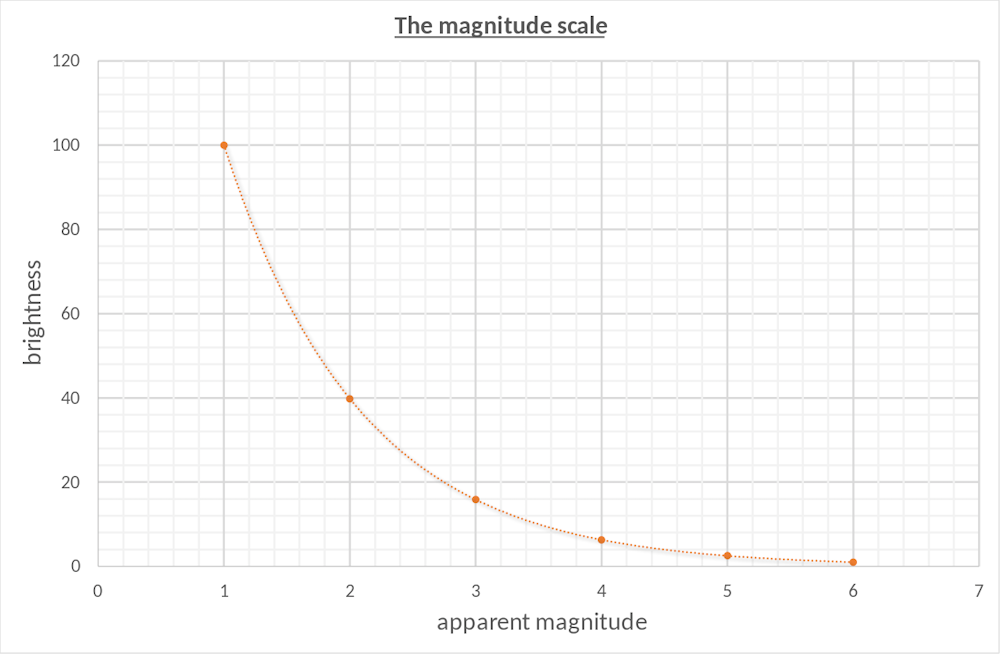
It seems the Roads Department is also becoming the Astronomy Department of Sierra County! My coworker, Road Worker Sara, and I were discussing the various brightness of stars and planets, so I shared the system of measurement called Magnitude.
Apparent Magnitude is a measure of how bright a stellar object looks when considering normal interferences like the atmosphere, distance, star size. Meaning, how it looks to our eyes on Earth. Absolute Magnitude measures how brightness compares if you were in space with no interference, each star on its own.
The system is reverse logarithmic meaning the lower the number, the more bright it seems. So the full Moon is -12.6 apparent magnitude, planet Venus is -4.9, and bright star Sirius is -1.46, while star Vega is mag +0.03 and faint Orion Nebula is +4.0, near the limit of the human eye.
Road Worker Sara shared a wonderful analogy to remember the inverse numbers of brightness - it's like different sandpapers. 60 grit sandpaper is rougher than 2000 grit. It's great when knowledge of one field can improve the understanding of another. Look forward to more "Astro Tips from Road Workers" in the future!
Keep lookin' up — Roadworker Collin