Night Sky
2 min read
Gemini, the constellation of the Twins
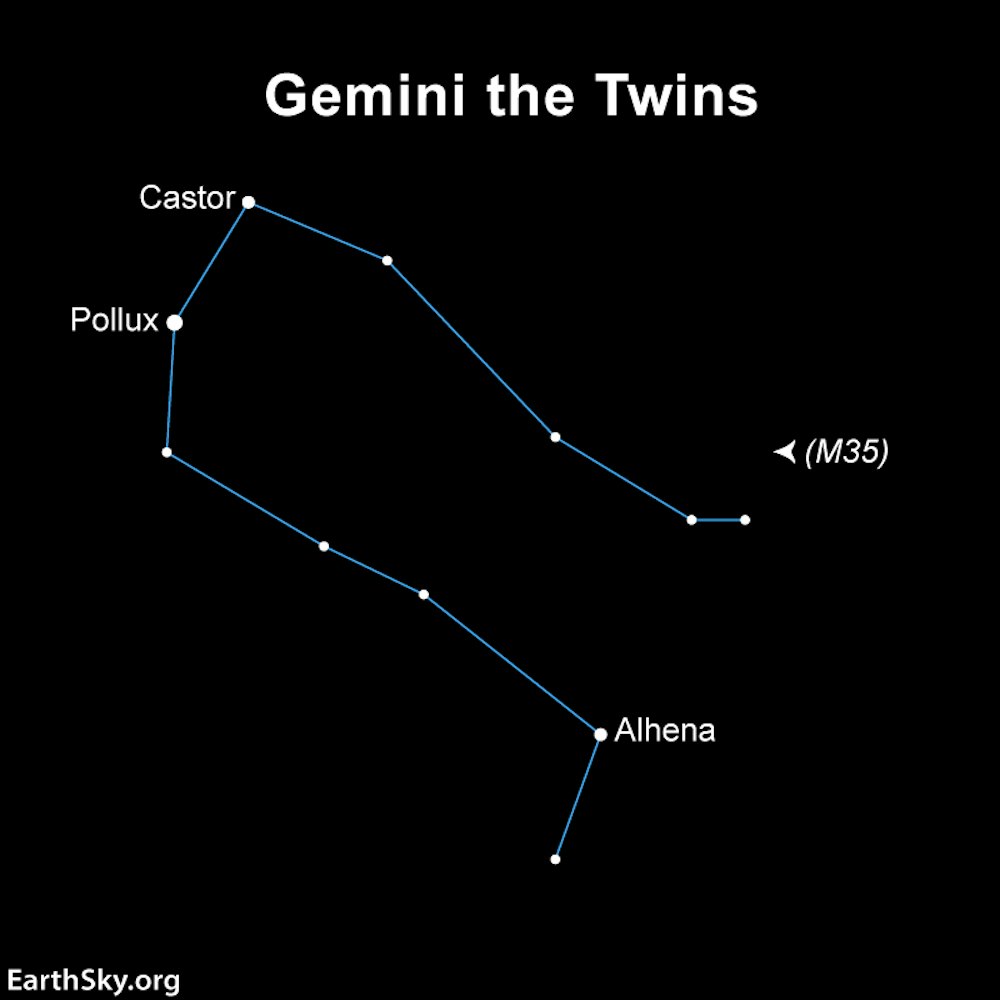
Most people see the constellation Gemini as just two bright stars – Castor and Pollux – sometimes called the Gemini twins. These two stars aren’t really twins. Pollux is brighter and more golden in color. Castor is slightly fainter and white. But both stars are bright, and they’re noticeable for being close together on the sky’s dome. From time immemorial, people have thought they looked like brother stars.
January, February and March are great for observing these stars. In early February, Gemini climbs highest in the sky around 10 p.m. local time. In late February, the constellation is highest around 9 p.m. Gemini stays in view in the evening sky until around May. By late May and June, Gemini is found low in the west at nightfall, and Gemini’s two brightest stars – Castor and Pollux – fade into the sunset before the June 21 summer solstice.
In Greek mythology, Castor and Pollux were the sons of a mortal mother, Leda. Castor was the mortal brother, son of Tyndareus, and Pollux the immortal brother, son of Zeus. Castor and Pollux were joyfully united in spirit, yet sorrowfully divided by circumstance. When Castor was slain in battle, Pollux was inconsolable and begged Zeus to relieve him of the bonds of immortality. Zeus granted his request, and, to this day, Pollux and Castor stand reunited in the heavens, a tribute to the redemptive power of brotherly love and the inherent duality of life, of mortality and immortality intertwined forever.
Source: earthsky.org