On the Shelf
By Paul Guffin
3 min read
Neighbors
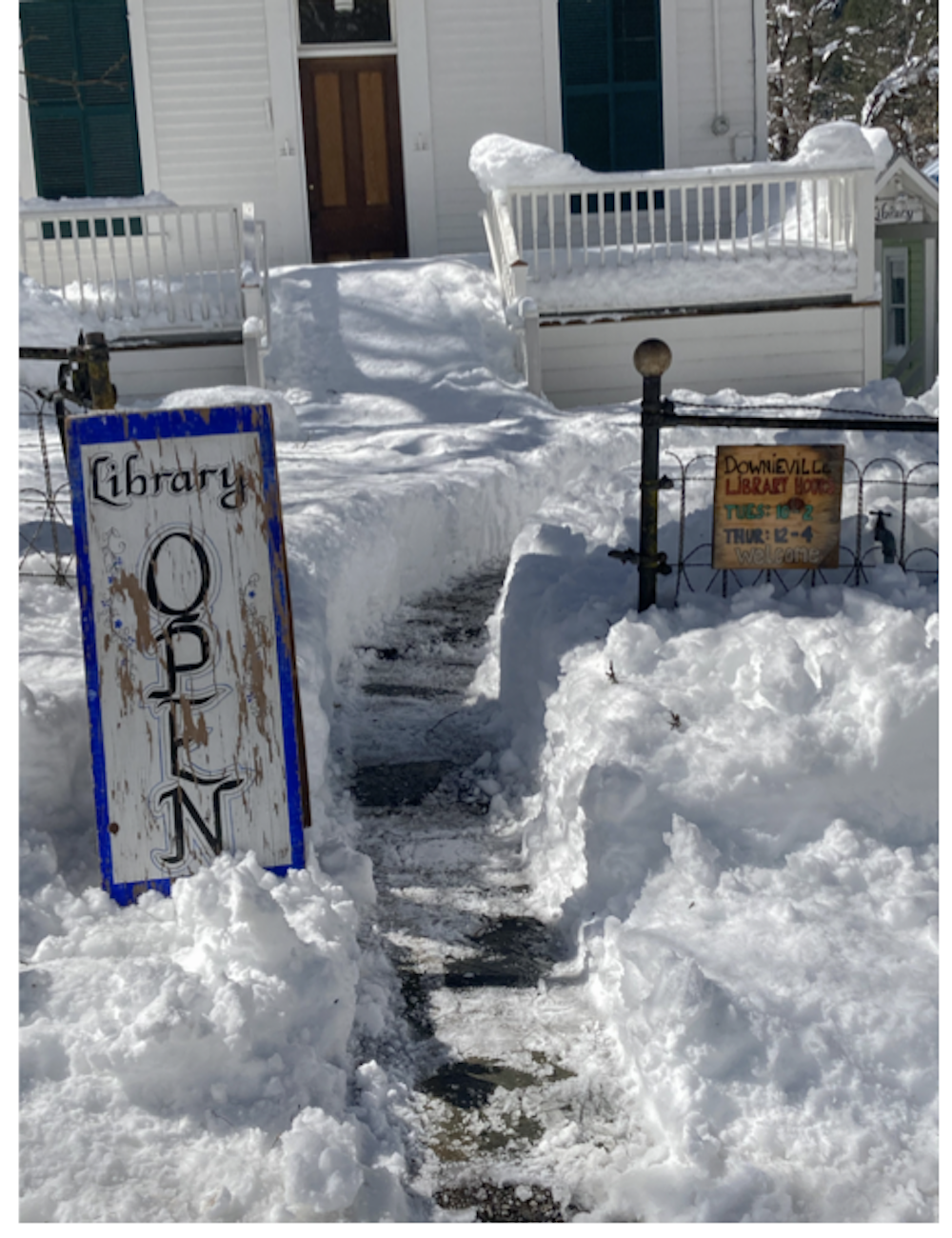
When I arrived at the Downieville Library for my “shift” last Thursday, I found the walk from the street to the stairs going down to the library had been shoveled (as you can see in the photograph). This was the result of a community neighbor, Keith Loving, who was going around town that day, with his shovel, looking for people who needed help. (He had earlier stopped by where I was digging out our car, and lent his neighborly help there, as well.)
Oxford Languages defines “neighbor” as (1) “a person living near or next door to the speaker or person referred to”, (2) “a person or place in relation to others near or next to it”, and, (3) “any person in need of one’s help or kindness”. That last definition is supposedly based on the Biblical story of the Good Samaritan. Actually, that story defines “neighbor” in almost the opposite manner. The lesson of that story is that a neighbor is anyone who sees someone else in need, turns aside from what they were already doing, and provides whatever help is needed (or, at least, whatever the person is able to give).
Currently (with interruptions for power outages), Linda and I are watching Lemony Snicket’s “A Series of Unfortunate Events”. The theme song for this show is “Look Away”, which matches perfectly the commentary by “Lemony Snicket” throughout each episode, when he warns viewers about what is to come, and advises they (we) would be better off not watching at all. As the song says, “This show will wreck your evening, you whole life, and your day; every single episode is nothing but dismay…Ask any stable person, ‘Should I watch?’ and they will say: Look away”. (Nevertheless, we continue to watch.) It is too often the case that, in real life, when faced with disaster, dismay, and evident need in another person’s life, we, too, look away. A neighbor is one, however, who does not look away. Not only does the neighbor not look away, the neighbor steps into the disaster, the dismay, the need.
Many of us — or, perhaps, our children — grew up watching Mister Rogers Neighborhood on television. You might remember the theme song of that show: “Won’t You Be My Neighbor?”. It asks the question, “Would you be mine? Could you be mine? Won’t you be my neighbor?” And, in doing so, it teaches us to ask for help, when we need it. It asks us to invite others to be neighbors to us — just as we, in our turn, try to be neighbors to them.
So, let me wrap up this week’s column in the words of Rudyard Kipling, in the first verse of his poem, “Neighbours”:
The man that is open of heart to his neighbor,
And stops to consider his likes and dislikes,
His blood shall be wholesome whatever his labour,
His luck shall be with him whatever he strikes.
The Splendour of Morning shall duly possess him,
That he may not be sad at the falling of eve.
And, when he has done with mere living
— God bless him! —
A many shall sigh, and one Woman shall grieve!
Finally, looking ahead: September 28 is National Good Neighbor Day, so declared in a 1978 proclamation signed by President Jimmy Carter — who is, himself, a shining example of the neighbor who sees a need, doesn’t turn away, but steps in and, with hammer in hand (in President Carter’s case), provides the help that’s needed.