Senate Committee Advances Wildlife Coexistence Bill
SB 1135 would reestablish nonlethal programs to manage conflicts between humans and animals.
3 min read
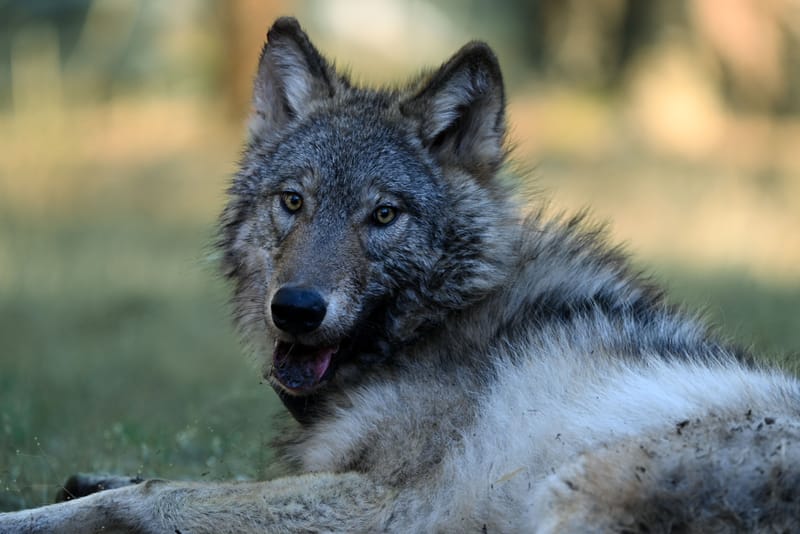
A photo of a gray wolf captured during collaring operations in January of 2026. Credit: CDFW.
SACRAMENTO — The Senate Natural Resources and Water Committee approved Senate Bill 1135 on April 14. Authored by Senator Catherine Blakespear, the California Wildlife Coexistence Act now moves to the Appropriations Committee. The measure reestablishes programs in the Department of Fish and Wildlife to address human-wildlife conflicts through proactive, nonlethal strategies. All activities remain subject to future legislative funding.
SB 1135 adds a new chapter to the Fish and Game Code to create the Wildlife Coexistence Program. The program would manage conflict calls, promote nonlethal solutions, investigate incidents, maintain a statewide reporting tool, support community efforts, and conduct public outreach. It would also rename the former California Wolf-Livestock Compensation Pilot Program as the Wolf-Livestock Coexistence and Compensation Program. At least 50% of funds for the wolf program must support proactive deterrence equipment and practices. Participants seeking compensation for verified livestock losses or indirect impacts must document the use of approved nonlethal measures.
The bill further establishes a Wildlife Coexistence Technical Advisory Committee. The committee would provide guidance on science-based practices, program metrics, equity, and partner coordination. The department would also be required to publish annual data on its website by July 1, 2028, including conflict statistics and program outcomes.
Supporters highlighted rising human-wildlife interactions. Jennifer Fearing, speaking for the National Wildlife Federation, noted a 31% increase in wildlife incident reports over five years. She cited the case of Blondie, a black bear euthanized in Monrovia after protective swipes at people near her cubs. “A statewide wildlife coexistence program established by SB 1135 could have saved Blondie’s life,” Fearing stated. Pamela Flick, California program director for Defenders of Wildlife, discussed gray wolf recovery and the Sierra Valley pack. “The lethal removal of the [Beyem Seyo] pack after they’d grown habituated to preying on livestock for over a year is a failure in our efforts to coexist peacefully with these wild animals,” Flick said.
Opposition came from agricultural groups pending amendments. Kirk Wilbur of the California Cattlemen’s Association expressed support for the programs in principle but opposed the bill without changes. He proposed adjustments to nonlethal funding set-asides when compensation funds run low and to ensure practicability based on terrain and resources. Stephen Lee of the California Farm Bureau echoed those concerns while praising recent Department of Fish and Wildlife efforts on information sharing and attractant reduction.
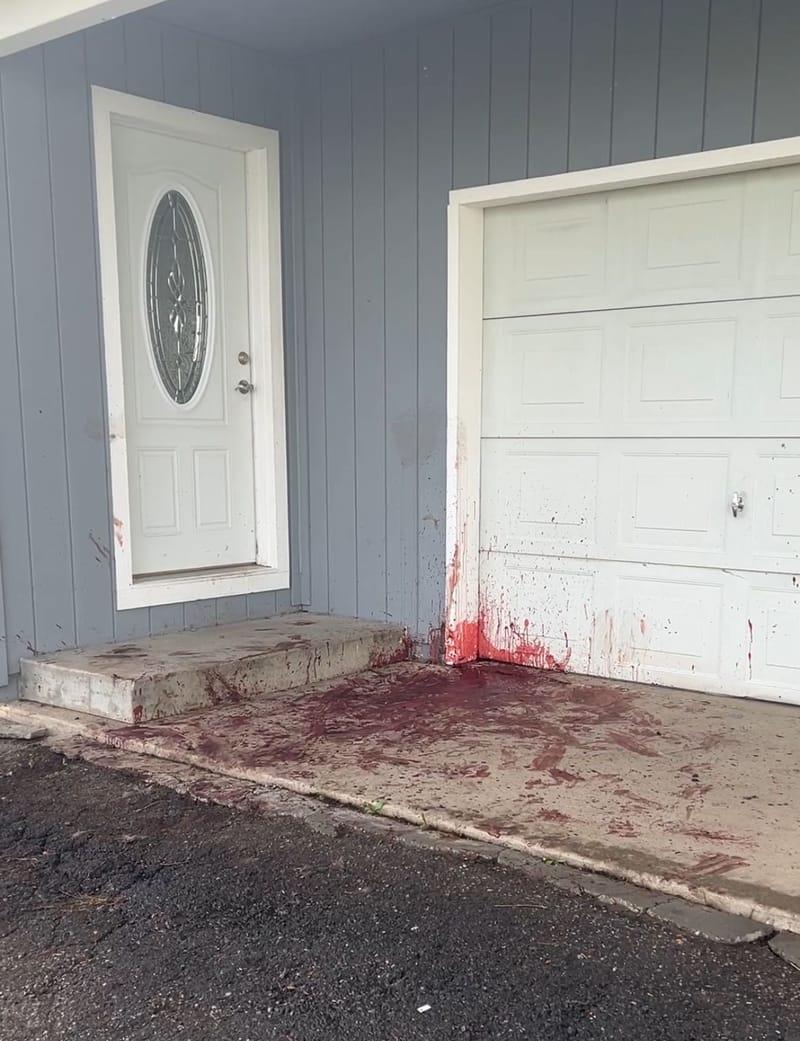
The aftermath of a wolf killing an elk on a Sierra Brooks doorstep, displayed by Senator Shannon Grove during committee proceedings. Credit: Sierra County Sheriff’s Office.
Rural legislators raised practical questions about impacts on livestock operations. Senator Shannon Grove displayed a photograph of a bloody doorstep in Sierra Brooks caused by a wolf dragging an elk carcass onto a family’s porch. She described ranchers waking to such scenes and livestock losses in her district. Grove asked how the bill would ensure full compensation for direct losses and indirect costs such as fence damage. She also questioned the effectiveness of tools like guardian dogs. “The wolves eat the dogs no matter what kind of dogs they are,” Grove stated. Senator Blakespear responded that her office continues collaborative discussions with farm and cattle groups through ongoing workshops with the Department of Fish and Wildlife.
Several organizations offered support during public comment, including the Animal Welfare Institute, Audubon California, and the California State Association of Counties. The measure passed on a motion referring it to the Appropriations Committee. Senator Blakespear closed by thanking committee members and stakeholders for their engagement.