Sierra Avalanche Center Receives Type 1 Designation
Longtime forecaster Brandon Schwartz will lead the Tahoe center year-round.
2 min read
TRUCKEE – The Sierra Avalanche Center, which forecasts avalanche danger for the Lake Tahoe backcountry, has become a Type 1 regional center. Tahoe National Forest announced the designation November 17 after the Forest Service hired Brandon Schwartz, one of the center’s three forecasters, as its full-time, year-round director.
The National Avalanche Center’s operating guidelines classify centers by their size and responsibilities. A 2015 Forest Service planning document identifies the Tahoe program as a Type 2 regional center that was already issuing daily winter advisories. Its Type 1 duties now include advising the Forest Service’s regional office and other avalanche centers. Tahoe National Forest expects the Sierra team to offer more guidance locally and statewide and to help smaller centers across the country plan their avalanche programs.
Schwartz has forecast avalanches in the region for more than 22 years, according to David Reichel, Sierra Avalanche Center executive director. The Forest Service’s Truckee Ranger District runs the forecasting operation. The Avalanche Center, a nonprofit, raises money for forecasts, pays observers to track conditions in the backcountry, and teaches avalanche safety.
In Sierra County, Yuba Pass on Highway 49 marks the northern edge of the forecast area. From there, the area stretches south to Ebbetts Pass on Highway 4, covering about 1,500 square miles in California and Nevada. Skiers and snowmobilers use the winter forecasts to plan routes. Search and rescue teams, railroad operators, and transportation departments also rely on them, according to the Forest Service.
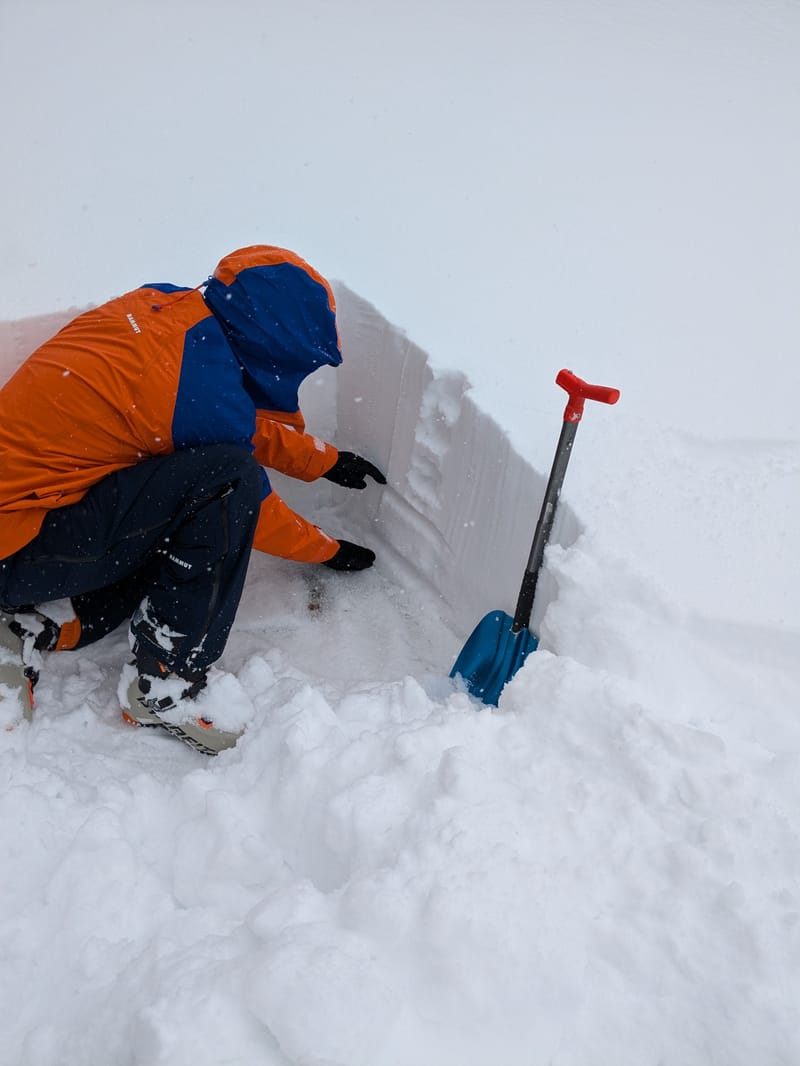
A forecaster examines a weak layer beneath fresh snow on Tamarack Peak on November 16. The pit was on a northeast-facing slope at about 9,200 feet.
Sierra Avalanche Center
The day before the announcement, Schwartz and fellow forecaster Steve Reynaud examined the snow on Tamarack Peak in Nevada. Beneath the recent storm snow, they found a weak layer of loose, sugary snow near the ground. The next morning, Schwartz warned that on slopes facing northwest through northeast above about 8,500 feet, a person could trigger a slide that broke nearly to the ground. The center’s free backcountry forecast shows where slides are most likely and how large they could be.