Straight Outta Compote
3 min read
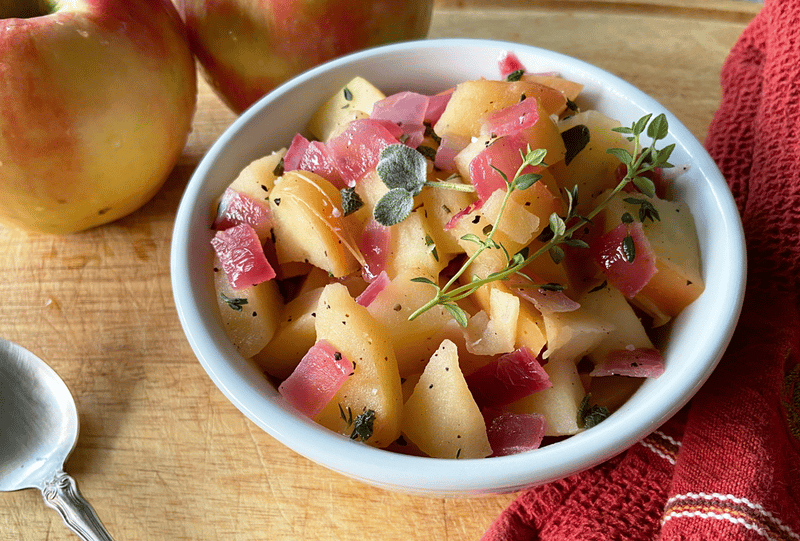
You are about to witness the strength of treat knowledge. So let’s set the record straight on who’s who in the fruit spread game.
Representing the gelatinous crew is jelly, made from fruit juice rather than fruit pulp. Its swagger comes from its smooth, clear appearance and firm, gel-like consistency. On the grittier side of town is jam, which incorporates crushed or chopped fruit cooked with sugar. The preserves posse flexes with larger pieces of fruit suspended in syrup or gel. Applesauce keeps it smooth and simple, with cooked apples mashed or puréed into a softer, more uniform consistency. Then there’s chutney, bringing a little savory street cred with its mix of fruit, vinegar, spices and sometimes onions. And finally, compote rolls with tender chunks of fruit simmered in a looser, syrupy sauce. Different textures, different flavors, each with its own style.
So where does compote hit hardest?
This fruity player doesn’t stick to one corner of the kitchen. It’ll hold its own over pancakes, waffles and oatmeal, bringing a naturally sweet, fruit-forward boost to your morning lineup. Spoon it over yogurt, swirl it into oatmeal or pile it onto French toast for a breakfast upgrade that doesn’t need much backup. Warm apple compote also makes a solid partner for vanilla ice cream, cheesecake or bread pudding, where its soft fruit and spiced syrup bring a little contrast to creamy, rich desserts.
But don’t sleep on its savory side. Apple compote pairs up with roasted pork and grilled sausages, where its sweetness helps balance rich, salty flavors. It can also bring something unexpected to a cheese board, especially alongside sharp cheddar or creamy brie. Think of it as the versatile crew member that knows how to work with just about anybody.
Apples bring plenty of room to experiment, too. Tart varieties like Granny Smith can give compote a bright, tangy edge, while sweeter apples create a softer, mellower flavor. Some varieties hold their shape better during cooking, leaving you with distinct chunks of fruit, while others break down more readily into a thicker sauce. The choice comes down to the texture you’re after. A little cinnamon and nutmeg will keep things classic, while fresh ginger, cardamom or a strip of citrus zest can take the flavor in a different direction. You can leave the apples chunky or cook them longer for a softer finish. Unlike a jam that needs to reach a particular set, compote is all about that spoonable, syrupy middle ground.
Ready to roll with the big dogs of the fruit spread game? Then grab those apples, mix ‘em and cook ‘em, and bring some flavor to the whole block.
Sage Apple Compote
Serves 2-4
• 2 Tbsp butter
• 1 Tbsp olive oil
• ½ red onion diced
• 2 apples, diced (any variety will do-peeled or not peeled, your choice)
• 10 fresh large sage leaves, cut into ¼-inch pieces
• 1 tsp fresh thyme or ½-tsp dried
• ¾ cup chicken stock OR water (more may be needed, it depends on the apples)
• 1 tsp salt
• ½ tsp pepper
Directions:
Heat butter, oil and onions in a saucepan over medium heat. Cook until onion softens, about 5 minutes.
Add in the remaining ingredients, cover and continue to cook for 15 minutes or so, on low-medium heat, stirring often.
You may need to add an additional ¼ cup of stock or water, depending on the variety of the apple. Serve leftovers cold or warmed with French toast and maple syrup in the morning.