Tahoe National Forest Plans Pile Burns Around Truckee
Smoke could linger for weeks and affect major travel routes.
2 min read
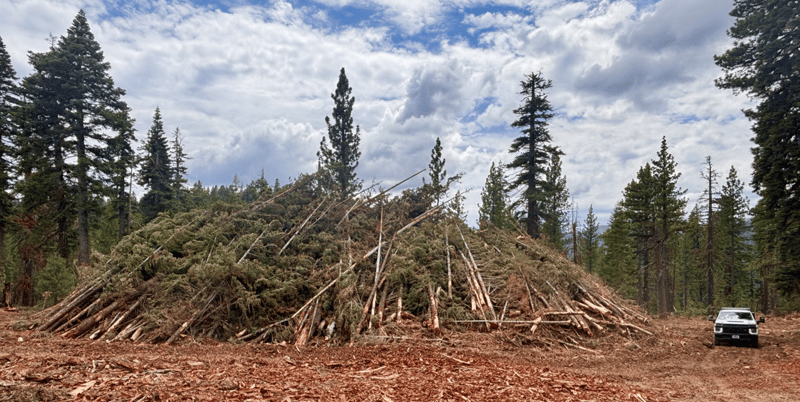
Landing piles contain vegetation and timber byproducts left after forest health projects.
U.S. Forest Service
TRUCKEE – Tahoe National Forest plans to burn up to 144 acres of large debris piles around Truckee through fall and winter, with smoke potentially affecting Interstate 80, Highway 89 north and south of town, and local streets.
The Forest Service announced the plans November 16, saying crews will ignite the piles when weather and available firefighting resources allow. Known as landing piles, the heaps contain excess vegetation and timber byproducts left after forest health work. The material slated for burning came from projects to reduce wildfire risk across approximately 5,000 acres surrounding Truckee communities.
Truckee District Ranger Jonathan Cook-Fisher said burning was the fastest and most economical way to remove the material because it could add to wildfire risk.
“We know smoke is never convenient or welcome whether from wildfires or prescribed burns,” Cook-Fisher said in the release. “All efforts will be taken to reduce public impact during holidays and significant community events.”
Residents and visitors should expect smoke during and after ignitions. It may settle into low-lying areas overnight and in the early morning, and it could linger for days to weeks after crews finish lighting the piles, the agency said.
Burn decisions will account for temperature, humidity, wind, vegetation moisture, smoke dispersal, and available firefighting resources. The Forest Service said it coordinates with the California Air Resources Board, obtains approval from local air quality districts, and works closely with the National Weather Service before burning.
To reduce smoke exposure at home, the agency advises residents to close doors and windows at night and use a portable air cleaner if available. Portable cleaners work best with doors and windows closed. Residents with central air systems can use them to filter indoor air, with high-efficiency filters where possible.
Drivers encountering smoke should slow down, turn on their headlights, and set their vehicle’s ventilation to recirculate. People with heart or lung disease, asthma, or other conditions aggravated by smoke should seek clean air and consider contacting their health care professional, the Forest Service said.
AirNow’s smoke guidance also recommends limiting outdoor exercise when it is smoky and waiting for better air quality before being active outside. Residents can check conditions on the AirNow Fire and Smoke Map.
The Forest Service directs residents and travelers to its Tahoe National Forest alerts page for current and upcoming prescribed fire projects.