Wild Things Brings Animal Encounters to Downieville School
Students felt an owl’s soft feathers and met a giant python.
3 min read
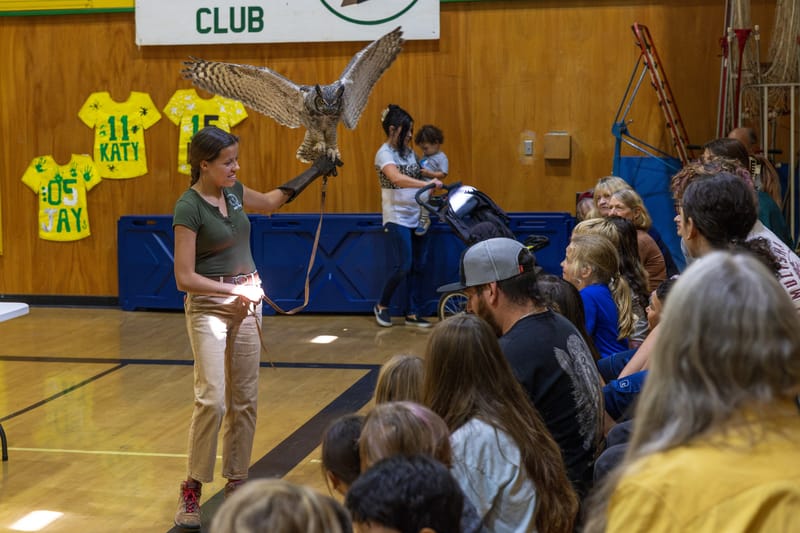
Elsa Arriola shows Downieville students Nova, a great horned owl.
DOWNIEVILLE — Downieville School students got close enough to feel a great horned owl’s soft feathers and run a hand along a large Burmese python when Conservation Ambassadors’ Wild Things returned for a school assembly on Monday, October 5.
Wildlife educator Jojo Kerschner, assisted this year by animal keeper Elsa Arriola, introduced five animal guests: a Gila monster, a young Virginia opossum, a great horned owl, a Burmese python, and a familiar capybara named Tater Tot. Along with explaining how the animals live, Kerschner told students how each came into the program’s care.
Based in Weimar, Wild Things provides a home for displaced and injured wildlife and brings animal ambassadors to schools and other audiences. This year’s visit offered a new lineup, with Tater Tot returning from last year’s assembly.
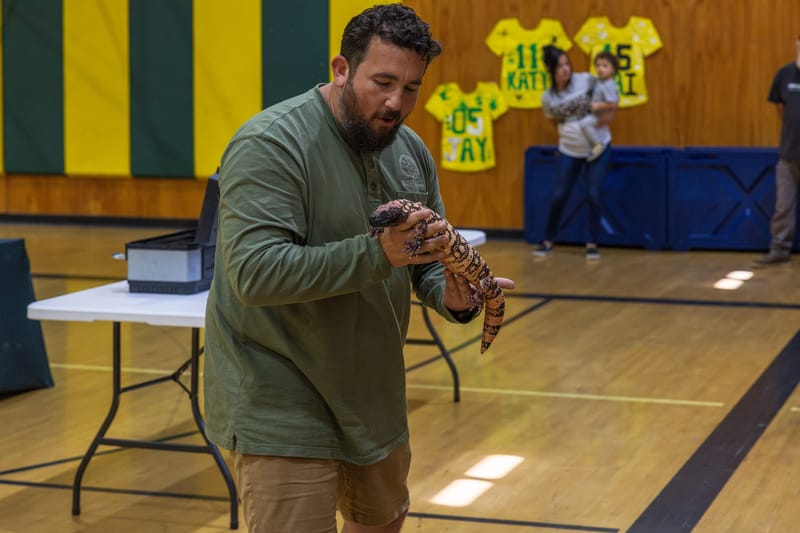
Smaug, a Gila monster from Arizona.
The first guest was Smaug, a Gila monster with pink and orange markings and a thick tail that stores fat. Kerschner described how the desert lizard uses its forked tongue to find food and explained its venomous bite.
Smaug arrived at the center after a couple picked him up in the Arizona desert and tried to take him home, Kerschner said. They were stopped at a California agricultural inspection station, where the animal was confiscated.
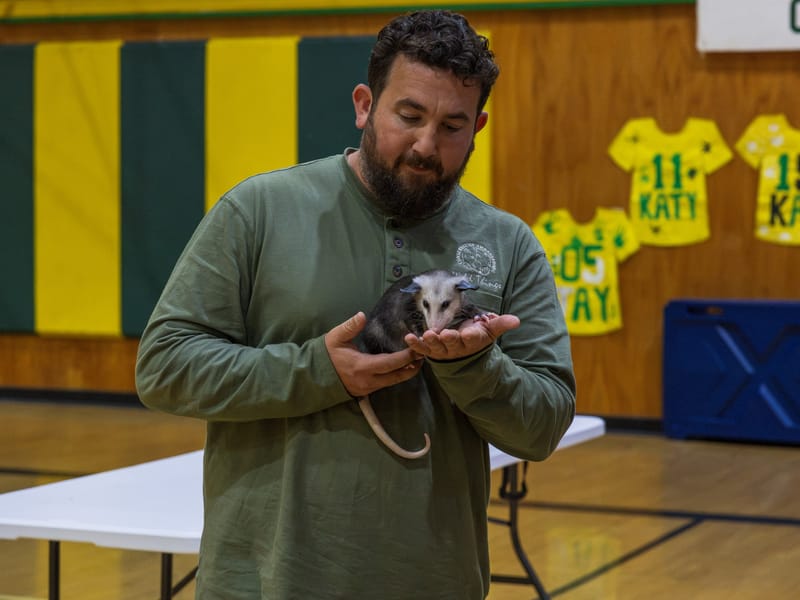
Kerschner displays a recently-rescued juvenile opossum.
Kerschner said the youngest guest, a Virginia opossum about five months old, had been found alive in his mother’s pouch after a vehicle struck her in Reno, Nevada. The person who rescued him kept him at home for about a month, cuddling him and letting him spend time with children and dogs. He became so accustomed to people that he could no longer safely return to the wild.
“You always want to get an animal to the proper rehab center,” Kerschner told the students, explaining that professional care gives rescued wildlife the best chance of returning to the wild.
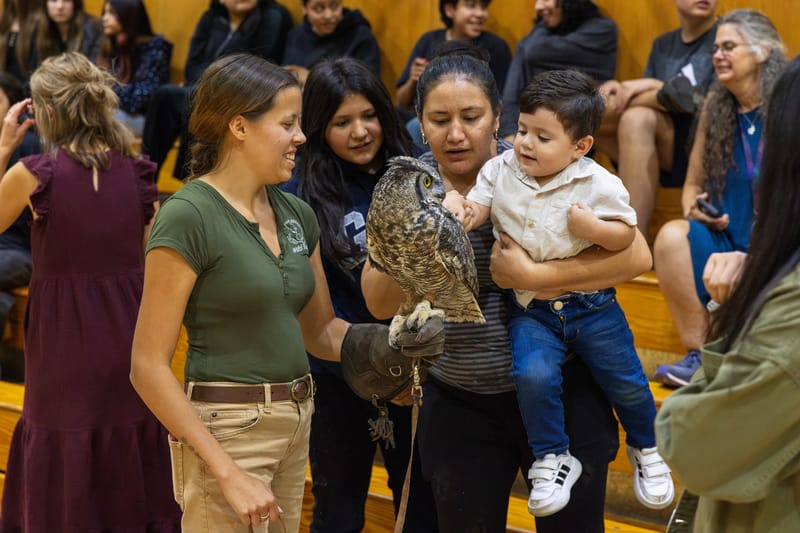
Nova allows assembly-goers to feel her feathers.
Nova, the great horned owl, brought a lesson students could hear and feel. Kerschner asked the audience to listen as she flapped her wings, demonstrating the quiet flight that helps owls hunt. Arriola carried Nova along the rows so students could gently stroke her back and feel her soft feathers.
Nova had been struck by a car and treated at the California Raptor Center at the University of California, Davis, Kerschner said. A permanent wing injury left her with limited flight, and she now lives with Wild Things.
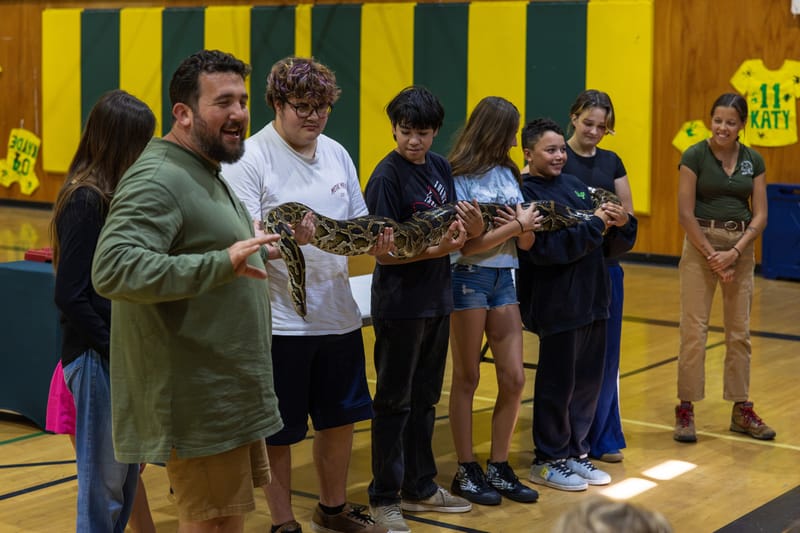
Students hold a 13-foot Burmese python.
For the Burmese python, Kerschner called up a row of student volunteers to help display a snake he described as about 13 feet long and weighing around 80 pounds. Other students then had a turn passing the table and touching her back.
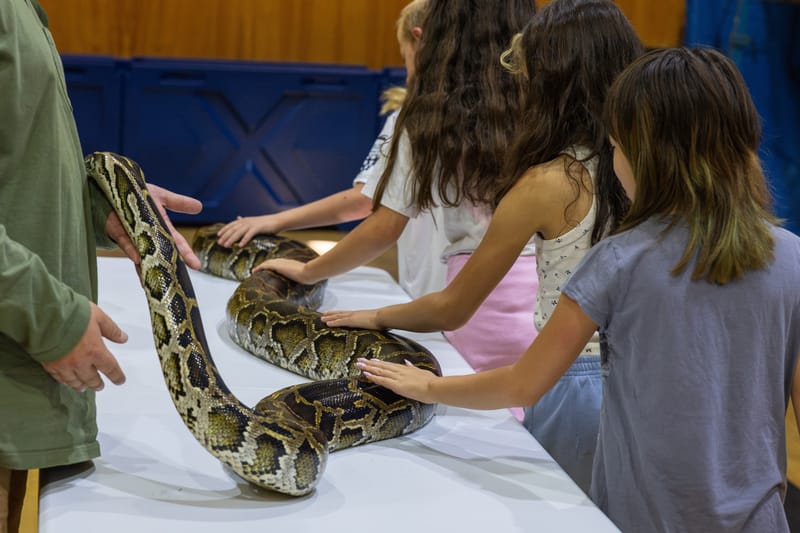
Hands-on with the python.
The python had started as a small pet, Kerschner said. Her owner fed and housed her properly, but she kept growing until she needed a new home. He used her story to urge students to research pets before getting them and plan for their care throughout their lives.
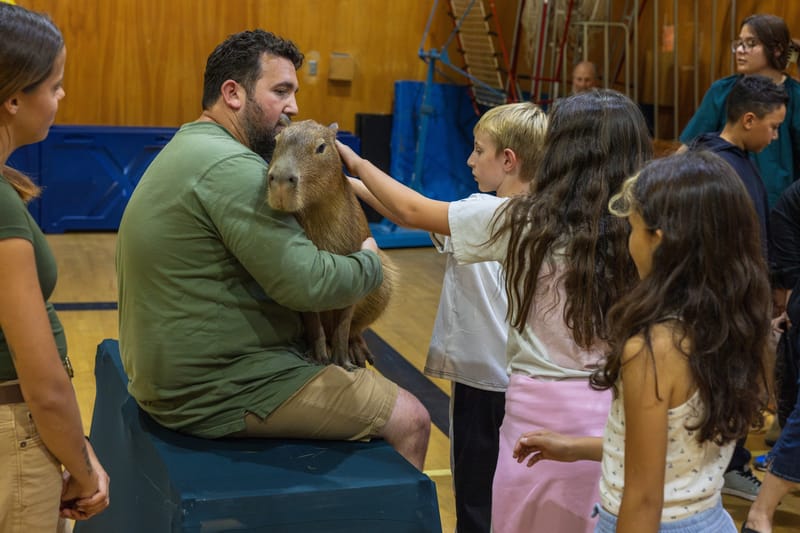
Tater Tot returned, once again letting students up close.
Tater Tot closed the animal presentations. Kerschner said the capybara now weighs more than 85 pounds. He explained how capybaras, the world’s largest rodents, use webbed feet to swim and spend much of their lives around water.
Tater Tot’s mother came to the center pregnant from an Arizona facility that closed after its owner died, Kerschner said. When she rejected Tater Tot, he became the pup’s caregiver, tending to her every two to three hours, day and night.
As he closed the show, Kerschner urged students to act on the things they care about, whether people, plants, animals, or the planet. Students were invited to finish the visit by lining up to pet Tater Tot.