Winter Storm Batters Northern Sierra Nevada Regions
Residents face extended power outages, travel disruptions, and cleanup after days of heavy snow and wind.
4 min read
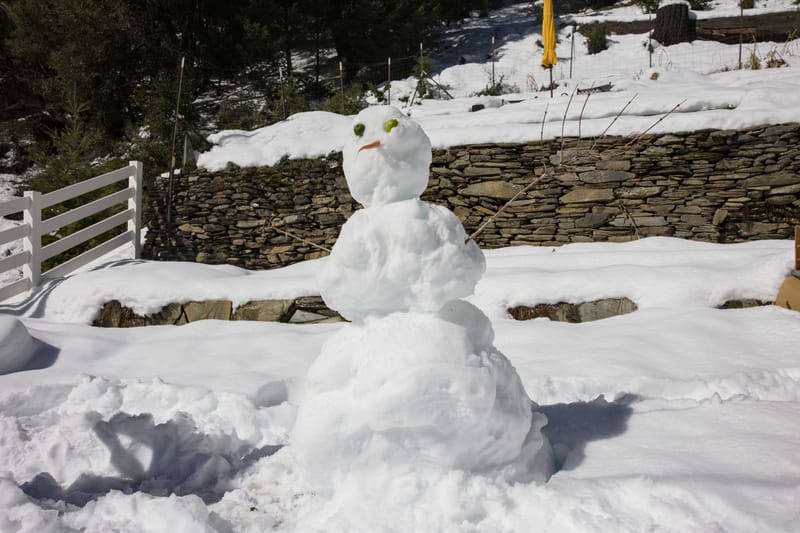
A snowman built in Downieville on Sunday, February 22, after the storm had subsided.
NORTHERN SIERRA — A series of powerful Pacific storms moved through the northern Sierra Nevada between February 15 and February 20. The National Weather Service issued winter storm warnings for the West Slope of the northern Sierra Nevada and western Plumas County areas. Heavy snow combined with strong winds created hazardous conditions throughout the region. Travel grew difficult in many locations while power infrastructure sustained damage from snow weight and falling trees. Officials and residents have dealt with prolonged disruptions, and power remains out in parts of Sierra and Nevada counties.
The Storm’s Progression
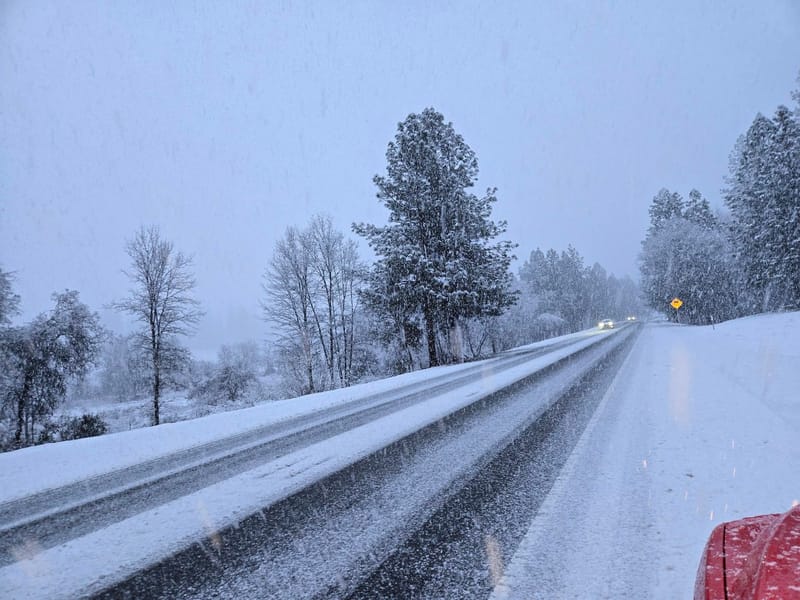
State Route 20 near Penn Valley on February 19. Credit: CHP - Grass Valley.
The National Weather Service Sacramento office issued warnings starting around February 15 that extended into February 20 for the affected zones. Snow levels dropped from 4,500 to 5,500 feet initially to as low as 1,500 to 2,500 feet during the heaviest periods. Winds gusted to 45 to 55 miles per hour at times, reducing visibility through blowing snow. Multiple rounds of heavy precipitation fell mainly from February 16 through February 19. Conditions improved somewhat by February 20, although cold temperatures and residual snow continued to have an impact. Local agencies issued repeated travel advisories and closely monitored developments.
Traffic Impacts
Major highways faced repeated closures and strict chain controls throughout the storm. Interstate 80 experienced full shutdowns at times from Colfax to the Nevada state line because of heavy snow, whiteout conditions, and numerous spinouts. Highway 50 also saw segment closures, and State Route 49 in Sierra County required traffic restrictions or temporary halts. Portions of Highway 70 near Graeagle faced similar controls.
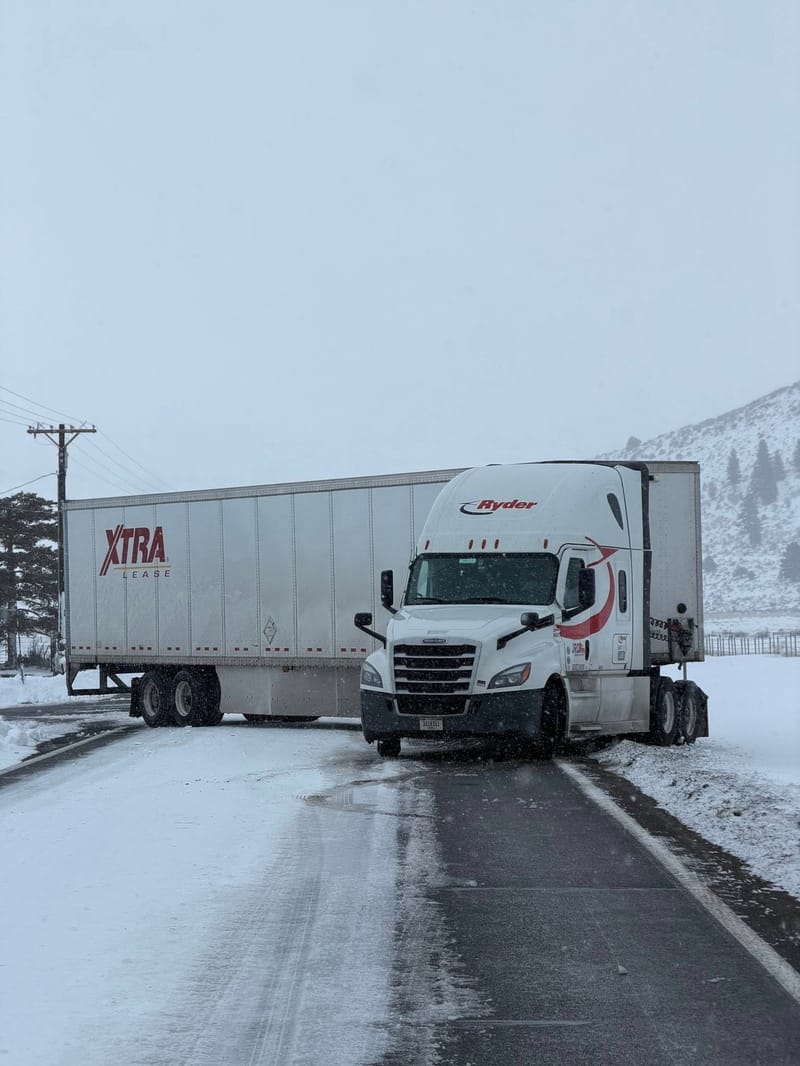
A big rig became stuck on Highway 49 in Loyalton, and its driver was later cited chain violations. Credit: Sierra County Sheriff’s Office.
The Sierra County Sheriff’s Office detailed enforcement actions against a commercial vehicle that violated chain requirements. On February 18, deputies observed a commercial semi-truck sliding into Loyalton at an unsafe speed on snow-covered roads without chains. “The driver lost traction on the snow-covered roadway but was able to regain control before crashing,” the Sheriff’s Office stated in a release. A deputy conducted a stop and escorted the vehicle for a turnaround, but the semi became stuck during the maneuver, so deputies assisted by pulling the big rig free. California Highway Patrol officers issued multiple citations to the driver. The sheriff’s office noted that deputies stopped four commercial big rigs that day for chain violations on Highway 49 through Sierra Valley.
Power Outages
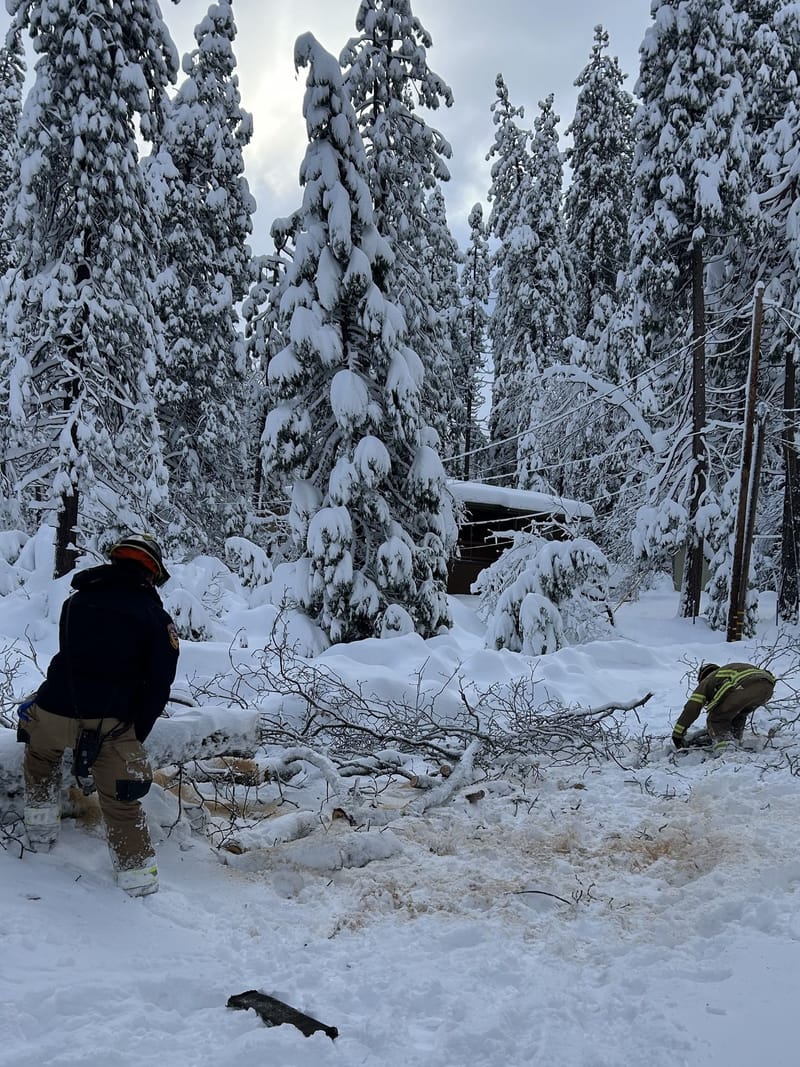
Several falling trees hit power lines, causing widespread outages. Credit: California Governor’s Office of Emergency Services.
Heavy, wet snow and high winds brought down numerous trees and power lines across the northern Sierra Nevada. Nevada County experienced the most extensive disruptions, with more than 7,000 Pacific Gas and Electric customers without electricity at the peak around February 19. Several ongoing power outages are affecting Sierra and Nevada Counties. Customers remain without service in Sierra City, Pike, and parts of western Nevada County.
Cleanup and restoration efforts involve coordinated multi-agency operations. PG&E crews work alongside CAL FIRE’s Nevada-Yuba-Placer Unit, local fire departments, and county public works teams to clear downed trees from roadways and power lines. The Nevada County Office of Emergency Services coordinates local response, while the California Office of Emergency Services supports with mutual aid resources. Deep snow and difficult road access slowed progress in more remote communities.
Snowfall and Historical Context
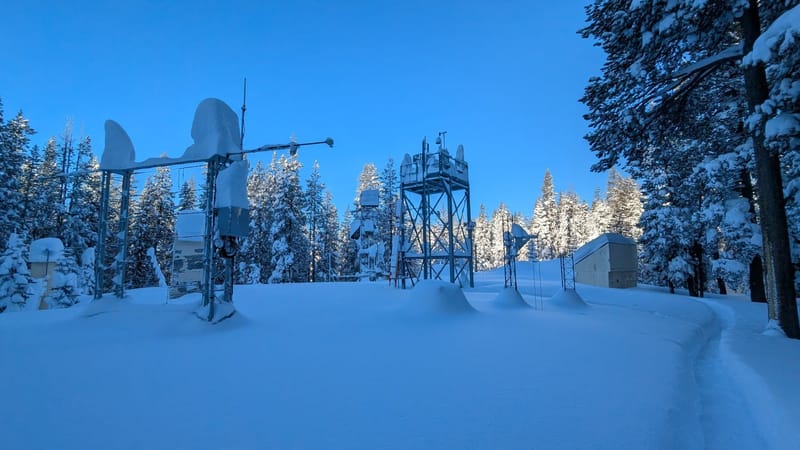
UC Berkeley’s Central Sierra Snow Lab recorded 111 inches of snow in a 5-day period. Credit: Central Sierra Snow Lab.
The storm produced substantial snowfall, particularly at higher elevations across the northern Sierra Nevada. The UC Berkeley Central Sierra Snow Laboratory near Soda Springs measured 111 inches of new snow over a five-day period ending around February 20. Forecasters had projected 4 to 8 feet at pass levels in many areas, and observations closely matched those amounts. The 111-inch total ranks as the third snowiest five-day stretch on record at the laboratory since digitized records began in 1970. Only two other periods exceeded the amount: December 1970 with 113 inches and April 1982 with 118.5 inches.
Ongoing Issues and Recovery
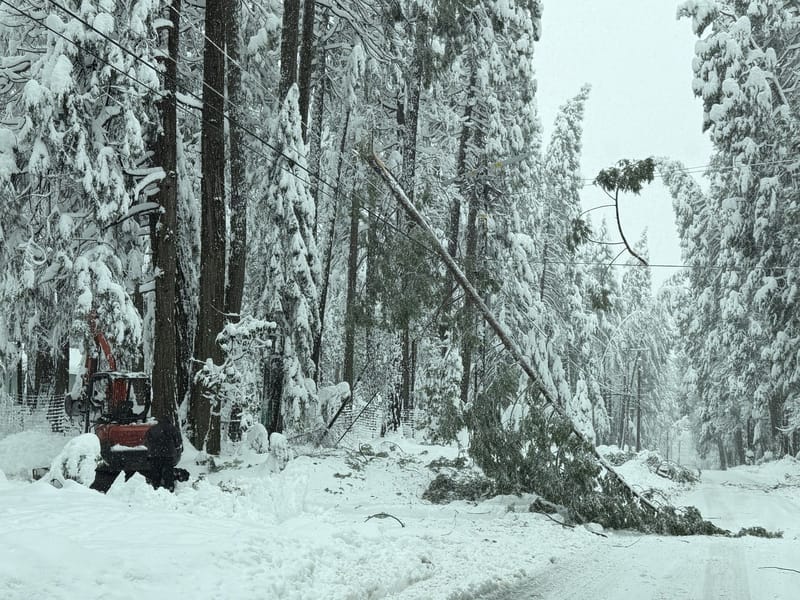
Outages from damage to power infrastructure persist in parts of Sierra and Nevada Counties. Credit: California Governor’s Office of Emergency Services.
As of February 23, power restoration efforts remained active in Nevada and Sierra Counties. Sierra County Supervisor Lila Heuer reported, based on contact with PG&E workers on Monday morning, that crews were actively working to repair the main lines to Sierra City, and would afterward shift focus to secondary lines connecting to residences. She estimates power will be restored by Tuesday, February 24, but PG&E has not yet released a restoration timeline. PG&E estimates that power will be restored to Pike by February 24 at 10 AM.
Road conditions have improved on primary routes, but repair work and snow removal operations persist on sections of Interstate 80 and Highway 49. Officials in Sierra, Nevada, and Plumas counties urged drivers to check current conditions before travel and to carry emergency supplies. Full recovery from infrastructure damage and snow removal will likely require weeks of additional work by crews.