Wolf-Hazing Training Draws More Than 20 Ranchers
Sierraville course prepares ranchers to seek permits for projectiles and pursuit.
3 min read
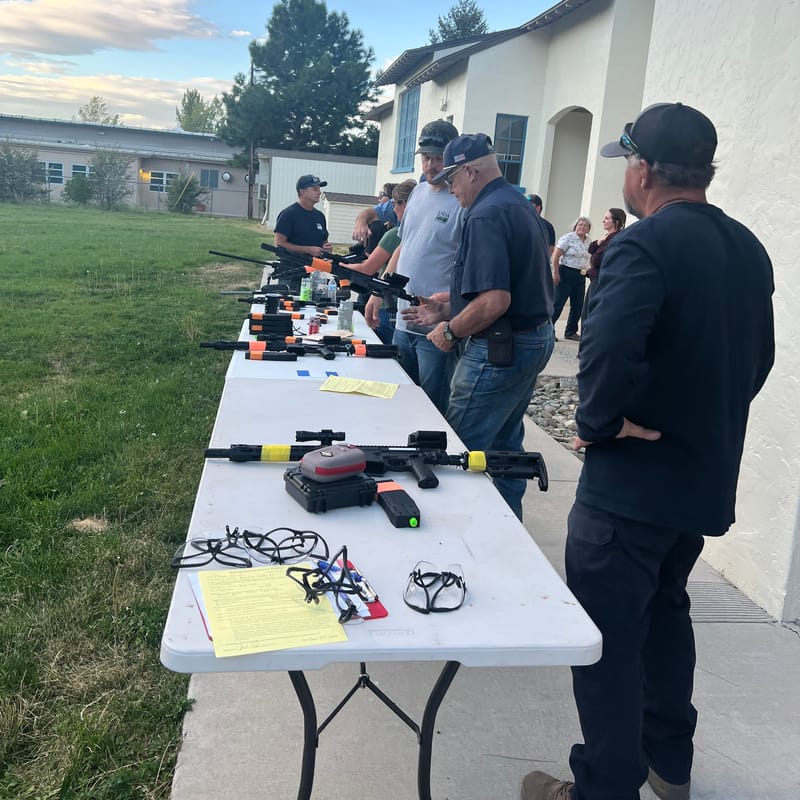
Participants in the September 10 projectile launcher training in Sierraville.
Sheriff Mike Fisher
SIERRAVILLE — More than 20 ranchers attended training September 10 in Sierraville on using projectile launchers to drive wolves away from livestock, according to Sierra County Sheriff Mike Fisher. The course prepares ranchers to seek state permission to fire paint or inert-powder rounds at wolves and pursue them as they move away.
The California Department of Fish and Wildlife (CDFW) developed the authorization process this year. Ranchers must obtain the department’s permission after training before using the expanded methods.
Under CDFW’s guidance for ordinary hazing, ranchers can use lights and loud noises, or approach a wolf to move it away from livestock. The approach must stop once the wolf leaves and heads away, and may resume if it stops leaving or turns back. The expanded authorization can allow “sustained pursuit”: continuing to drive the wolf away as it retreats.
The Sierra Valley Resource Conservation District hosted the session at the Historic Sierraville School, with instruction from the United States Department of Agriculture’s Wildlife Services. Congressman James Gallagher also attended and described the session in a Facebook post, saying, “While up in the Sierra Valley, I sat in on a USDA training with Sheriff Fisher that allows ranchers to be certified in more aggressive hazing tactics against wolves using paint ball projectiles. I will continue to work hard to give us the tools we need to better protect our lives and livelihoods from wolves.”
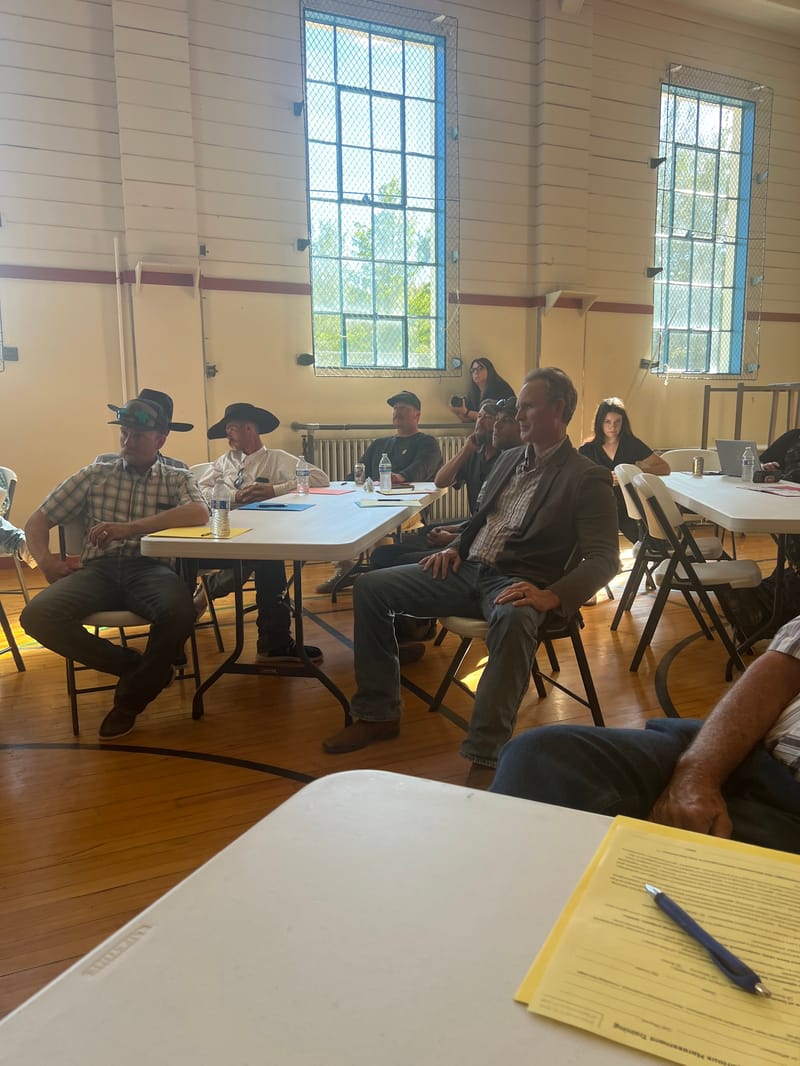
Congressman Gallagher during the training at the Sierraville School.
Sheriff Mike Fisher
The training covers launcher safety and limitations and includes a field range exercise, according to an August guide from University of California Cooperative Extension, prepared with CDFW’s help. The rounds are intended for nonlethal hazing, and the guide cautions that improper use can cause serious bodily harm. Launchers also differ in range and accuracy.
Fisher, who helped with the training, said that the launchers immediately available to ranchers would fire inert-powder rounds. “It’s a pretty good impact,” he said. Ranchers would not be allowed to use solid rubber or kinetic balls for wolf hazing, he said, and California law prevents them from possessing pepper balls, which contain a chemical irritant.
Gray wolves remain protected under state and federal endangered-species laws, which restrict pursuing them as well as killing them. CDFW can issue the ranchers’ permits under Fish and Game Code, which allows the department to authorize activities involving protected species for wildlife management. An April agreement with the United States Fish and Wildlife Service sets out how CDFW can designate partners to conduct the hazing under federal conservation authority.
Permitted ranchers must report each use of projectiles or sustained pursuit through CDFW’s online system within seven days. The program also requires compliance with firearms laws and prohibits firing projectiles where carcasses or bone piles attract wolves.
Before the Sierraville course, Fisher questioned how useful the powder rounds would be in the field. In an interview published September 2 by Ag Alert, the California Farm Bureau’s newspaper, he said their limited range and impact made them useful only in narrow circumstances, and doubted they would work against wolves already accustomed to attacking cattle.
“When you’re actively working, it’s very difficult to have that tool immediately available,” he told the newspaper.