CDFW Collars Five Gray Wolves in Northern California Operation
State biologists aim to improve wolf monitoring and conflict prevention with new tracking collars.
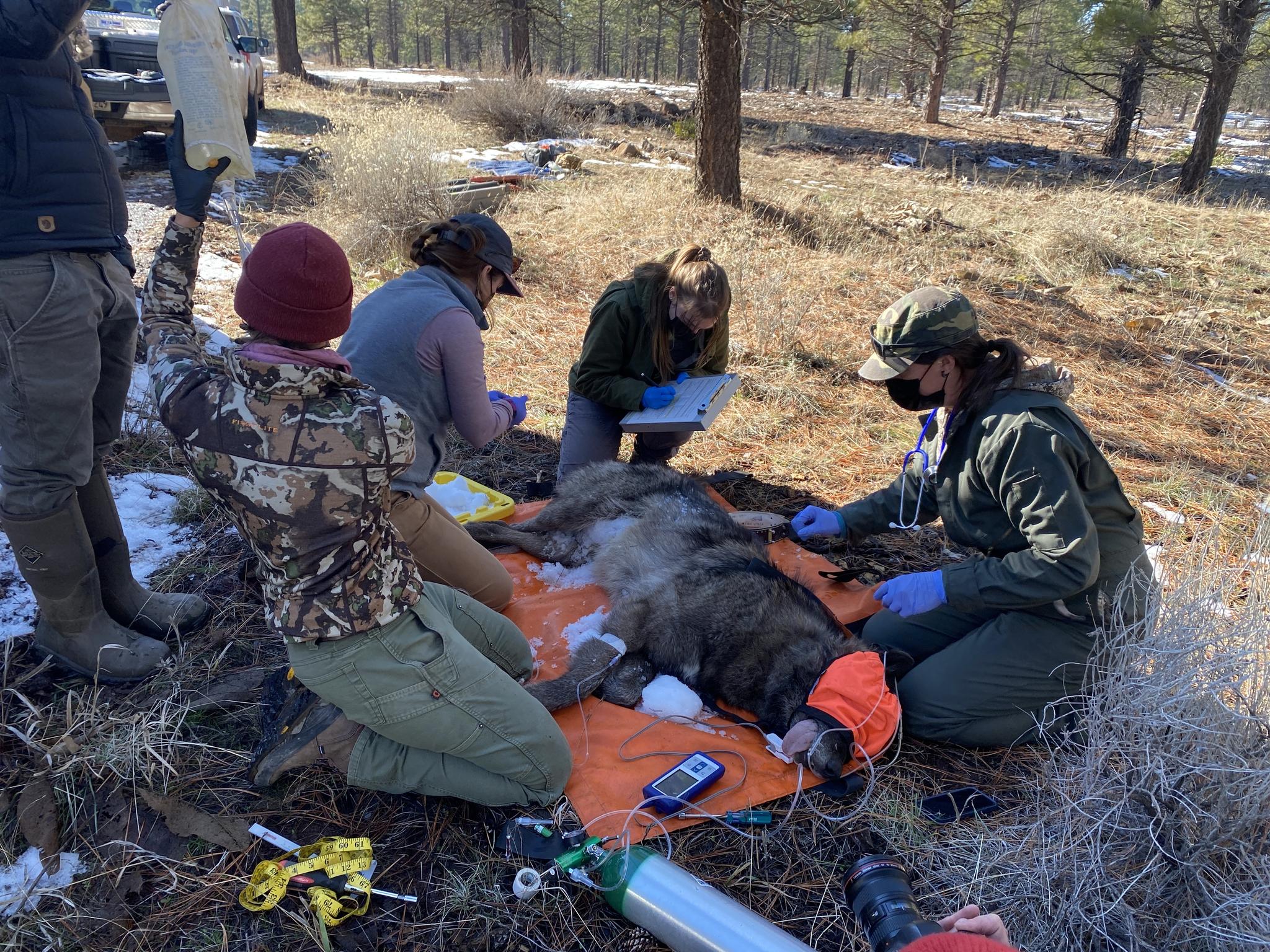
A CDFW team works to collar and collect samples from a sedated gray wolf. Credit: CDFW.
NORTHERN CALIFORNIA — The California Department of Fish and Wildlife (CDFW) has successfully fitted satellite collars on five gray wolves during a recent helicopter-based capture effort in the Sierra County area. Operations took place between January 12 and January 20 across Lassen, Modoc, Shasta, Siskiyou, and Tehama counties. Wolves were captured by helicopter, transported to nearby field sites for processing, and released on public land close to their capture locations. Biologists fitted each animal with a satellite collar while collecting body measurements, DNA samples, and blood for health and genetic analysis.
The collared wolves belonged to the Whaleback and Harvey packs. One adult male, born into the Whaleback pack, was captured in northern Lassen County and returned to its pack after release. A dispersing adult male from the Harvey pack, previously collared, had his device replaced in Modoc County. Additional captures included a female born in 2024 from the Harvey pack in northwestern Lassen County, and two females born in 2025 from the same pack in northwestern Shasta County.
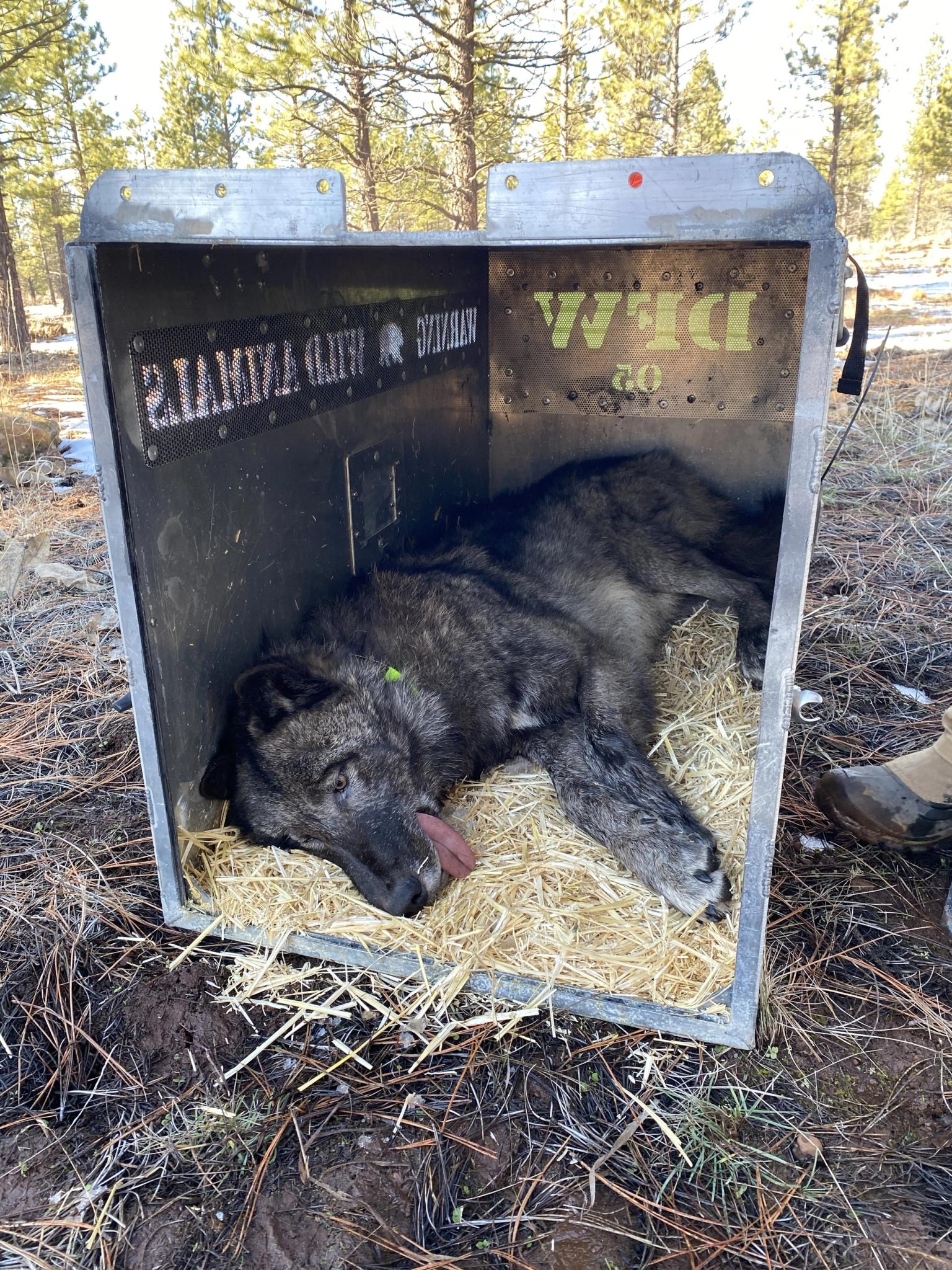
A sedated gray wolf after being collared. Credit: CDFW.
During the operation, a sixth wolf—an adult female from the Harvey pack—died after capture. CDFW is investigating the factors contributing to the death, noting that wildlife capture operations carry inherent risks to animals.
Satellite collars collect multiple location points daily and transmit data to CDFW once per day, rather than in real time. Designed to last two to three years, the collars are programmed to drop off automatically before the battery depletes. Data from the new collars began appearing on CDFW’s public mapping tool within days of the captures.
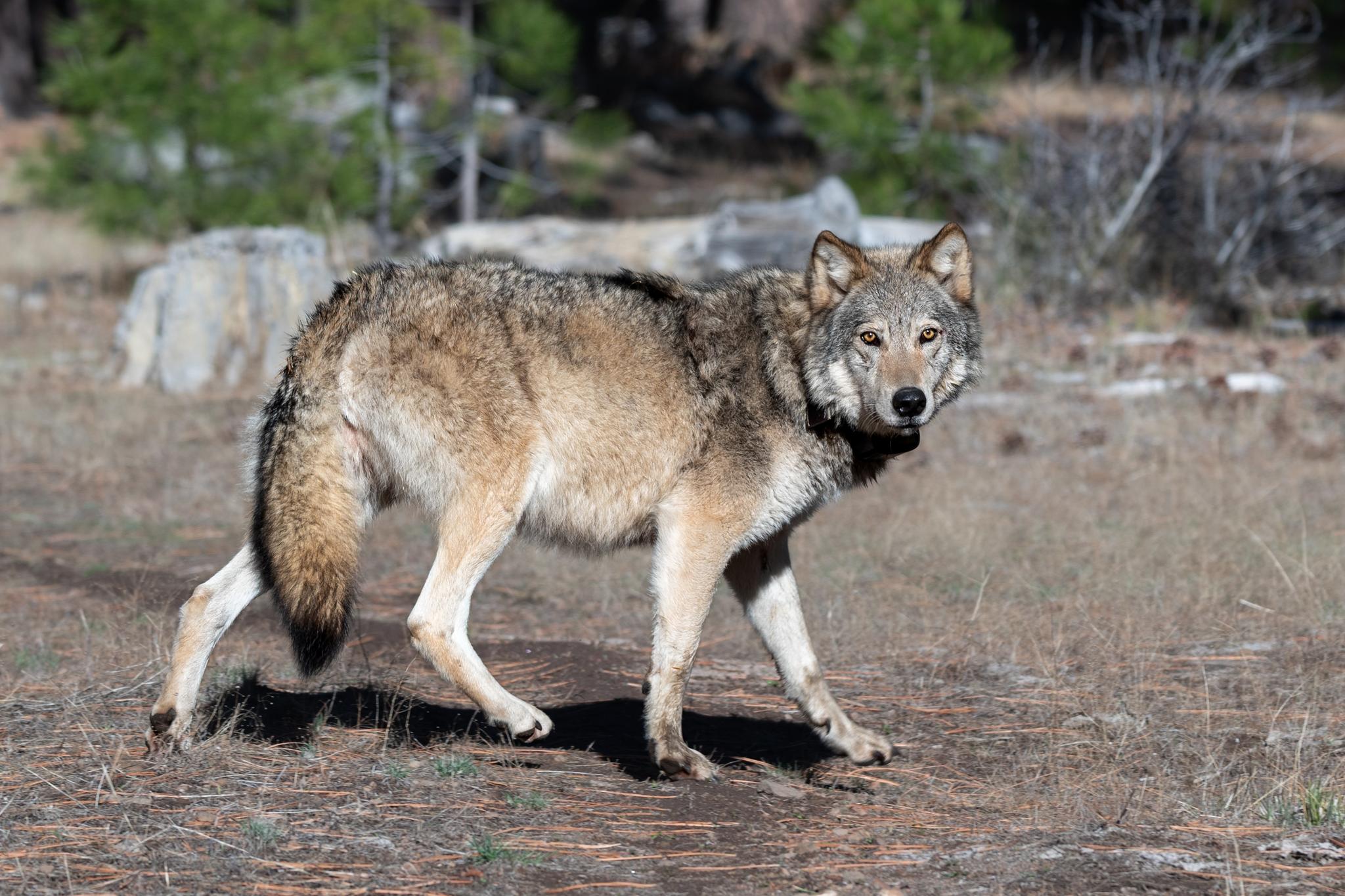
A gray wolf returns to the wild sporting a new satellite collar. Credit: CDFW.
In May 2025, CDFW launched the Wolf Location Automated Mapping System, commonly called the Wolf Tracker. Available on the department’s gray wolf webpage, the interactive tool displays approximate locations of GPS-collared wolves in hexagonal cells to help livestock producers understand nearby wolf activity and reduce potential conflicts. The tool is available at https://wildlife.ca.gov/Conservation/Mammals/Gray-Wolf/Location-Map.
Over the past decade, CDFW has collared 38 gray wolves statewide, with 13 currently carrying active devices following the latest operation.