CPUC Proposal Would Tighten Rules for Burying Power Lines
PG&E warns its plan could shrink as regulators weigh safety, reliability, and costs.
4 min read
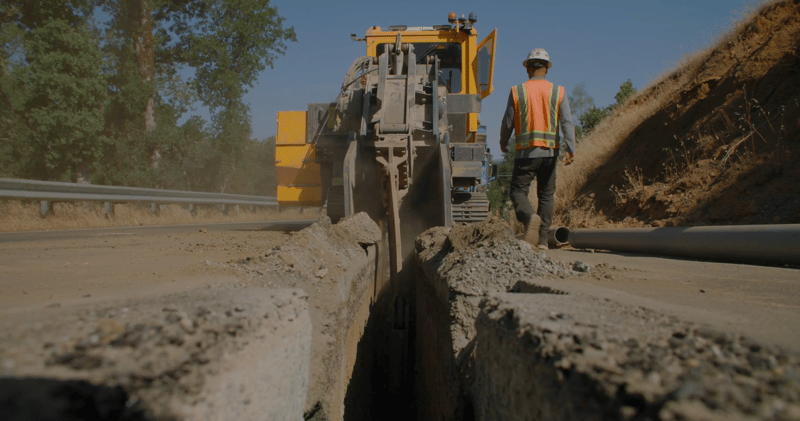
Recent PG&E undergrounding work.
Pacific Gas & Electric
SACRAMENTO – A California Public Utilities Commission proposal would tighten the rules for charging customers for underground power lines through an expedited approval program. Projects would have to provide at least as much benefit per dollar as the best alternative.
Pacific Gas and Electric Company (PG&E) says the proposed rules would reduce eligible mileage in its 5,000-mile undergrounding plan for 2028–2037 to about 1,100 miles. The company raised that objection in its November 9 announcement celebrating 1,500 miles of completed undergrounding since 2021.
The dispute concerns how to spend customers’ money on wildfire protection: more expensive underground lines that provide stronger protection along their routes, or less expensive overhead upgrades that can cover more ground for the same construction spending.
The rules would apply to the expedited ten-year undergrounding program created by Senate Bill 884. Utilities would use a common method to weigh project costs against the value of preventing fires, avoiding outages, and reducing maintenance expenses over the equipment’s life.
Projects already must show that their estimated benefits equal or exceed their costs to enter the program’s cost review. The proposed decision would add a second test: undergrounding must provide at least as much benefit per dollar as the best alternative for the same line. Utilities would have to recheck that comparison if detailed planning lowers undergrounding’s score below the alternative’s initial estimate.
In its 2026–2028 wildfire mitigation plan, PG&E estimates average construction costs of approximately $3 million per mile for undergrounding and $1 million per mile for covered overhead wire.
Overhead upgrades include stronger poles and power lines with a protective covering. PG&E’s wildfire plan says covered wire generally can be installed faster, while undergrounding offers greater protection from falling trees and lower maintenance expenses over time.
Those construction costs reach customers through their electric bills. Under the commission’s rate-setting process, utilities recover approved building and financing costs from customers over time. Lower construction spending therefore means less for customers to repay, all else equal.
Choosing covered wire could keep bills lower than they would be with more undergrounding. The long-term comparison also depends on maintenance costs: underground lines cost more to build but less to maintain, according to PG&E.
The company estimates that covered wire alone reduces ignition risk by about 67%, compared with about 98% for undergrounding primary distribution lines. PG&E puts covered wire combined with fast-acting shutoff settings and planned safety shutoffs at about 97%, while acknowledging the resulting outages disrupt customers.
That reliance on shutoffs is a central part of PG&E’s objection. In an October 27 filing, the company argued that restricting undergrounding would leave customers more dependent on those outage programs. It also said a long-term construction program helps lower costs through improved planning, contracting, and construction methods.
“Undergrounding is one of the most powerful tools we have to protect our customers and communities from wildfire risk,” Matt Pender, PG&E’s Undergrounding and System Hardening Vice President, said in the November 9 release.
PG&E says its underground lines deliver approximately 90% fewer outages for the customers they serve. Its 1,500-mile milestone counts lines installed and put into service, including 325 miles completed this year. County totals supplied by the company show 11 miles completed in Sierra County, 69 in Plumas County, and 13 in Nevada County since 2021.
The two sides also disagree on how to value preventing a catastrophic fire. PG&E gives extra weight to these events when estimating benefits. The proposed decision would base estimates on how likely an event is and how much damage it could cause, including rare catastrophes.
Consumer advocate The Utility Reform Network supports calculations without PG&E’s extra weighting. In November 2 comments on the utility’s ten-year plan, the group also backed the proposal’s approach of counting future maintenance savings among a project’s benefits. PG&E wants to subtract those savings from project costs before calculating the benefit-cost ratio. Both methods count the savings, but they affect a project’s score differently.
PG&E also wants regulators to allow undergrounding that falls short of the comparison when local conditions, such as tree-strike danger and shutoff impacts, favor it. The proposed decision says those risks and benefits should be included in the calculations used to compare projects.
The proposed rules would also set auditing requirements and compare completed projects’ costs with forecasts. Spending that fails the expedited program’s conditions could undergo a separate review before being charged to customers. Utilities can also seek undergrounding funding through other proceedings, including their general rate cases.
PG&E’s ten-year plan remains before the Office of Energy Infrastructure Safety, which reviews its wildfire protection and reliability benefits. If that office approves the plan, PG&E would then ask the commission for conditional approval to recover its costs from customers.
The proposed rules are on the commission’s November 19 voting agenda.