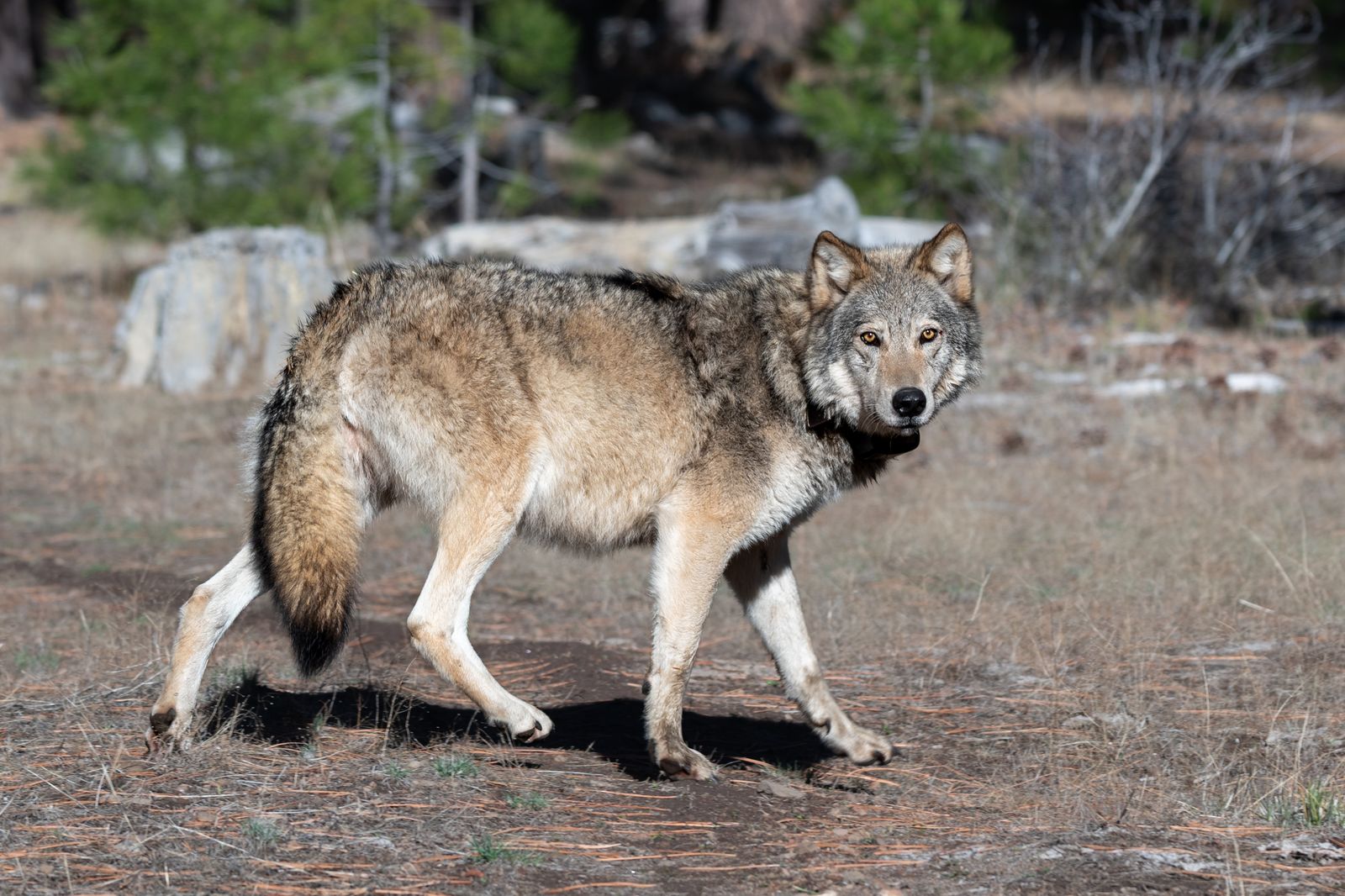
Long Valley’s First Confirmed Pups Join California’s Growing Wolf Population
Eight packs have documented litters amid shifting territories and livestock conflicts.
4 min read
SIERRA COUNTY – The Long Valley gray wolf pack has produced its first confirmed litter, at least five pups, in a territory spanning eastern Sierra and Plumas counties and southern Lassen County, according to the California Department of Fish and Wildlife’s latest wolf update.
The pack is one of eight with documented litters this year. Adding their reported minimums gives at least 42 pups across California, including at least nine in Siskiyou County’s Whaleback pack. The new July–September report lists 10 active packs.
Long Valley’s breeding female, CA101, left the Beyem Seyo pack in early 2025. Biologists confirmed her litter in August through trail-camera footage and genetic testing, according to CDFW’s October account of California’s known wolves. The department recognized Long Valley as a pack in April after documenting wolves consistently using the area for at least six months.
During the summer quarter, biologists spent 13 days on ground-capture operations in Long Valley territory and fitted one of the male pups, CA195, with a tracking collar. In southern Plumas County, the Grizzly pack also had at least five pups, and biologists collared an adult male after four days of capture work.
California’s modern wolf recovery began on December 28, 2011, when OR7 crossed the Oregon border and became the state’s first confirmed wolf since 1924. Wolves have returned through natural dispersal from other states, then through the reproduction and movement of wolves born here.
CDFW’s ten-year history traces the first contemporary pack to Shasta in Siskiyou County in 2015. That pack soon disappeared from monitoring, but the Lassen pack became established in 2016 in Lassen and Plumas counties and began producing pups the following year. Its litters have continued annually through this year.
The statewide increase accelerated later. California’s minimum year-end count rose from seven wolves in 2020 to 18 in 2022, then 44 in 2023, 50 in 2024, and 55 in 2025, according to the department’s 2025 annual report. Those are minimum tallies of wolves verified alive at each year’s end, and more recent estimates put the statewide population closer to 100, including an estimate reported by NBC Los Angeles in July.
As young wolves leave their birth packs, they carry the population into new territories. The Whitehorse pack’s breeding female came from Whaleback, as did the female that produced Ashpan’s first recorded litter this year. Long Valley’s female came from Beyem Seyo, whose original breeding pair were both born into the Lassen pack.
Deaths have also reshaped the population. CDFW documented 12 wolf deaths in 2025, including four Beyem Seyo wolves killed during the department’s effort to stop persistent livestock attacks in Sierra Valley. Three were adults; the fourth was a juvenile killed inadvertently during the removal effort.
Pack boundaries and names also change as animals move. This summer, genetic testing established that the female previously associated with Lassen County’s Tunnison pack had bred with the Harvey pack’s male, producing at least four pups. She remained with Harvey, and CDFW now lists Tunnison as inactive.
The expansion reached the southern Sierra Nevada in 2023, when biologists confirmed the Yowlumni pack in Tulare County, more than 200 miles from the nearest known northern pack. Its later range included northern Kern County and Tule River Tribe lands. A mange outbreak affected the pack in 2025, and its breeding female was found dead that September, likely from complications of the infection, according to CDFW.
Yowlumni is now listed among past packs. During this summer’s reporting period, the collared female CA091 continued traveling alone in Tulare and Kern counties. Farther north, biologists detected at least two wolves in northern Butte and northwestern Plumas counties, and a lone wolf in northern Lake County.
The new reports also document new livestock injuries in the Sierra Valley. CDFW’s October 16 investigation report attributes injuries to two calves in Sierra County to Long Valley wolves, in cases dated August 11 and September 3. Both were on private land.
In eastern Plumas County, investigators attributed one dead calf and two injured calves to Grizzly wolves in August and September. Statewide, the quarterly report records 49 investigations during July–September, with 17 confirmed and seven probable wolf-caused livestock losses.
Local prevention work has included September’s wolf-hazing training in Sierraville, which prepared ranchers to seek authorization for expanded methods of driving wolves away from livestock. Tracking collars help biologists map territories, follow dispersing animals, and respond to potential livestock conflicts. Long Valley’s newly collared juvenile is the pack’s only wolf listed with an active collar in the summer report.