Washoe Tribe Completes Acquisition of Loyalton Ranch
State conservation funds and partners helped the Washoe Tribe reclaim ancestral homelands for restoration.

Updated
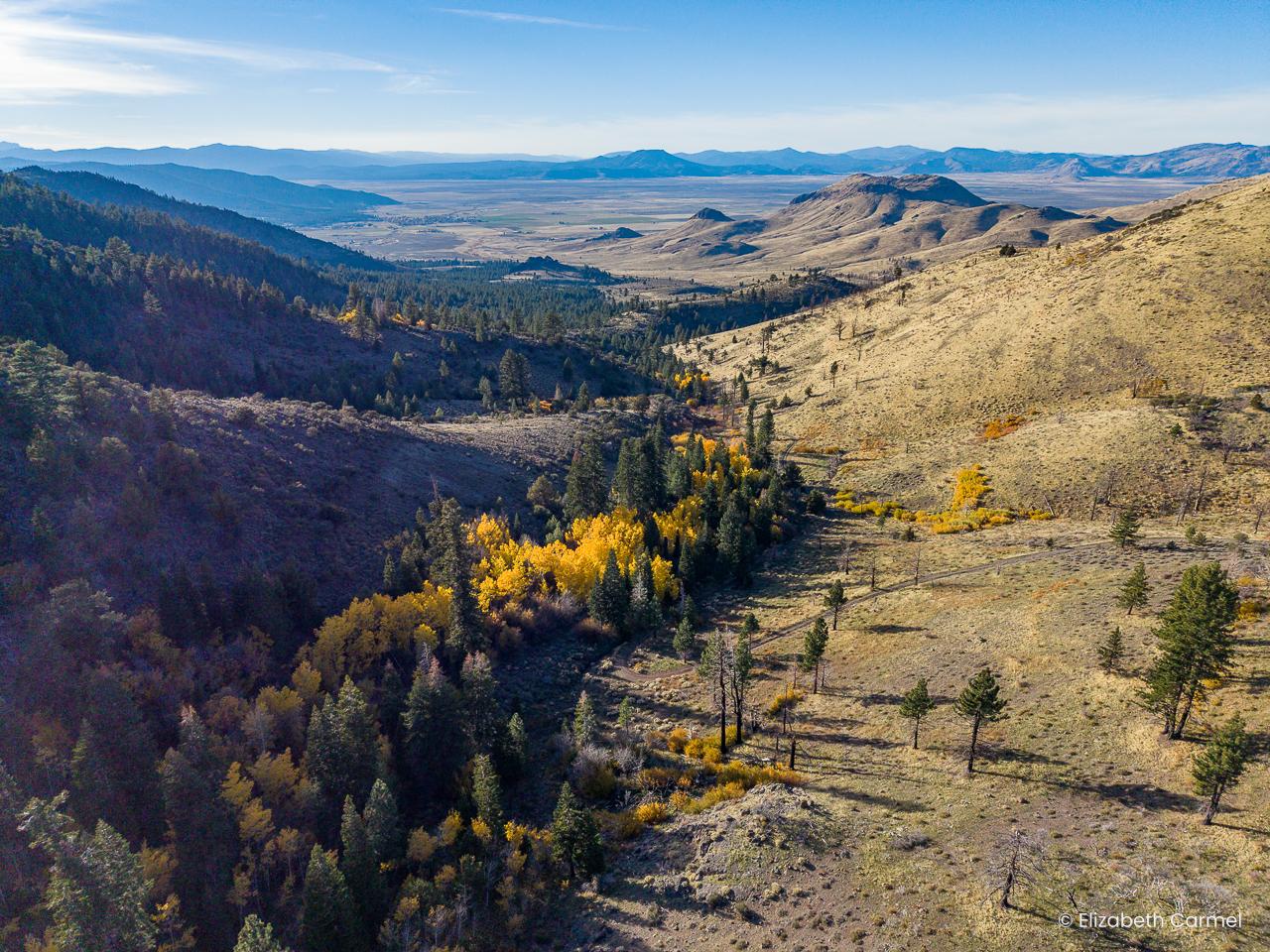
The west side of the Loyalton Ranch property, now WélmeltiɁ Preserve, with the Sierra Valley in the background. Photo © Elizabeth Carmel.
SIERRA VALLEY — In June 2018, 57.6 percent of California’s voters supported Prop 68 and authorized the sale of $4 billion in general referendum bonds to help fund state and local parks, environmental protection, wildlife protection, water infrastructure, and flood protection projects within the state.
Ironically, this measure has played a critical role in providing the Washoe tribe, the indigenous residents of land stretching in a line along the eastern side of the Sierras from Honey Lake in the north to Sonora Pass in the south, with $5.5 million of funds needed to return a small portion of the native homelands taken from them in the 19th century.
Yesterday, the Wáši-šiw Land Trust announced the completion of its $6 million deal with the City of Santa Clara to buy the Loyalton Ranch, a 10,274-acre piece of land, comprised of 6,371 acres in eastern Sierra County and 3,903 acres in southeastern Lassen County.
The seeds of this purchase were sown back in 1977, in the wake of the 1973 OPEC oil embargo, when Santa Clara acquired the property from a ranching family for $1.6 million. However, when the prospect of generating electricity from geothermal resources fizzled, the county hired a caretaker, leased grazing rights to local ranchers, did nothing to maintain the ranch’s structures, and, overall, lost a little money each year in property taxes.
Nonetheless, the property’s deed was money in the bank. How much was it worth? In 1999, the County gathered its first estimate, $2.6 million. Then, in 2016, the Board of Supervisors was told the land was worth $10 million. Finally, after Sierra County had set the assessed value of its share of the property at $1.397 million in 2019, an appraiser hired by Santa Clara set the value of the grazing and recreation area at $4.0 million.
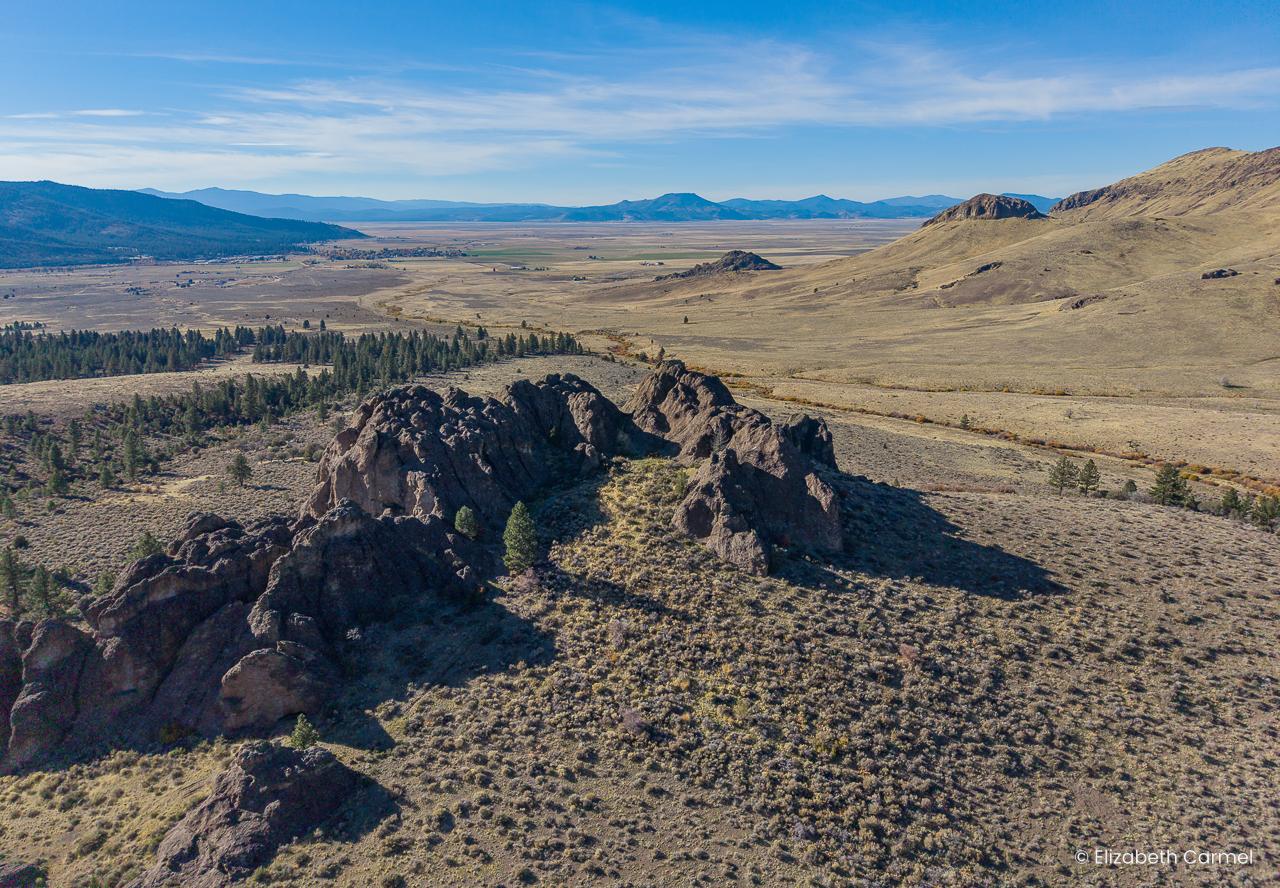
Castle Rock with a view to the Sierra Valley. Photo © Elizabeth Carmel.
But nobody raced to acquire this property, territory bordered primarily by public lands managed by the California Department of Fish and Wildlife, U.S. Forest Service, and the U.S. Bureau of Land Management. Its terrain ranges from sagebrush scrub and grasslands to conifer forests, aspen groves, mountain meadows, pine (Ponderosa, Jeffrey, and Pinyon) and juniper woodlands, springs, and perennial creeks. It is also home for many mammals (coyote, gray fox, bobcat, possibly badger, pronghorn, mountain lion, and is part of a key migration corridor for part of the Loyalton-Truckee deer herd) and birds (Golden eagles, red-tailed and rough-legged hawks - and perhaps sage-hen grouse - as well as a wide variety of migratory birds also like to frequent the area). The terrain and wildlife made Loyalton Ranch a perfect spot to help implement SB-5, the California Drought, Water, Parks, Climate, Coastal Protection, and Outdoor Access for All Act of 2018 - the legislation used to divide up the $4 billion bond sales money authorized by voters with the passage of Prop 68.
SB-5 specifically gave the California Wildlife Board (CWB), a group formed after passage of the Wildlife Conservation Law of 1947, a sum to $30 million for the “acquisition, development, restoration, protection, and expansion of wildlife corridors and open space to improve connectivity and reduce barriers between habitat areas and to protect and restore habitat associated with the Pacific Flyway.”
The Act also gave the CWB not less than $60 million for the “protection, restoration, and improvement of upper watershed lands in the Sierra Nevada and Cascade Mountains, including forest lands, meadows, wetlands, chaparral, and riparian habitat in order to protect water supply and water quality, improve forest health, reduce wildfire dangers, mitigate the effects of wildfires on water quality and supply, increase flood protection, or to protect or restore riparian or aquatic resources.” Another $52 million was allocated to the CWB for the purpose of expanding habitat that “furthers natural community conservation plans”. Section 80132 of the Act also provided the CWB with $18 million to, amongst many other things, “enhance wildlife habitat” and “implement conservation actions.”
Recognizing these facts and with a long-term vision of repatriating as much of their native land as possible, the Tribal Council of the Washoe Tribe of Nevada and California collaborated with the Northern Sierra Partnership and the Feather River Land Trust for 4 years to develop a strategy to acquire Loyalton Ranch, now renamed the WélmeltiɁ Preserve.After the Wáši-šiw Land Trust was formed and a conservation plan developed for the Preserve, the Washoe applied for the $5.5 million grant they received from the CWB in November of last year.
Now, with the grant money and private donations, the Wá∙šiw (Washoe) people, a group forcibly removed from this land and told they could no longer use their native lands for resources or ceremonies over a century ago, have made the largest tribal land return ever completed in the Sierra Nevada and the third largest in California.
According to Washoe Tribe Chairman Serrell Smokey, besides being a site for land conservation, restoration, and habitat management,“This land purchase is good medicine for our people. This is a small start to healing from generations of historical trauma, and the benefits will go on for many generations to come.”
Corrections: The original version of this article contained errors. The Washoe tribe received $5.5 million, not $5.4 million, from the Wildlife Conservation Board; the deal was with the City of Santa Clara, not Santa Clara County; the tribe collaborated with the Northern Sierra Partnership, not with the Sierra Nevada Partnership.